


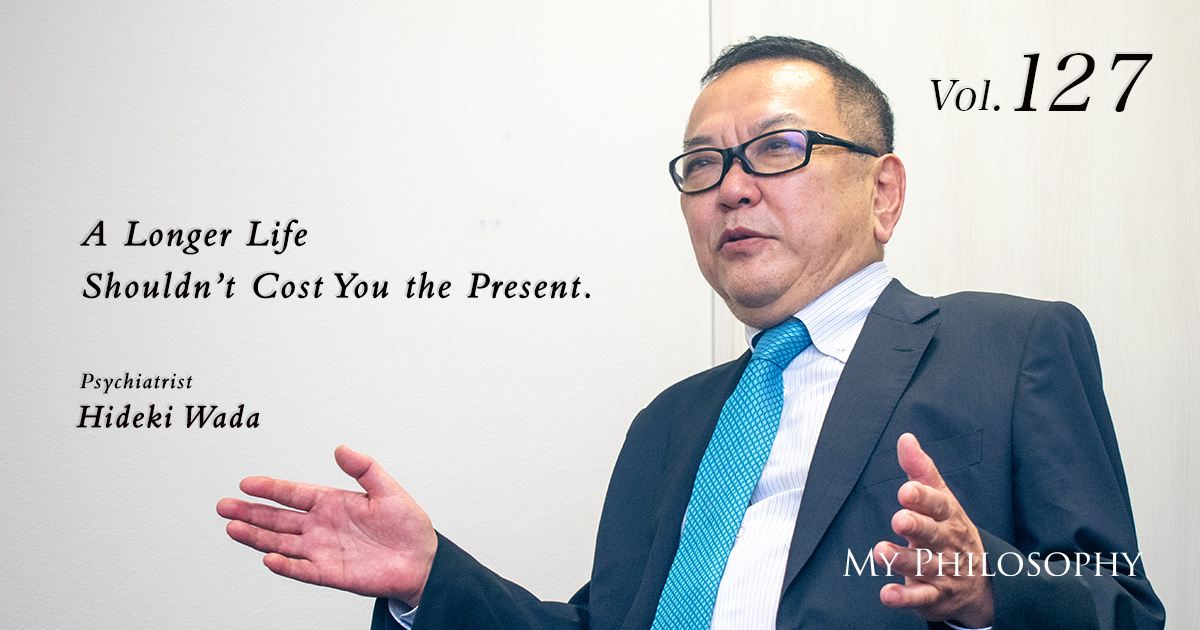
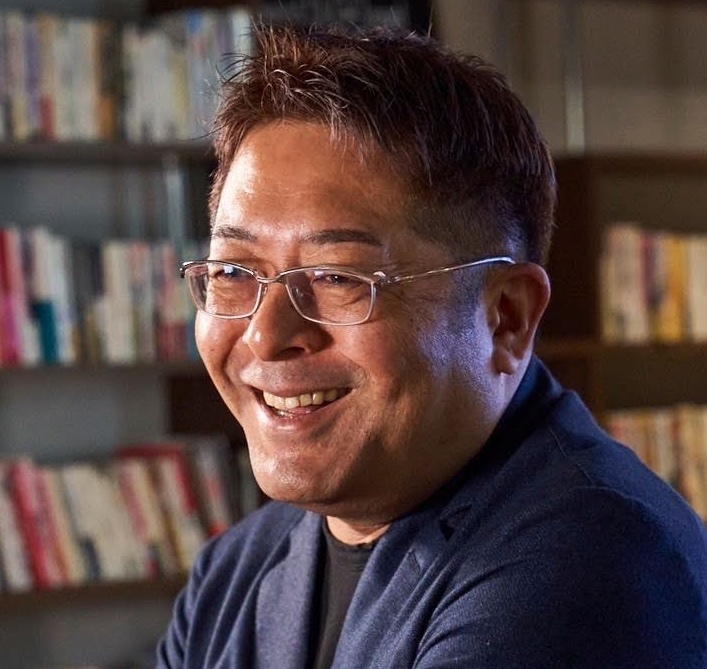
For more than 35 years, Psychiatrist Dr.Hideki Wada has worked in medicine and the care of older adults. At the same time, he has published more than 900 books.
“We cannot remain as we are forever.”
Having spent his career confronting that reality, Wada believes deeply in the importance of living fully in the present. Through the lenses of aging, mortality, and medicine, he reflects on how to avoid becoming an uninformed patient—and on what truly ideal healthcare should look like.
Profile
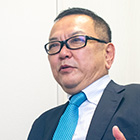
Vol.127 Hideki Wada
Psychiatrist
Born in Osaka in 1960, Hideki Wada entered Nada High School—one of Japan’s most prestigious schools—by passing the entrance exam in the top five, and later studied at the Faculty of Medicine at the University of Tokyo.
After graduating, he served as an assistant in the Department of Neuropsychiatry at the University of Tokyo Hospital and as an nternational fellow at the Karl Menninger School of Psychiatry in the United States.
For more than 35 years, he has worked at the forefront of geriatric medicine and geriatric psychiatry in Japan as a psychiatrist specializing in the care of older adults.
He currently serves as Director of the Hideki Wada Mind and Body Clinic, Psychiatric Advisor at Kawasaki Saiwai Hospital, a part-time lecturer in the Faculty of Economics at Hitotsubashi University, a Specially Appointed Professor in the College of Life Sciences at Ritsumeikan University,Specially Appointed Professor, College of Life Sciences, Ritsumeikan University, Representative of the Ryokutetsu University Entrance Examination Seminar, and leader of Kōreitō (a political movement dedicated to the well-being of older adults)
His wide-ranging activities also include founding Tetsuryokukai, a prestigious preparatory school specializing in admission to the University of Tokyo for students at integrated junior and senior high schools.
His books have sold more than 10 million copies in total. Drawing on his experience in healthcare for older adults, he has published numerous bestsellers advocating a less restrictive approach to life and health, including The 80-Year-Old Wall(Gentosha Shinsho), which ranked No. 1 on Japan’s annual bestseller list, as well as Age 70, "The Turning Point in Aging" and After 60, "Do Whatever You Want"
In addition to medicine and education, Wada is active as a commentator on politics and economics and as a film director. Through his independent perspective, unconstrained by conventional assumptions, he continues to offer insights into how to live wisely in an era of 100-year lives.
Do What You Can, While You Can
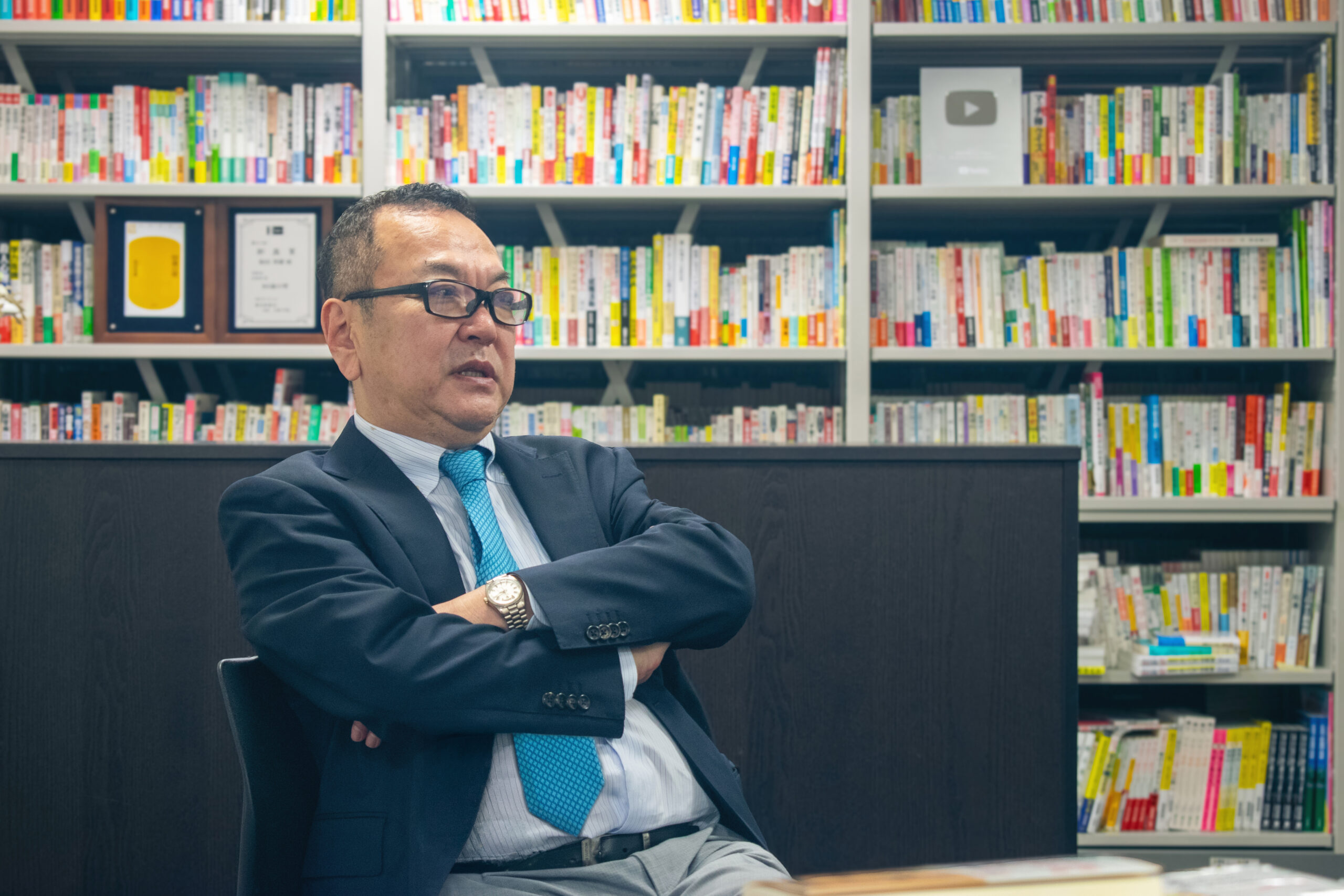
There is a familiar question: do you eat your favorite food first, or save it for last? As a child, I was the sort of person who ate what I disliked first and saved the best for the end. But at some point, I realized that there is no guarantee we will always be able to enjoy the foods we love.
I came to understand this at the first hospital where I worked, a hospital specializing in geriatric care.
Former university professors, cabinet ministers, and company presidents came to us as outpatients or were admitted to the hospital, but by then many were bedridden or living with advanced dementia. Whenever I saw them, I was struck by the realization that none of us can remain in our present position forever. Nor can we assume that we will always be able to enjoy good food, or remain healthy enough to travel.
Wine is one of my great pleasures. This year, I bought two hard-to-find bottles of 1985 Henri Jayer. Buying them was one thing; the question was when to drink them, and with whom. So I set myself a goal: “I want to remain healthy enough to enjoy wine until I am 75.” I will turn 75 in 2035. By then, these wines will be fifty years old and should be magnificent. And I think my body may still be up to enjoying them.
Seventy-five is one benchmark for me.
Growing older means realizing that pleasure may not wait for us.
That is also why I do not think very much in terms of setting money aside simply as “retirement savings.” I currently have diabetes, heart failure, and high blood pressure, but even if someone told me to give up wine now, I would have no intention of doing so.
Travel is the same. By our mid-eighties, even the most luxurious journey imaginable—flying first class, with a chauffeur waiting at the airport—can be exhausting. A trip involving economy-class connections and bus travel is harder still. When I travel abroad, I rent a car and drive myself. Each time, I wonder how much longer I will be able to travel this way. That is precisely why we have to go while we are still healthy enough to go.
There is another philosophy that is the other side of the same coin.
None of us knows when we will die.
Precisely because we do not know, we should enjoy the present.
There Is No Guaranteed Formula for a Longer Life
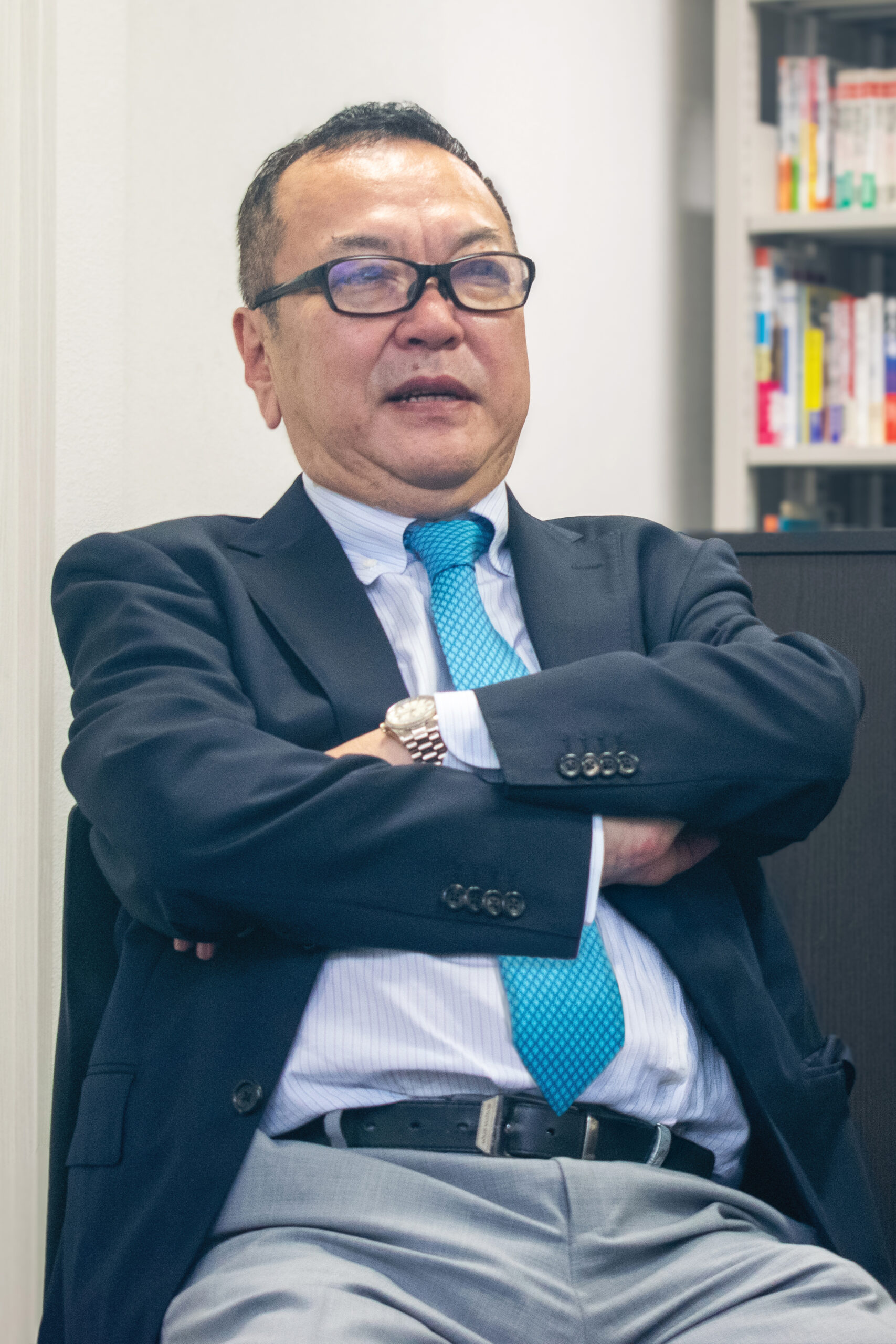
One thing I have learned very clearly as a doctor is that people can take meticulous care of themselves and still become ill, while others can live carelessly and reach a great age.
Medicine may lower the risk of disease or improve our chances of living longer. But it cannot guarantee the course of a person’s life or lifespan. There is no such thing as a method that will ensure longevity. Yet people struggle desperately because they believe there must be one.
Perhaps people are afraid of death, but I think much of that fear is based on a vague image of what dying will be like.
Having watched many older people die, it often seems simply that they go to sleep and do not wake up.
My mother died recently. She had gradually stopped eating, and one day the hospital called to say that her pulse had become difficult to detect. When I arrived, she could still nod, so I thought she might have a few more days. But that evening, the hospital called again to say that she had stopped breathing, and she died. Perhaps that is simply what dying can be like.
After 85, Cancer and Dementia Are Commonplace
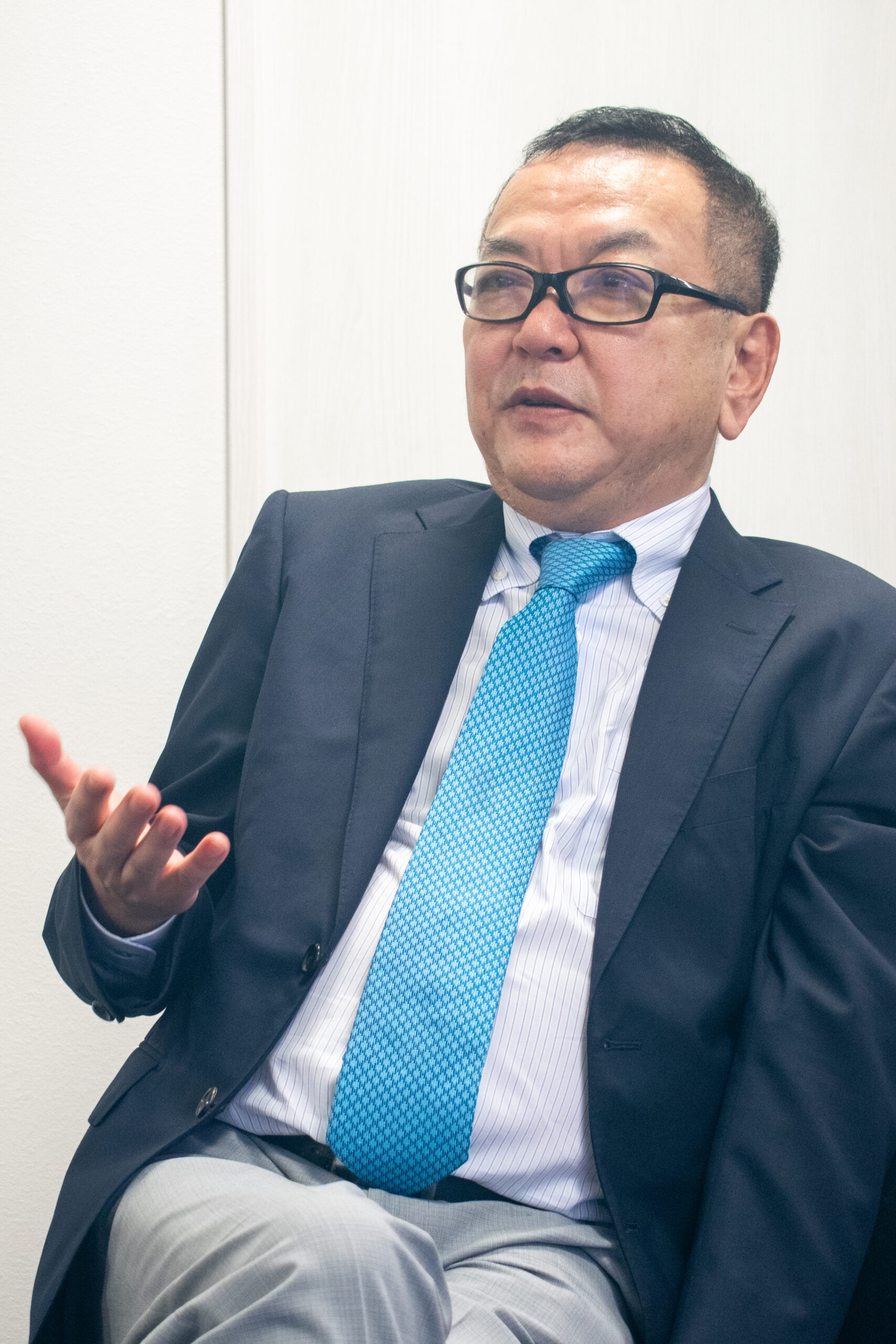
An experience at the geriatric hospital where I worked changed my view of life.
We performed many autopsies there. What I saw was that small cancers unknown to the patient, the family, or even the physicians, as well as changes in the brain associated with Alzheimer’s dementia, were present in virtually every older patient—particularly those over 85.
Yet even among those found to have cancer, cancer had been identified as the cause of death in only about one-third of cases. In the remaining two-thirds, another disease had been the immediate cause of death. In other words, a lesion may exist in the body without ever causing symptoms or determining a person’s lifespan.
Many people assume that cancer is a painful disease from which one dies in great suffering. But as these cases—and the fact that many cancers go unnoticed until they are advanced—show, cancer is often asymptomatic. Cancer itself can, of course, cause pain. But I also believe that one reason cancer becomes such a painful ordeal is the treatment, which can impose a considerable burden on the body.
Bird, Rabbit, and Turtle Cancers
There is one way of thinking about cancer that I find particularly persuasive. Professor Welch at Dartmouth describes three types: “bird cancers,” “rabbit cancers,” and “turtle cancers.”
Bird cancers progress extremely rapidly. Even when they appear to have been detected early, microscopic metastases may already be present. Many pancreatic cancers fall into this category. In such cases, treatment often does little beyond extending life for a short time.
Turtle cancers progress slowly. Even if left alone, they grow only little by little and do not metastasize. Because they do not threaten life, there is little point in detecting and treating them early in the first place. Some thyroid cancers and many prostate cancers fall into this category.
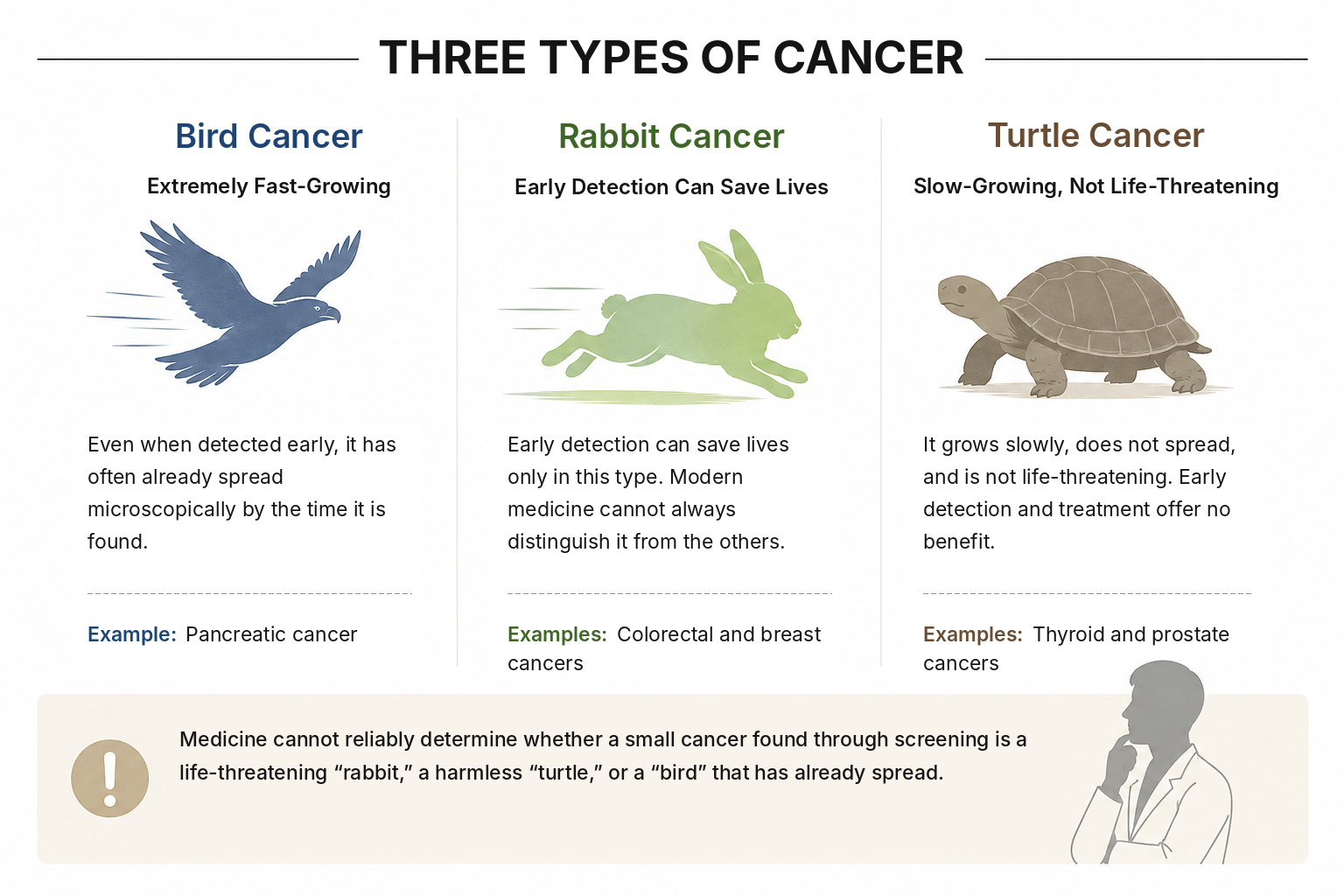
That is why, when screening identifies an abnormality, I see little value in becoming excessively fixated on the numbers or rushing into treatment that places a heavy burden on the body.
Make Peace with What You Cannot Control
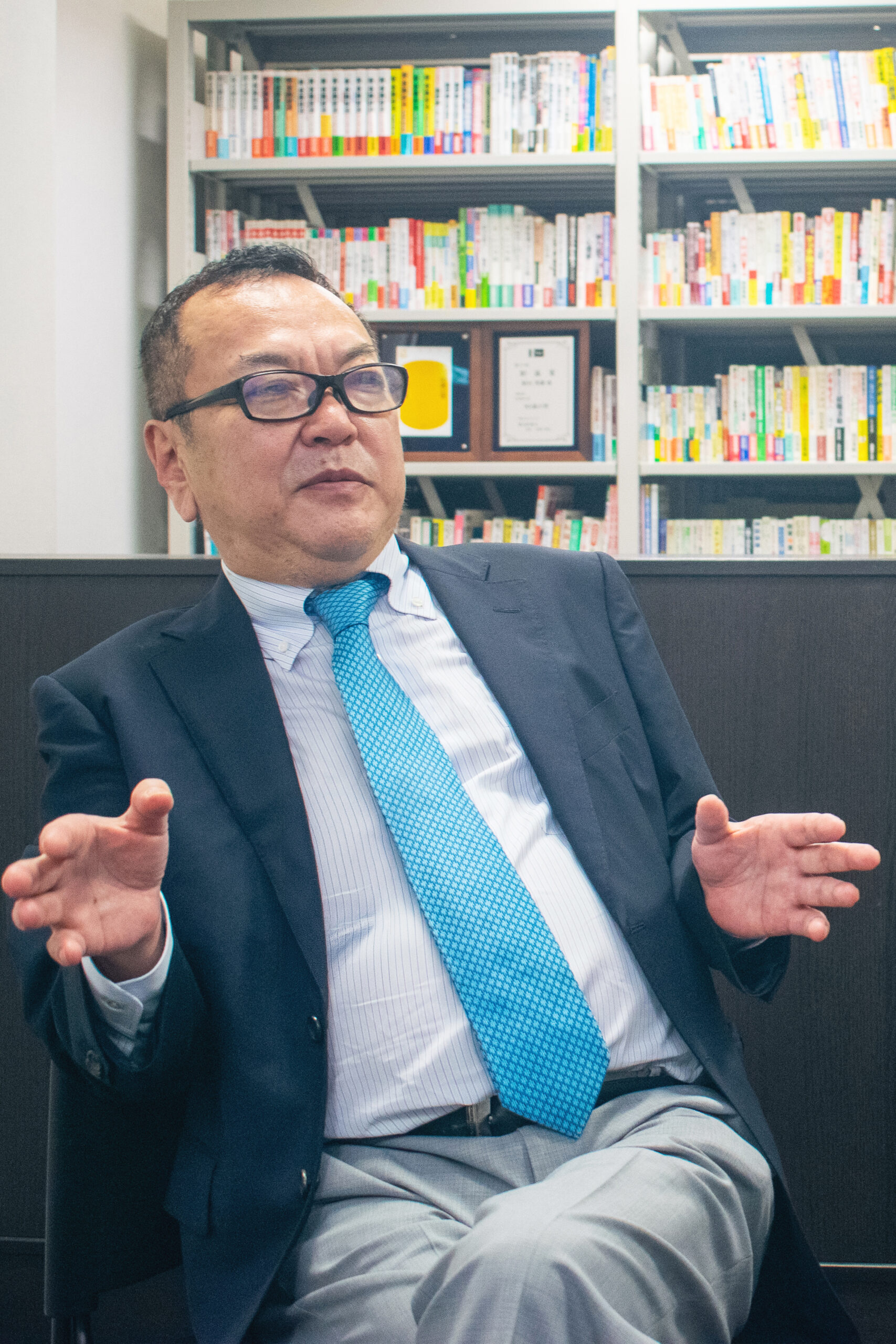
As we move through our fifties, sixties, and seventies, health checkups inevitably come with warnings: “If you leave your blood pressure like this, you will have a stroke,” or “If your blood sugar stays this high, you will end up on dialysis.”
But no matter how faithfully you follow treatment, sometimes illness strikes and sometimes it does not.
There is a well-known large-scale study conducted in the United States. Older adults with an average systolic blood pressure of 170 were divided into one group that took antihypertensive medication and another that did not, and were followed for more than five years.
About 5 percent of those whose blood pressure was lowered with medication had a stroke, compared with about 8 percent of those who did not take the medication. To be sure, antihypertensive medication reduced the risk of stroke from 8 percent to 5 percent. But viewed another way, 92 percent of those who did not take the medication did not have a stroke.
Lowering blood pressure also tends to involve more than simply taking medication. People are expected to reduce salt, eat lightly seasoned food, change their daily habits, and accept all kinds of restrictions. Even if you spend the rest of your life that way, the risk of stroke falls only from 8 percent to 5 percent; it does not become zero. And medicine cannot predict whether you will endure the restrictions, take the medication, and still fall within that 5 percent, or take no medication, make no such sacrifices, and remain among the 92 percent who do not have a stroke.
I believe it is better to recognize that some things lie beyond human control. Around the age of 50, I decided to stop struggling against what could not be changed. I was later diagnosed with diabetes and high blood pressure, but I do not pursue excessive treatment merely to lower numbers, nor do I live by denying myself what I enjoy.
Do Not Be an Uninformed Patient
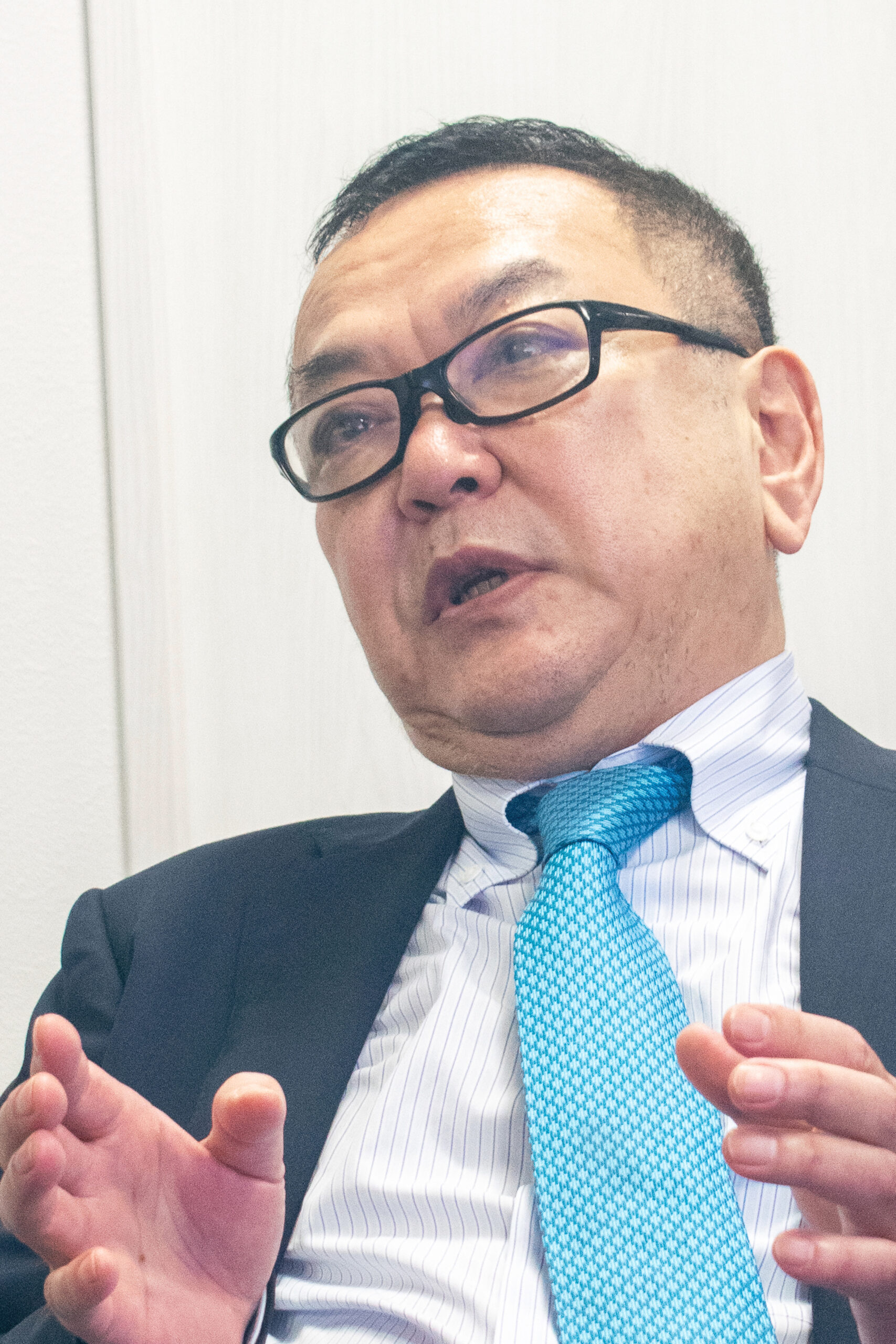
That said, we should still acquire information in advance, on the assumption that bad things can happen. For example, everyone in Japan over the age of 40 pays long-term care insurance premiums, yet very few people learn in advance how to use the system if they develop dementia. In that sense, many people are what Japanese slang calls jōjaku—at a disadvantage because they lack essential information.
Choosing a hospital is another example. In medicine, the clearest example of an uninformed patient is someone who chooses a university hospital solely on the strength of its name.
In 2014, it came to light that eight patients had died following laparoscopic liver procedures performed by the same surgeon at Gunma University Hospital. Later investigations found that as many as thirty patients had died in total, including those who had undergone open surgery. The surgeon’s technical competence was clearly an issue, but the university’s systems were also at fault—not least the lack of proper supervision.
This is probably only the tip of the iceberg.
Gunma University Hospital had long been said to prioritize research over clinical practice. It was not necessarily strong in hands-on patient care. Yet people choose it simply because it is a university hospital. Tokyo is only about an hour from Gunma by bullet train. There are any number of hospitals in Tokyo with highly skilled doctors, yet people still choose the nearby university hospital. Patients need to be better informed. We must not be dazzled by titles and allow ourselves to be carried passively along a medical conveyor belt.
The Hospital I Envision
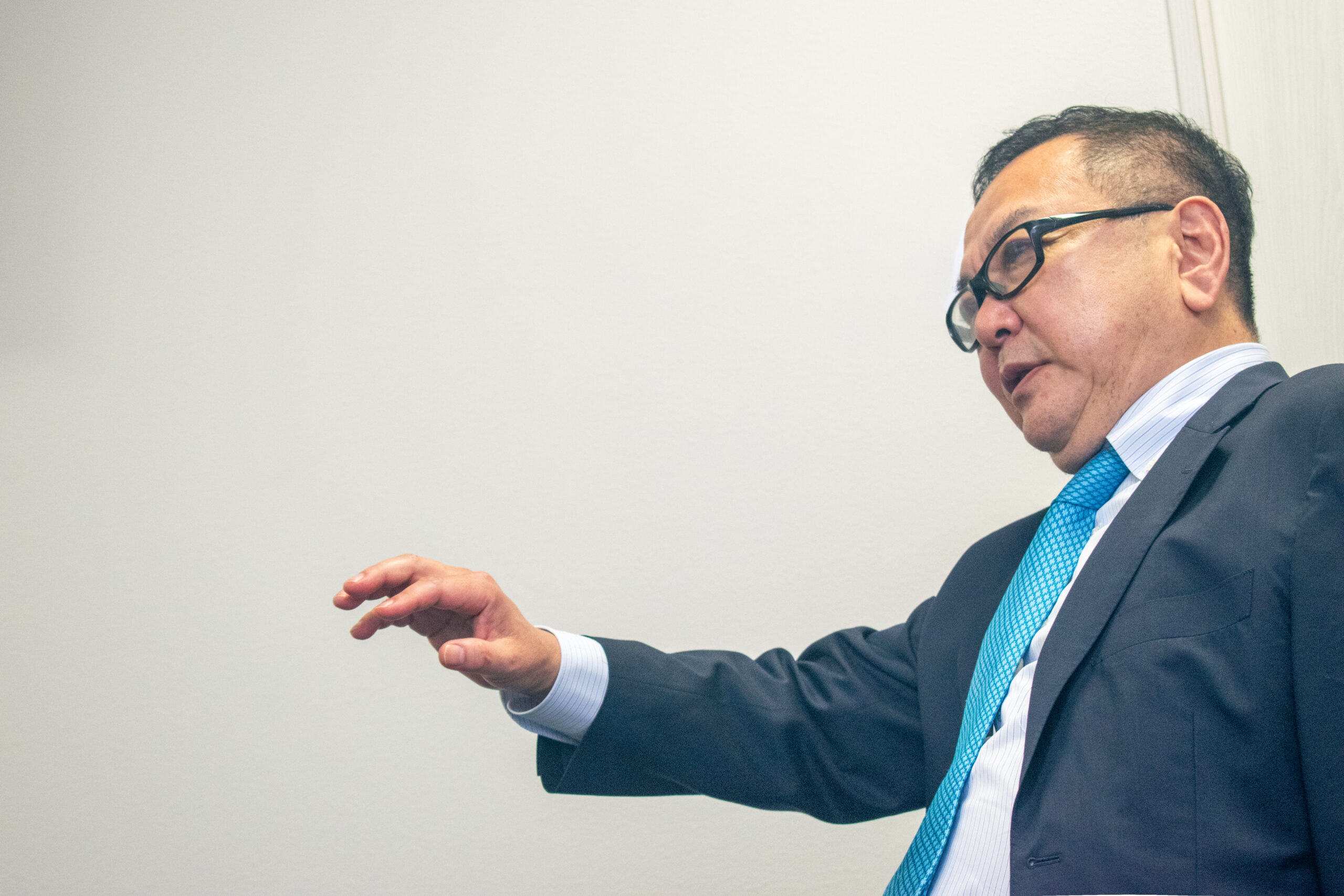
We are moving from an era in which living longer was considered enough to one in which the real question is: how long can we remain healthy?
For more than ten years, I have carried an idea: to build a hospital that brings the very best physicians together under one roof.
Japan has a universal health insurance system, so rich and poor alike receive care through the same insurance-based hospital system. In a capitalist country like the United States, by contrast, there is a system in which those able to pay more can gain access to better doctors.
Given how economically stratified Japan has become, I believe there should also be room for a membership-based “hospital of exceptional physicians.” We would bring together the most highly skilled doctors from across the country and create a hospital supported by membership fees.
The hospital would also have an affiliated medical school. It would attract residents who want to learn from these exceptional physicians. The clinic where they treat patients would provide care free of charge. You would feel safer with a “protégé of a great physician,” trained directly by the best, would you not? It is like sushi prepared by a chef who trained at a first-rate restaurant.
One system would give those able to pay access to medical care at the highest level; the other would ensure that the skills of exceptional physicians are passed to the next generation. One day, I would truly like to build a hospital that brings those two things together. That is another dream I continue to carry.
This article presents the personal experiences and views of Dr.Hideki Wada. It is not intended to recommend stopping or changing any particular treatment or medication. Please consult your treating physician or another qualified healthcare professional regarding decisions about your care.
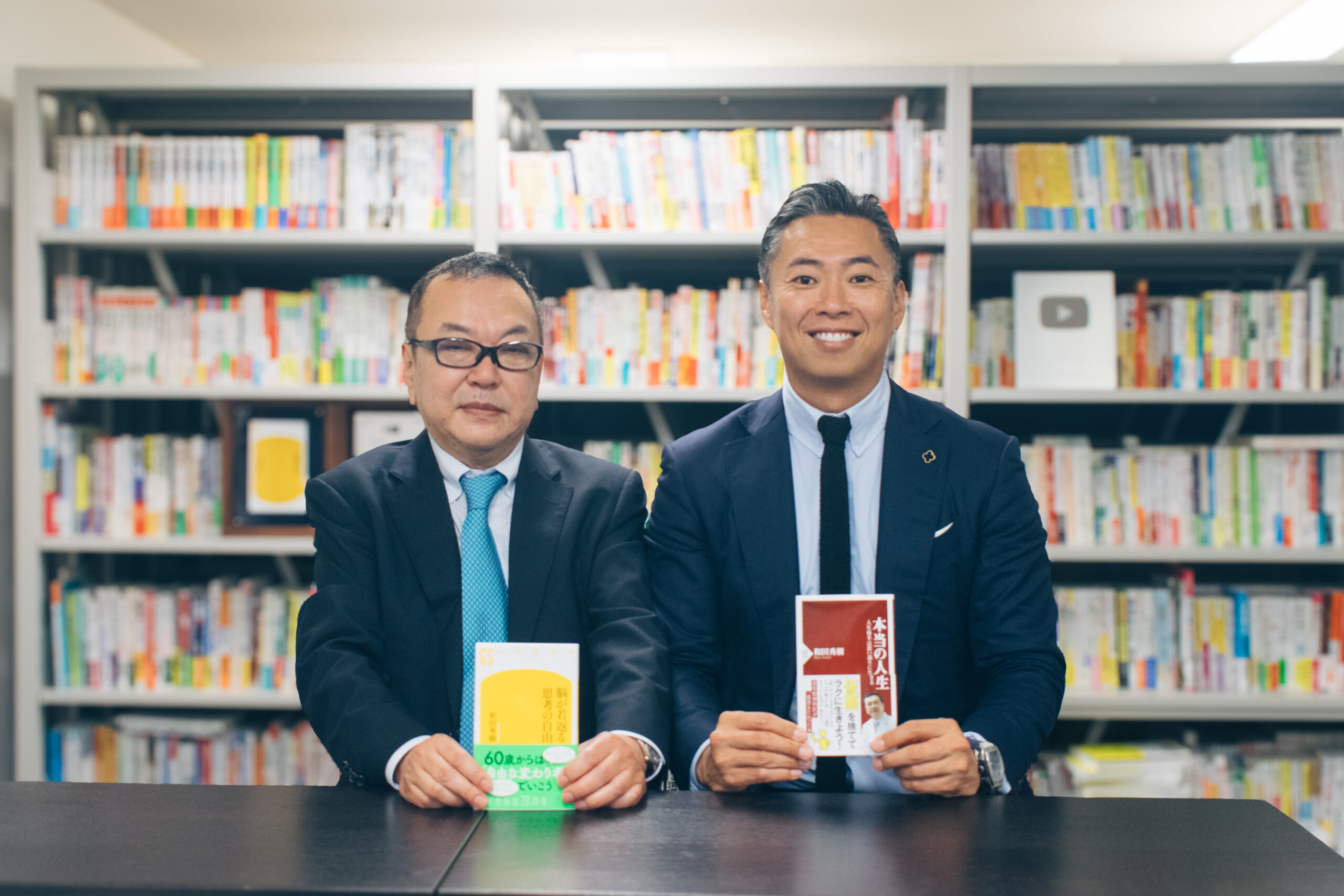
It had been a long time since an interview had stirred this much energy in me.
Rather than simply answering questions, I came away believing that, with Mr.Sugiyama involved, two dreams I have carried for many years—a medical information platform created from the patient’s point of view, and a hospital staffed entirely by outstanding physicians—might actually be possible.
In that sense, the interview gave me hope as well, and I look forward to seeing what he accomplishes in the years ahead.
One thing I did not say explicitly during the interview is that, if I had to name the central theme of My Philosophy, it would be “survival”—staying in the game. Life is long. There is little point in clinging to today’s success or status if you cannot endure what comes afterward.
Before “The 80-Year-Old Wall,” I never had a true blockbuster. But an occasional solid bestseller allowed me to keep writing for a living. Since “The 80-Year-Old Wall,” I have continued to publish between forty and sixty books a year. As I have grown older, however, I have realized that sustaining that pace requires me to preserve my vitality.
Modern medicine may cure disease or bring test results back within the normal range, but it does not necessarily restore a person’s vitality. I have therefore come to feel keenly that I need to seek out information that conventional medicine does not provide.
This is true not only for me, but for everyone from middle age onward.
Refusing to follow doctors blindly and choosing the right doctor may be the single most important factor in survival. Conversely, anyone who simply does whatever a doctor says and chooses doctors by brand name alone can hardly object to being called uninformed.
In the United States, more expensive hospitals tend to attract better physicians. In Japan, virtually all medical care is provided through the national insurance system, so having the right information gives you a better chance of receiving better care. Even a wealthy person who lacks information and chooses a university hospital based on its brand image may end up with a doctor who has published extensively but lacks clinical skill.
Of course, it is difficult for someone without a medical background to gather that information. That is why I also dream of building a self-pay hospital that brings together highly skilled physicians.
No matter how well we survive, we will all die one day. My other goal is to build something that will outlive me and leave my name behind, and to do work for which people will be grateful. I intend to keep moving forward toward that goal.
Hideki Wada, Psychiatrist
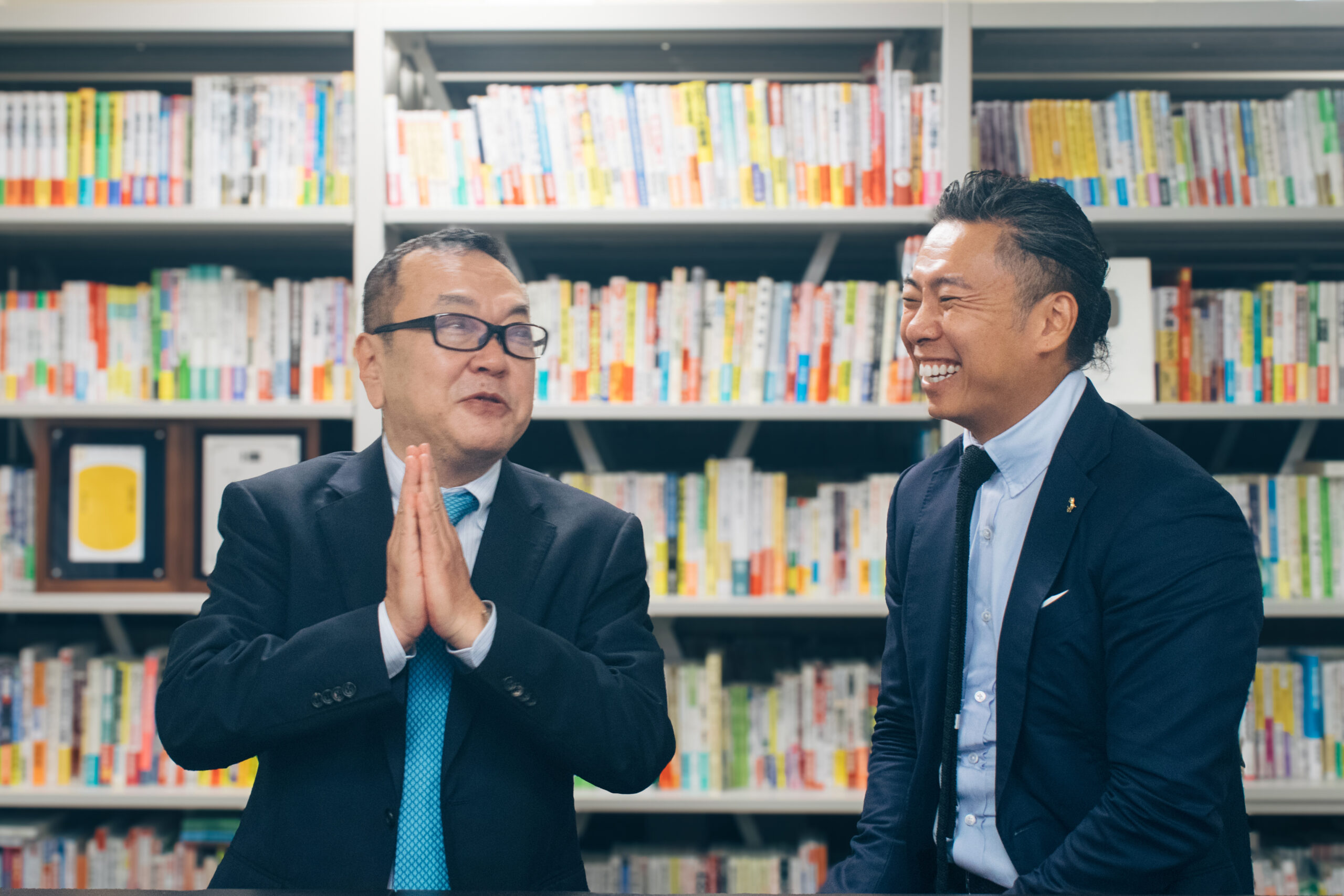
This interview left me struck not only by Dr. Hideki Wada’s words, but by the energy of the life he leads.
He enjoys wine and ramen and does not impose needless restrictions on himself. This is not a disregard for health. It is a deliberate choice not to sacrifice too much of life today for the sake of tomorrow.
Life is finite. Yet rather than treating that fact as a reason for pessimism, he turns it into the energy to take on what can still be done. Dr. Wada’s view of life and death has a depth that goes beyond the familiar phrase “you only live once”—the depth of someone who has spent decades confronting aging and death in clinical practice.
At the same time, what matters to him is not simply living longer, but staying vigorous enough to remain active—to keep going, and to survive.
Rather than achieving one great success and stopping there, he continues to write, share his ideas, and seize the next opportunity. To do that, we cannot hand all responsibility for our bodies and medical care to someone else; we must obtain information and make our own decisions.
Choosing medical care not by the reputation of a hospital or the title of a physician, but by identifying the treatment and doctor we truly need—this is not only a medical issue. It is also a question of how we choose to live our lives.
Through this interview, I felt anew the need for medical information conveyed from the patient’s point of view, and for a hospital that brings together truly exceptional doctors and passes their expertise to the next generation.
An interview is not merely a place to look back over the life already lived. When people meet and their experiences and ideas intersect, a new future can begin to take shape.
Do not sacrifice today for the sake of living longer.
By enjoying the present, staying vigorous, continuing to take on new challenges, and ultimately leaving behind work for which people will be grateful, Dr. Wada gave me the courage to move my own life forward again.
Keeping in mind that “we are all going to die anyway,” I was reminded once again to live each day as fully as I can.
Dr. Wada, next time, let’s have ramen together.
DK Sugiyama, Editor-in-Chief of My Philosophy
July 2026
Interview conducted at the Hideki Wada Mind and Body Clinic
Interviewed and edited by DK Sugiyama
Project Manager: Chiho Ando
Written by Eri Shibata, Deputy Editor-in-Chief of My Philosophy
Photography by Hirona Goto
Produced by the My Philosophy® Editorial Team
Milestone (2007~)
View all Interviews
-
Vol.130 Mihoko Yamasaki
Creator of a Walking Method for Better Posture and Gut Health
-
Vol.129 Anis Uzzaman
Founder and CEO, Pegasus Tech Ventures
Founder and Chairman, Startup World Cup -
Vol.128 Nicolai Bergmann
Flower Artist
-
Vol.127 Hideki Wada
Psychiatrist
-
Vol.126 Hiroki Ogawa
General Manager, UMITO Kamakura Koshigoe|Chef, Le RESTAURANT
-
Vol.125 Seiichi Okada
Owner & Vice Chairman, Medical Corporation Seiseikai Inokuchinoma Hospital
President & CEO, Okada Medical Investment Co., Ltd. -
Vol.124 Masato Kato
President & CEO, Bechstein Japan Co., Ltd.
Klavierbaumeister -
Vol. 123 Akiko Yamamoto
Japan President, Van Cleef & Arpels, Richemont Japan
-
Vol.122 Akimi Fukuhara
Pianist
-
Vol.121 Sammy Miyamoto
Hairstylist & Entrepreneur / President, “momotaro salon”
-
Vol.120 Ryotaro Muramatsu
Artist / Founder of NAKED, INC. / Visiting Professor at Osaka University of Arts / Branding Director of Achi Village, Nagano
-
Vol.119 lecca
Singer-Songwriter
-
Vol.118 John Tanzella
President / CEO of the International LGBTQ+ Travel Association (IGLTA)
-
Vol.117 Marin Alsop
Conductor
-
Vol.116 Hajime Kinoko
Modern Artist, Kinbakushi (Rope Master), Rope Artist, Photographer
-
Vol.115 Shintaro Koizumi
Out Japan Co., Ltd Chairman
SK Travel Consulting Co., Ltd (Out Asia Travel) President
International LGBTQ+ Travel Association (IGLTA) Ambassador to Asia -
Vol.114 George Fujisawa
George Fujisawa, President of Fluid Power, Ltd.
-
Vol.113 Kazumi Arikawa
President, Albion Art Co., Ltd.
Founder, Albion Art Jewelry Institute
Chevalier of the Ordre des Arts et des Lettres (French Republic)
International Council Member, Metropolitan Museum of Art (New York) -
Vol.112 Leslie Kee
Photographer
-
Vol.111 Mitsuyuki Takada
President and CEO of Albalkan Corporation
-
Vol.110 Koji Sato
Head Chef of Yamagata Kappo Akasaka Ajisai
-

Vol.109 Krishna Ramachandra
Founder and Non-Executive Chairman of Digital Insights Ventures
-
Vol.108 Marc Einstein
Chief Analyst of ITR Corporation
-
Vol.107 Kentaro Sakai
President and CEO of Sakai Fish Farm Co., Ltd.
-
Vol.106 Ryuki Narita
President of Narita Koi Farm Co., Ltd.
-
No.105 Yoshihiro Tsumura
President and Group CEO, Aderans Co., Ltd.
-
Vol.104 Takatoshi Maruo
"Bali's Aniki (*Big Brother)"
-
Vol.103 Takashi Shimokawa
Principal of the preparatory school "Bulkan Juku" | President and CEO of Tass Group
-
Vol.102 Sayuri Yamaguchi
Ginza "CLUB GRÈS" Owner Mama
-
Vol.101 Koji Yamamoto
President and CEO of Global Partners Inc.
-
Vol.100 Tetsuo Gyotoku
Director of the Japan BE Research Institute
-
Vol.99 Kiyoshi Murano
Philosopher and Astronomer | Futurist
-
Vol.98 Hiroshi Yaegashi
Catalyst | Business Creator
-
Vol.97 Hiroyuki Sasaki
Chairman, Group Representative & CEO Pro Labo Holdings Co., Ltd.
-
Vol.96 Satoshi Yamaguchi
Chairperson of the Chitose Koyukai Social Welfare Corporation
-
Vol.95 Hideko Suzuki
Doctor of Literature | Critic
-
Vol.94 Kiyoshi Kurokawa
Doctor of Medicine | Honorary Professor at the National Graduate Institute for Policy Studies | Representative Director of the Health and Global Policy Institute
-
Vol.93 Hiroshi Senju
Japanese Painter | Professor at the Graduate School of Kyoto University of the Arts and Design
-
Vol.92 Takashi Yamane
Management Scholar | Certified Public Accountant | Professor at Waseda University Graduate School of Business and Finance (WBS) | Emeritus Professor at Keio University
-
Vol.91 Kazuo Noda
Honorary Chairman of the Japan Research Institute, a general incorporated foundation | Honorary Chairman of the Social Development Research Center, a general incorporated foundation | Honorary President of Tama University | Honorary President of The Graduate School of Project Design
-
Vol.90 Goichi Okada
Sales Office Manager, Prudential Life Insurance Co. | Senior Consulting Life Planner
-
Vol.89 Tatsumitsu Yamazaki
Honorary Chairman of the Japan Sailing Federation | Former Chairman of S&B Foods Inc.
-
Vol.88 Rick Blangiardi
Hawai‘i News Now Manager
-
Vol.87 Timothy Cottrell
Head of School, ‘Iolani School
-
Vol.86 John Gotanda
President of Hawai‘i Pacific University
-
Vol.85 George Ariyoshi
Former Governor of Hawaii
-
Vol.84 Taro Yoshida
President and CEO, Hawaii Hochi Ltd.
-
Vol.83 Naoki Kusano
President, HANAKEN | TOKYO TONKOTSU RA-MEN BANKARA Founder
-
Vol.82 Akira Kawashima
Doctor | Doctor of Medicine | Professor, Department of Acupuncture and Moxibustion, Faculty of Health Sciences, Tokyo Ariake University of Medical and Health Sciences
-
Vol.81 Reika Asai
President of Kirei Company, Inc.
-
Vol.80 Seiji Hayashi
President and CEO of Car Conveni Club Co., Ltd.
-
Vol.79 Shinichi Inoue
CEO of Peach Aviation Co., Ltd.
-
Vol.78 Katsuyoshi Fukuyama
President and CEO of Gardner Co., Inc.
-
Vol.77 Nahoko Ishikawa
Representative Director, Sixth Sense Labs, Inc.
-
Vol.76 Shin Yamagishi
Photographer
-
Vol.75 Mikio Kawai
Professional Surfer
-
Vol.74 Isao Aoki
Professional Golfer | Chairman, Japan Golf Tour Organization
-
Vol.73 Norihiko Sasaki
Executive Director, Editor-in-Chief of NewsPicks | Editor | Journalist
-
Vol.72 Yazaki Yasuhisa
Freelance Journalist | Editor
-
Vol. 71 Michael Anthony
Executive Chef, Gramercy Tavern
-
Vol.70 Kenji Takenaka
Flower Designer
-
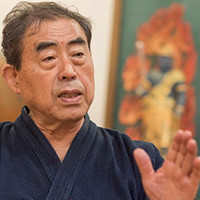
Vol.69 Daniel T. Ebihara
Head of the New York Kendo Dojo, Entrepreneur, and Product Designer
-
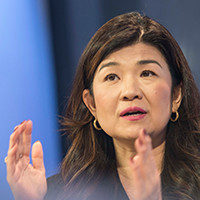
Vol.68 Kyoko Gasha
Journalist | Film Director
-
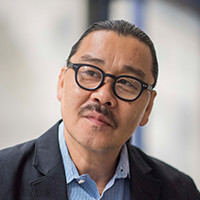
Vol.67 Casey Taniguchi
President of Yomitime
-
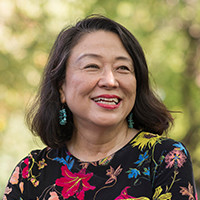
Vol.66 Misao Ito
Writer | Art Producer
-
Vol.65 Narimasa Nakaoka
President and Representative Director, Suzukake Co., Ltd.
-
Vol.64 Takashi Sano
Chocolate Shop Owner-Chef
-
Vol.63 Toshiaki Kurosaka
Chairman of Porsche Japan K.K.
-
Vol.62 Taro Saito
Communication Designer. President and CEO of dof Inc., Co-CEO of CC Inc., Outside Director of VOYAGE GROUP Inc., Outside Director of Oceanize Inc., and Global Strategy Committee Member of the NPO TABLE FOR TWO.
-
Vol.61 Hideyuki Murakami
President and CEO of Iwataya Mitsukoshi Ltd. | Executive Vice President of Isetan Mitsukoshi Holdings Ltd.
-
Vol.60 Yoshiyuki Okuno
Owner-Chef of Ristorante La Brinca
-
vol.59 Rika Yukimasa
Culinary Researcher | CEO, REKIDS Co., Ltd.
-
Vol.58 Kazuko Tōdō
Manager and Proprietor of "Royal Box" and "Lindbergh" | Editor-in-Chief of 'LB Nakasu Newsletter
-
Vol.57 Takaharu Futaeda
CEO, Anny Group KFT
-

Vol.56 Kengo Kuma
Architect
-
Vol.55 August Hergesheimer
President and CEO of Abios Corporation | Ph.D. in Nutritional Science
-
Vol.54 Tomio Taki
Honorary Advisor, Takihyo Co., Ltd.
School Board Chairman, Taki Academy, Inc.
Board Member, Mikimoto (America) Inc. -
Vol.53 Tadashi Okura
President and CEO of Torikizoku Co., Ltd.
-
Vol.52 Hiroshi Sugimoto
Japanese Painter | Specially Appointed Professor at Yokohama University of Art and Design
-

Vol.51 Aureana Tseu
Hula Artist
-
Vol.50 Don Konishi
Fashion Designer | Visiting Professor, Nagoya University of Arts and Sciences
-
Vol.49 Sachio Senmoto
Chairman of the Board, Renova, Inc.
-
Vol.48 Naoyoshi Amari
Head Priest of Ichigyosan Senshuji Temple | Principal of Senshu Kindergarten
-
Vol.47 Takashi Maeno
Dean and Professor of the Graduate School of System Design and Management at Keio University.
-
Vol.46 Tomizo Yamaguchi
Third-Generation Head of Kyoto Confectionery "Suetomi"
-
Vol.45 Toshiharu Kokubun
Representative Director of Earth Holdings Co., Ltd.
-
Vol.44 Keita Obara
Professional boxer
-
Vol.43 Yuko Kibayashi Shin Kibayashi
Non-fiction writer and manga creator
-
Vol.42 “My Philosophy” Junki Yoshida
Chairman and CEO, Yoshida Group & Founder, Yoshida Sauce
-
Vol.41 Seisei Hanayama
Artist
-

Vol.40 Yoshiharu Sekino
Explorer | Anthropologist | Professor at Musashino Art University
-
Vol.39 Masaki Yokokawa
Representative of WELCOME Group
-
Vol.38 Tamami Sunoda
President and CEO of NOZZE (Marriage Information Center)| President, CEO, and Owner-Designer of Fashion Brand "JuviJuvi"
-
Vol.37 Shuichi Tsuji
Sports Doctor | CEO of Eminecross Co., Ltd.
-
Vol.36 Yuichiro Miura
Professional Skier | Principal of Clark Memorial International High School
-
Vol.35 Nobufumi Matsunaga
Educational Environment Setting Consultant | Founder of V-net Educational Consultation Office
-
Vol.34 Tetsu Mizutani
Suntory Beer Limited - President, Chief Executive Officer
-

Vol.33 Yukino Kikuma
Lawyer
-

Vol.32 Keiko Kouda
CEO of AsMama Co., Ltd.
-

Vol.31 Takami Hasebe
White Ship Inc. CEO | Art Producer
-

Vol.30 Aya Kinoshita
Representative Director of UHM Co., Ltd. | General Manager of Hotel Niwa Tokyo
-

Vol.29 Clara Komazaki
KoLabo Co., Ltd. Representative Director and President
-

Vol.28 Nobuko Tsutsumi
Lecturer at Showa Women's University, Aoyama Gakuin Women's Junior College, and Hosei University | Freelance Announcer | Essayist
-

Vol.27 Yu Kaida
Portrait photographer
-

Vol.26 Manabu Miyasaka
President and CEO, Yahoo Japan Corporation
-

Vol.25 Shuichiro Kimura
Representative Director of Boulangerie Eric Kayser Japon Inc.
-

Vol.24 Yohei Sadoshima
President and CEO of Cork, Inc.
-

Vol.23 Toshiaki Kanda
Representative of Kanda News Network | IT Journalist, Social Media Consultant
-

Vol.22 Emmy Suzuki Harris
Japanese Representative of Change.org
-

Vol.21 Masakazu Yanagisawa
Director of Global Prime Finance Sales at Deutsche Securities Inc. | Board Member of NPO good aging yells
-

Vol.20 Fumio Tateishi
Chairman of the Board of Directors, OMRON Corporation
-

Vol.19 Nobuyuki Idei
Founder & CEO, Representative Director of Quantum Leap Corporation
-

Vol.18 Rowland Kirishima
Photographer | Multi-Creator
-

Vol.17 Junko Masachika
Founder of Personal Styling | President and CEO of Fashion Rescue Ltd. | Dean of Personal Stylist Japan | Chairman of the Professional Personal Stylist Association
-

Vol.16 Kumiko Otsuka
President and Representative Director of Otsuka Kagu, Ltd.
-
Vol.15 Tsugihiko Fujiwara
President and CEO of AOI Pro. Inc.
-
Vol.14 Hideaki Inoue
President and CEO, Park Corporation
-
Vol.13 Edward Suzuki
Architect | Representative of Edward Suzuki Associates Inc.
-
Vol.12 Hiroshi Kato
Economist
-
Vol.11 Seiichi Shimada
Special Advisor at Nihon Unisys Ltd. | Former Chairman of the Japan Housing Finance Agency | Former Vice President of Mitsui & Co., Ltd. | Former President of Nihon Unisys Ltd.
-
Vol.10 Kanae Doi
Japan Representative, International NGO "Human Rights Watch" | Lawyer
-
Vol.9 Hitomi Kumasaka
Social Media Consultant | President and CEO of Social Media Research Institute Co., Ltd.
-
Vol.8 Yuriko Takahashi
CEO of E.OCT Inc.
-
Vol.7 Kazuhiro Hasegawa
Representative of the Corporate Power Institute | Senior Researcher at the Inter Professional Education Research Center, Chiba University of Commerce (CUC)
-
Vol.6 Kage
President and Representative Director of Caricature Japan, Ltd., and Representative Artist | Asian Ambassador for the National Caricaturist Network (NCN)
-
Vol.5 Fumi Sasada
President and CEO of BRAVIS International, Inc. | Chairman of the Japan Package Design Association
-
Vol.4 Kota Matsuda
Chairman of Tully's Coffee International | President of Quiznos Asia Pacific
-
Vol.3 Shigeru Uchida
Interior Designer
-
Vol.2 Naoyuki Agawa
Dean of the Faculty of Policy Management at Keio University.
-
Vol.1 Hitoshi Suga
Venture Capitalist