



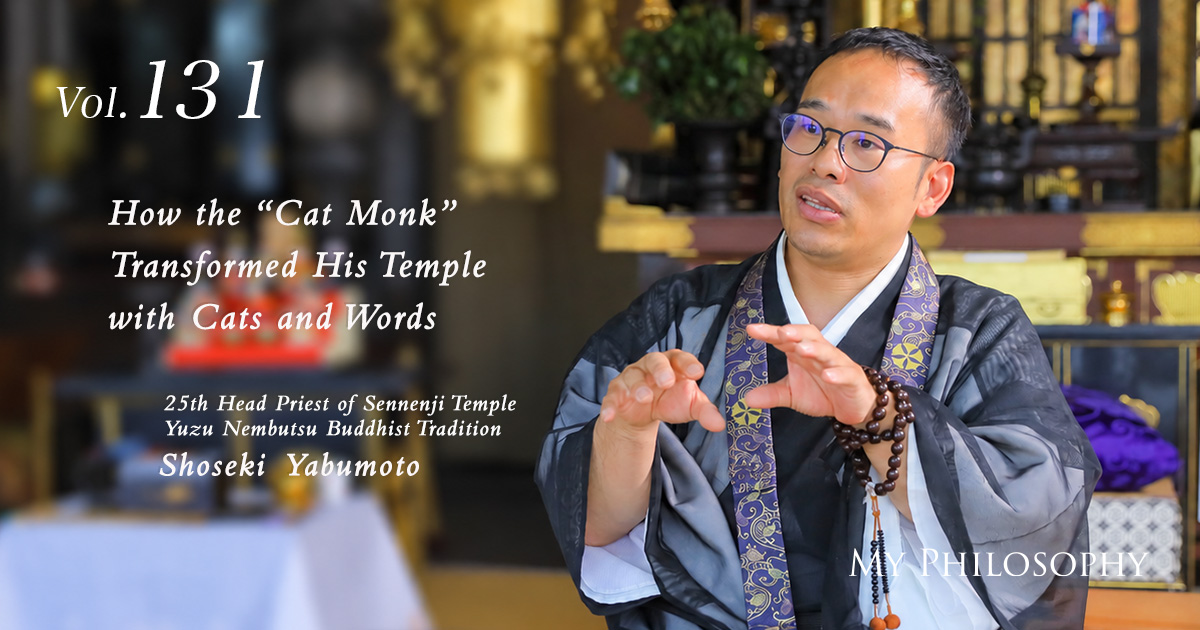
Known as Neko Bozu, or the “Cat Monk,” Shokei Yabumoto has a combined social media following of 1.08 million (as of his September 2026 interview). He is the 25th head priest of Sennenji, a temple with ties to the Toyotomi family and a history spanning more than 400 years. By sharing photographs of cats alongside thoughtful words on social media, he transformed a once little-visited temple into a popular destination. The messages on its noticeboard now attract widespread attention.
Yabumoto decided to take over the temple while still in elementary school and began his Buddhist training at 13. We spoke with him about his path to becoming head priest, the resolve that sustained him, his belief in the power of words, and his vision for the temple’s future.
Profile
Vol.131 Shokei Yabumoto
25th Head Priest of Sennenji Temple
Yuzu Nembutsu Buddhist Tradition
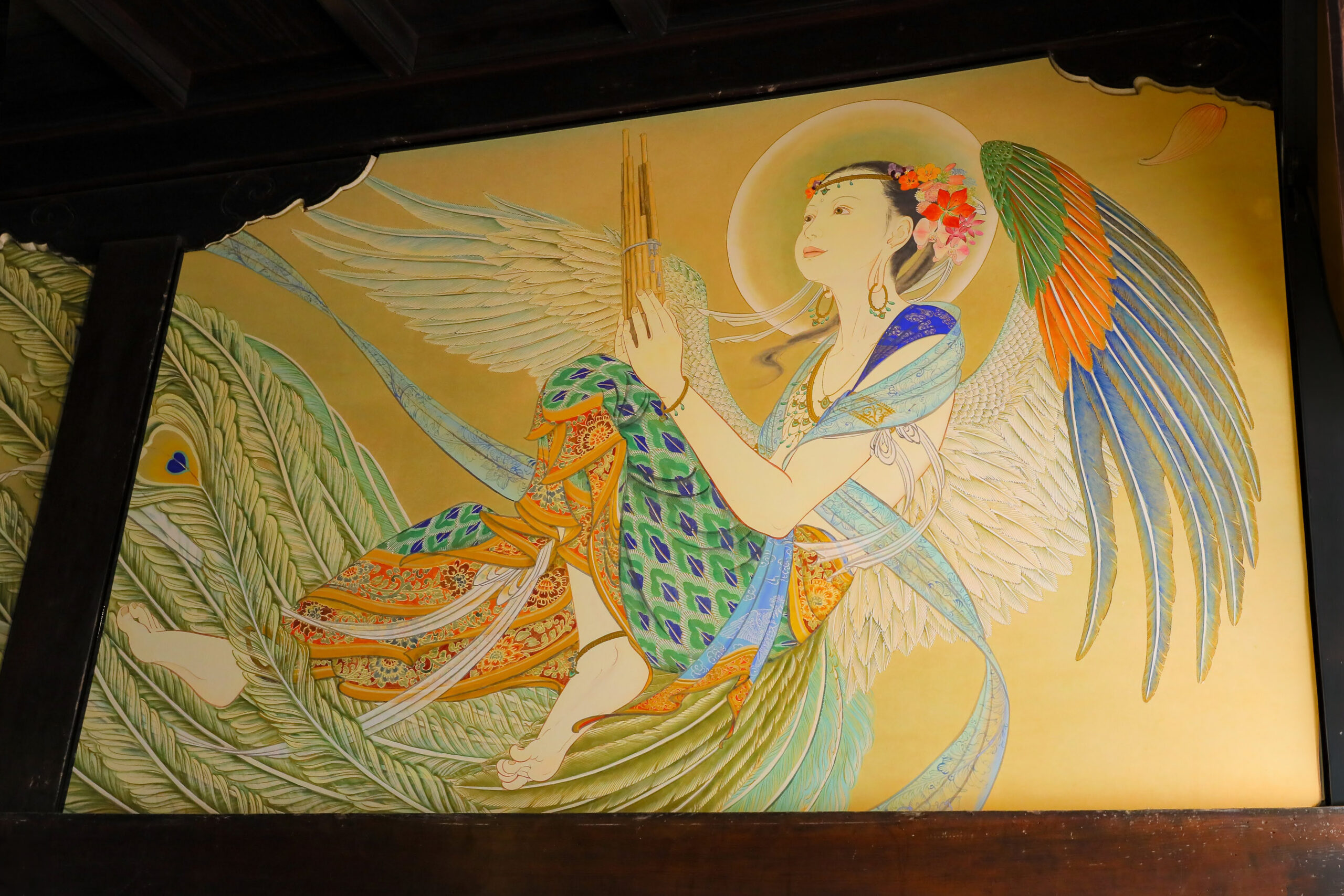
Born in Osaka Prefecture in 1982, Shokei Yabumoto is the 25th head priest of Sennenji Temple, part of the Yuzu Nembutsu Buddhist tradition. Founded in 1597 and associated with the Toyotomi family, Sennenji is known for ceremonies honoring dolls before they are laid to rest, rituals for severing harmful ties, and paintings of kalavinka—celestial beings in Buddhism celebrated for their beautiful voices—which the temple describes as “Japan’s most beautiful.”
Under the name Neko Bozu, he shares messages from the temple’s noticeboard and photographs of neighborhood cats on X (formerly Twitter) and Instagram. His combined following reached 1.08 million as of September 2026. He also participates in Sakura Neko, a community cat initiative that promotes humane population control through neutering and spaying.
His books include Osaka Sennenji Neko Bozu no Keijiban: Hito no Nayami no Hotondo wa “Hito”—Kyo no Kotoba 101 (Shufu to Seikatsu Sha), a collection of 101 messages from the temple’s noticeboard exploring how so many of our worries arise from relationships with others.
Instagram: https://www.instagram.com/sennenji1597/
How Cats and Words Transformed a Temple No One Visited
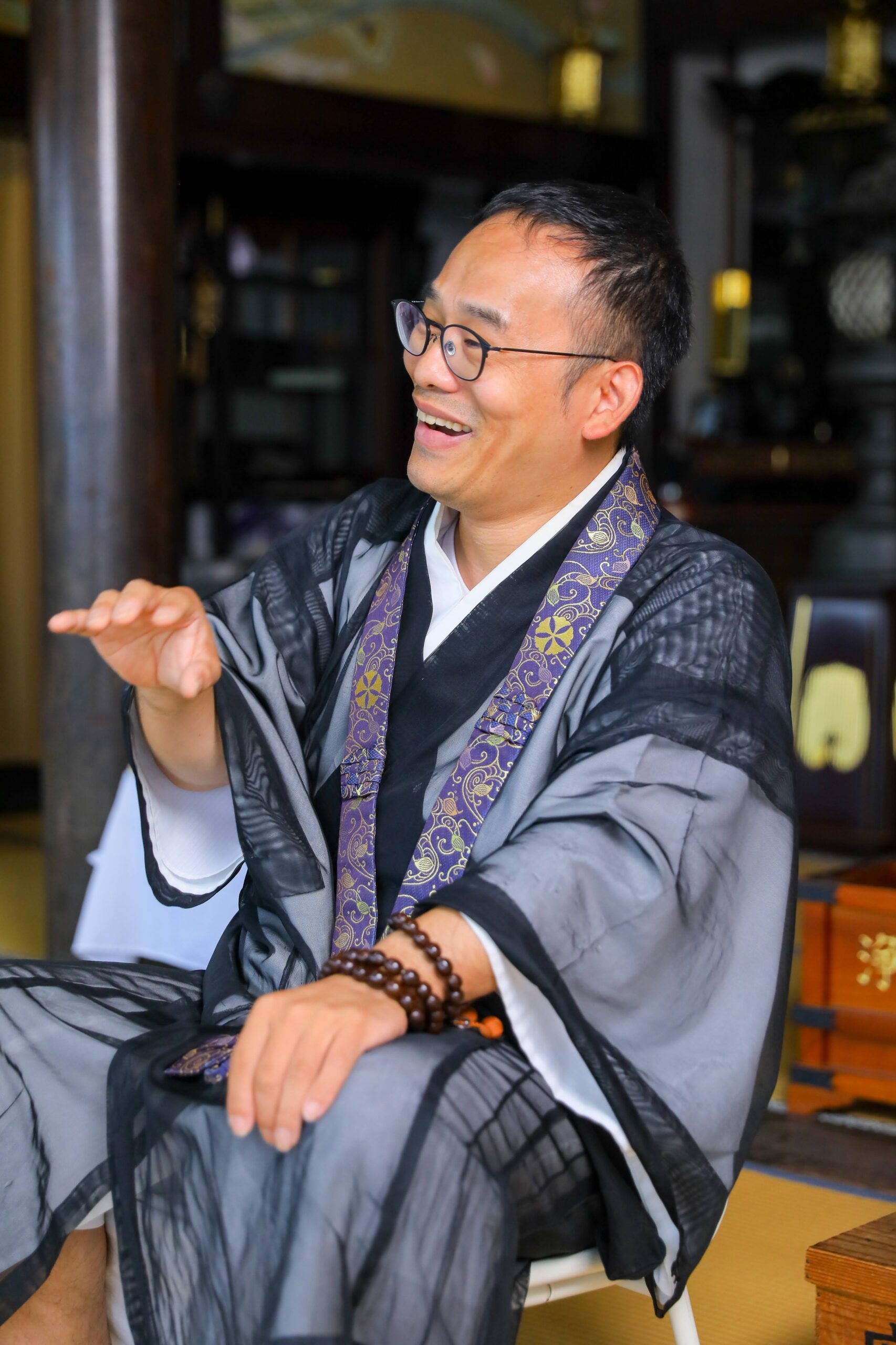
To be honest, Sennenji used to be a temple hardly anyone visited. We kept the gates closed, and only our regular member families came. Even online, we struggled to appear near the top of search results.
At one time, several dozen wealthy landowning families supported the temple. But as inheritance and other changes led more people to close up their family homes or have their family graves removed, that number gradually declined. Then the pandemic dealt us another blow. Funeral practices changed, and the temple’s finances became even more precarious. People say there may be only half as many temples in 20 years. I felt a real sense of urgency: ‘I don’t want us to be among the half that disappear! We can’t carry on like this.’
That was when I thought of using social media. I decided to make a serious effort with the temple’s accounts and began learning a little at a time, asking questions and seeking advice on Clubhouse, which was popular then.
But taking and posting photos of the temple every day gave me much the same picture each time. More importantly, they weren’t exactly eye-catching. So I decided to share the words I put up each day on the noticeboard outside the temple.
At first, things didn’t go as well as I’d hoped. As I wondered how to reach more people, I noticed that posts featuring cats were getting a lot of attention. I have cats myself, and I’m also involved in sakura neko, a community-cat neutering initiative.
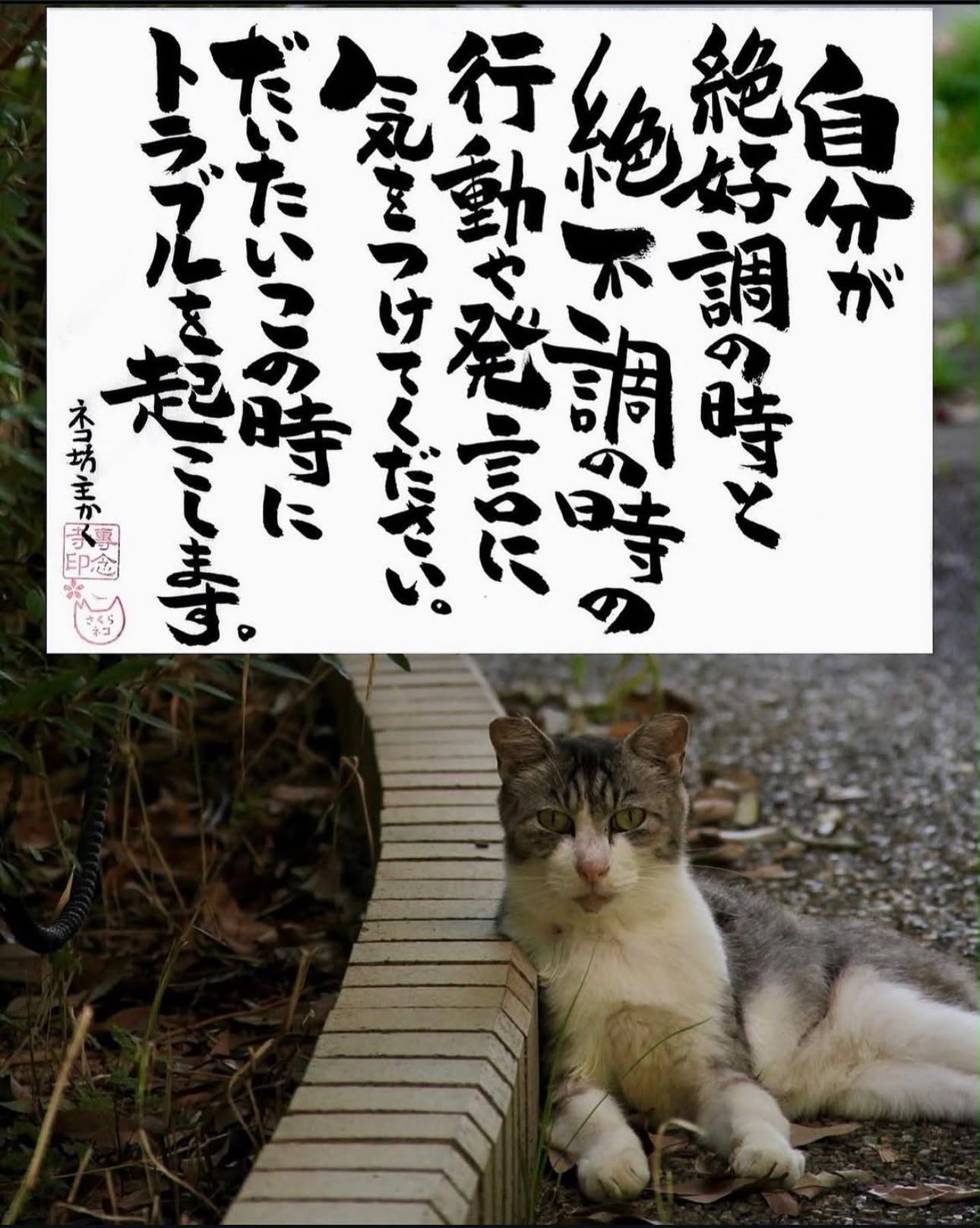
I thought that pairing cats with handwritten messages might make each more powerful. I changed my posts, and little by little, people began responding.
What really gave us momentum was a chance turn of events.
Until then, I’d been posting one cat photo alongside several images introducing our goshuin, temple seals accompanied by handwritten calligraphy. Then I caught a cold and couldn’t prepare the usual posts, so I put up ten cat photos instead. They went viral almost immediately. In just a week or two, my following on X grew from around 400 to more than 150,000.
After that, television and newspapers featured us. I kept posting regularly, and my Instagram following eventually reached 450,000. I also received publishing offers from 45 publishers and was able to publish books with three of them at the same time.
The Path to Becoming a Head Priest Began with Wanting to Help Others

The circumstances that led me to take over this temple go back to my childhood and what happened in our family.
I lost my father when I was seven. After that, we moved to Sennenji, my mother’s family home. My grandmother helped support my sister and me as our mother raised us on her own.
At the time, the temple had no successor. My grandfather, the previous head priest, died at 65, but my mother’s older brother, who belonged to the next generation, had reached his thirties without being involved in temple life. You can’t suddenly tell someone to take over and expect them to do it. He left the temple for the sake of his own family, leaving it without a head priest.
The temple isn’t our personal property, so when there is no head priest, the denomination’s head temple, the equivalent of a head office, sends someone to fill the position. In fact, of Sennenji’s 25 head priests, only four inherited the role through family ties. Partly because Buddhist monks weren’t allowed to marry until the Meiji era, the other 21 were appointed through a teacher-and-disciple system.
With my grandmother still living there and no head priest in place, the temple couldn’t welcome a new one. Member families who wanted someone appointed began asking, ‘Are you going to choose a successor, or are you going to leave?’ But if a priest came from elsewhere, my grandmother and the rest of us would all have to move out.
Around that time, at my elementary school graduation, I was asked what kind of person I wanted to become. I answered, ‘I want to help people.’ My mother told my uncle, her older sister’s husband, who was the head priest of another temple in the same Buddhist tradition. He said, ‘If that’s how he feels, he’d be suited to temple life. I’ll serve as Sennenji’s head priest alongside my own duties until he’s ready to take over.’
Our relatives then gathered to discuss it, and I was asked how I felt. I thought it over for a few days and decided to succeed him. A big part of my decision was knowing that otherwise we would have to leave our home. I also felt grateful to my grandmother for helping to raise me.
I found out later that my uncle had been paying the temple’s income to our family as a salary and arranging repairs to our home. After someone has done that much for you, saying you won’t take over hardly feels like an option. In a way, perhaps he did a very good job of brainwashing me! [Laughs]
That uncle later became my teacher.
My Training Years, When People Teased Me by Calling Me ‘Ikkyu-san’
I began training when I was 13. Each year, I gave up time from my summer and winter holidays to spend a week or two at our head temple, completing the training in stages, much like earning course credits. The rest of the time, I led an ordinary life. After ten years of that training, I was qualified to take over the temple at 23.
All my memories of the training itself are happy ones. There were plenty of other children around my age. The only painful part I remember was how much my legs hurt from sitting in seiza, the traditional kneeling position. These days, though, I can sit that way for two hours without any trouble.
At school, I kept it a secret that I was going to become a Buddhist priest. From junior high onward, friends would see me taking part in temple ceremonies or notice that I had shaved my head for training, and they would tease me: “It’s Ikkyu-san!” They meant the famous young monk. So right through high school, I didn’t tell anyone I was going to become a priest. It was only after I entered a Buddhist university that I felt able to speak openly about who I was. Everyone around me was in the same situation.
The Better Things Go, the Harder I Can Fall
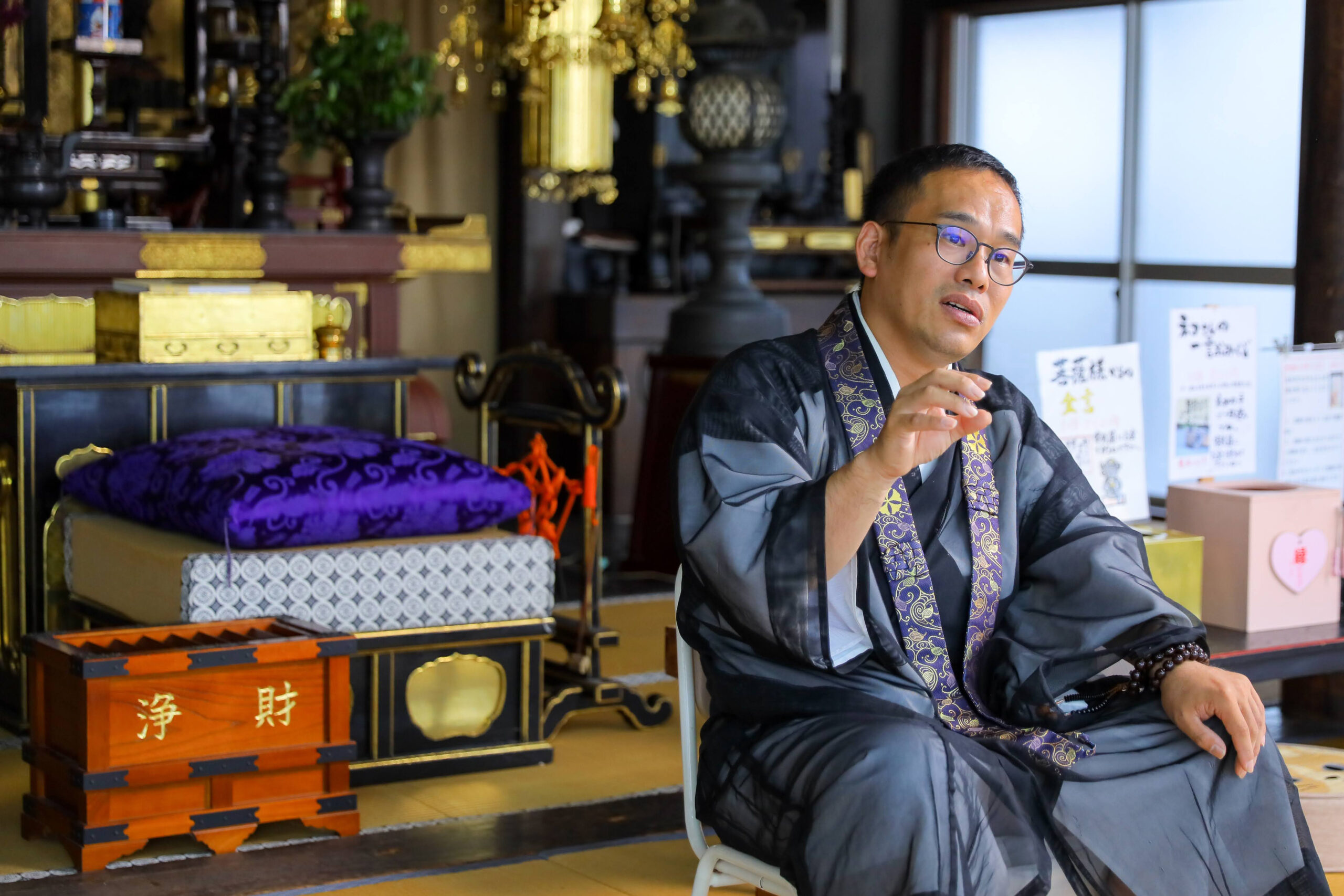
I aim to write one message for the noticeboard each day and post it on social media. If someone says something that strikes me in conversation, I make a note of it. Over time, I’ve gradually learned what kinds of words resonate with people. To be honest, posts that mention envy or sound a little spiteful get a good response. But I hold back, because if that were all I posted, I’d become a priest known for stirring up controversy online.
I also try to put words on the noticeboard that serve as reminders to myself. That’s because I often come crashing down just when things are going well. The better things are going, the more careful I need to be. I have to keep learning from everything. That’s the attitude I try to maintain.
Even When People Say, ‘You’re the Only One Who Does That’
I’ve done things that make people say, ‘You’re about the only person doing anything like that.’ For example, I made it possible to give offerings through cashless payment services such as PayPay. There are around 400 temples in our Buddhist tradition, and I think we may be the only one doing this. Most offerings still come in coins, but visitors from overseas don’t use cash, so we need to keep up with the times. Speaking of offerings, theft from the offering box happens quite often, in the daytime, in the evening, even in the middle of the night. I’ve actually chased thieves around myself! [Laughs]
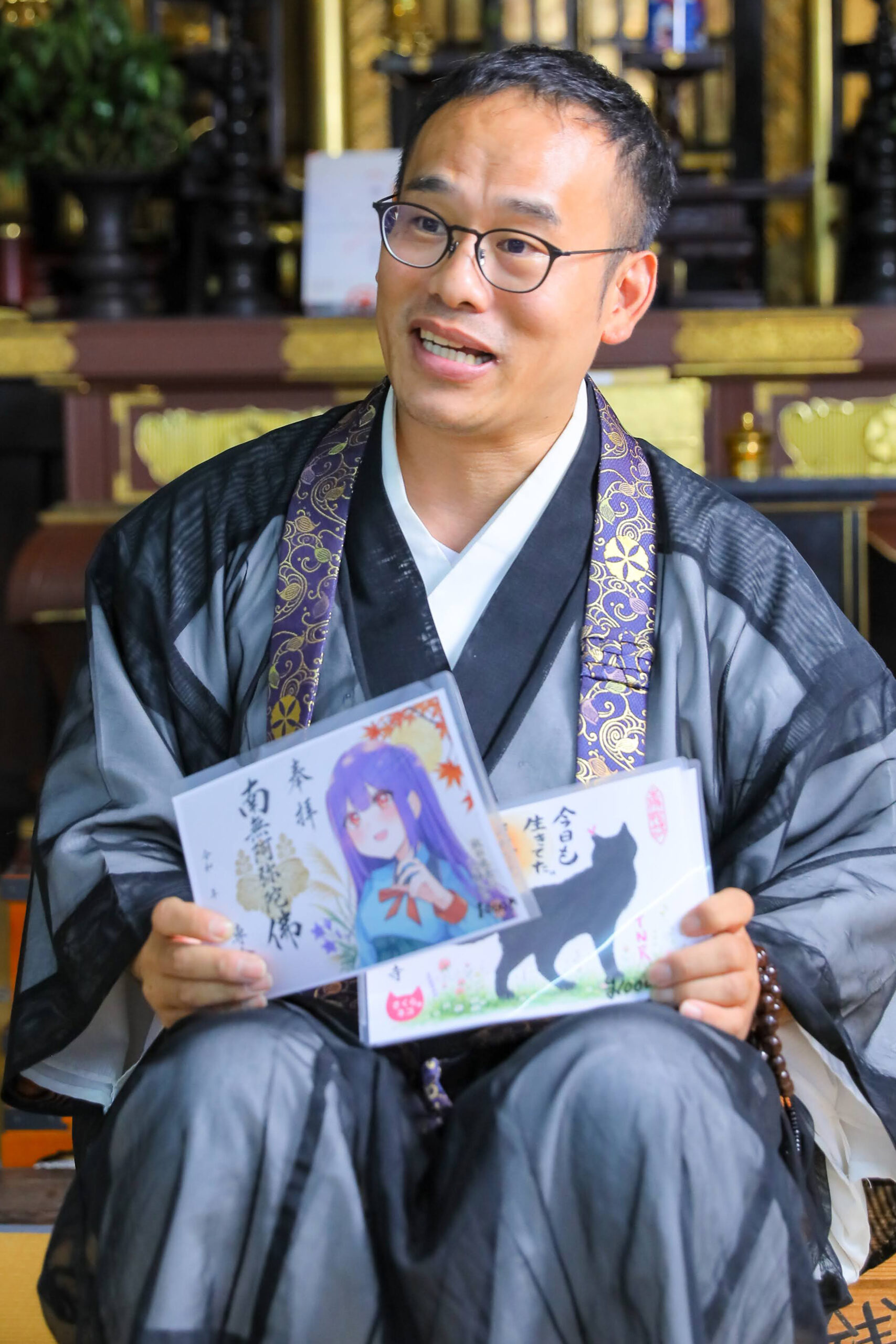
Another example is our goshuin with full-color illustrations. We develop each original design from scratch, and I write a message by hand to go with it.
The ritual we hold in the temple grounds to sever harmful ties has also changed with the times. Originally, it was intended to break ties with illness. These days, many people want to end difficult relationships. They make a cut while thinking of the ties they wish to sever, then burn what they have cut.
Taking on the Future
I had been aiming for a total of one million followers across my accounts, and I’ve now reached 1.08 million (as of the September 2026 interview), so I’ve achieved that goal. These days, social media actually brings in more income than book royalties and other sources. I’m saving all of that income for repairs to the temple. The work will cost around ¥120 million, with the roof tiles alone accounting for ¥40 million to ¥50 million. I want to repair the main hall and pass it on to the next generation in good condition. That’s my next goal.
My son, who may become the 26th head priest, is five now. A temple doesn’t need two head priests, so while I’m still healthy, I want him to be free to find a job elsewhere or pursue a different line of work. But I hope to make this the kind of temple, and to be the kind of father, that would naturally make him think, ‘I’ll take over from Dad,’ if I became unable to carry on.
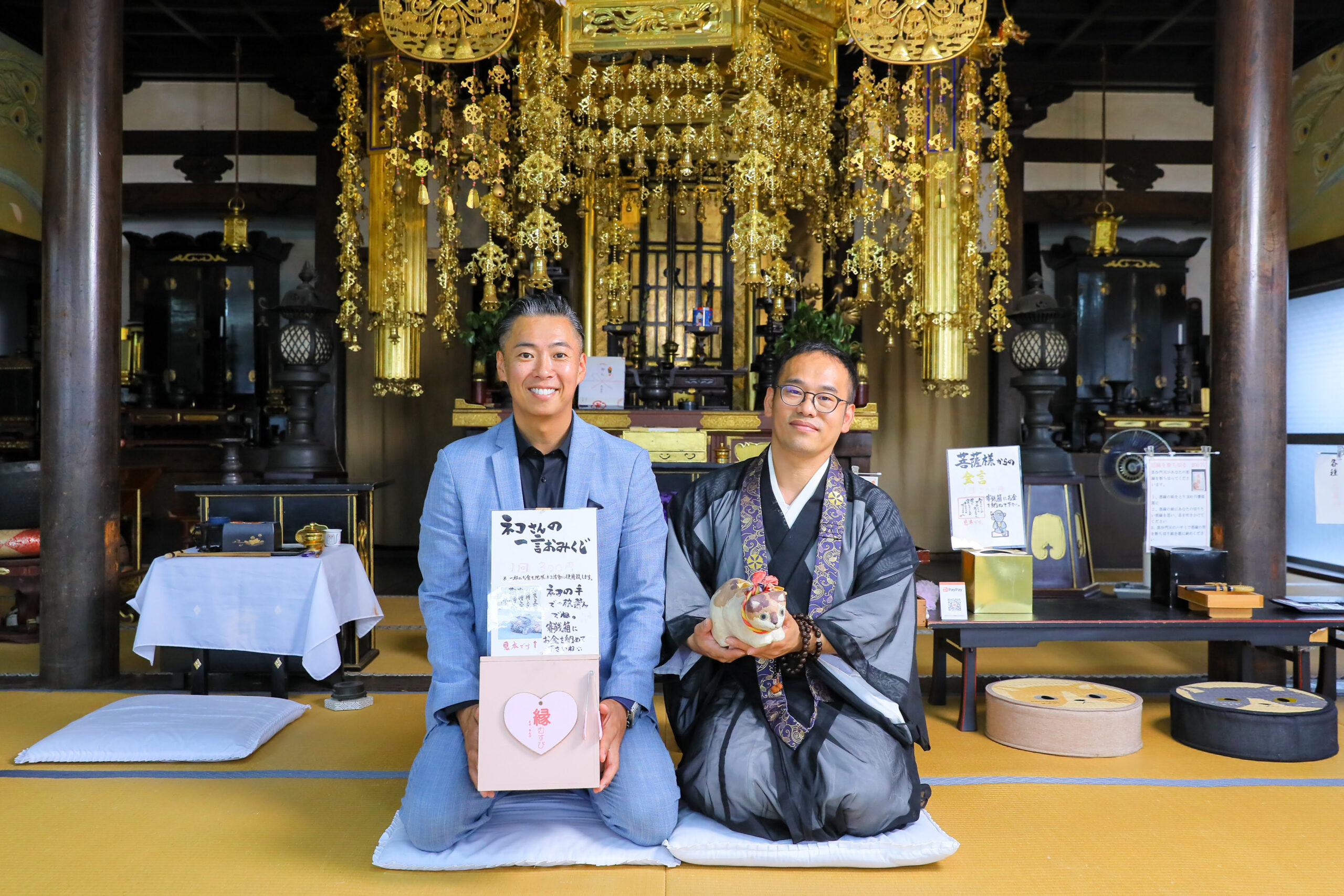
Being interviewed by DK Sugiyama gave me a valuable opportunity to look back on my life so far.
To be honest, I wondered whether anyone would really be interested in the story of an ordinary Buddhist priest like me. I didn’t take over the temple because I had some noble ambition from the start. It began with wanting to protect the place where my family lived.
Even after I became head priest, things were far from smooth sailing. I started using social media simply because I wanted to do something about a temple that no one visited. I never imagined then that more than a million people would come to see what I shared. And to think that the turning point came when I caught a cold and posted nothing but cat photos! You really never know what life will bring. [Laughs]
Talking with Mr. Sugiyama reminded me that it was my failures and detours, more than my successes, that made me who I am today.
‘My Philosophy’ sounds a little grand. I still have a great deal of growing to do as a person. I know I’ll keep making mistakes, but I want to continue caring for the temple and sharing what makes Buddhism so compelling.
I hope this interview will encourage people to take an interest in temples and Buddhism.
Mr. Sugiyama, thank you for this opportunity.
25th Head Priest of Sennenji Temple, Yuzu Nembutsu Buddhist Tradition
Shokei Yabumoto
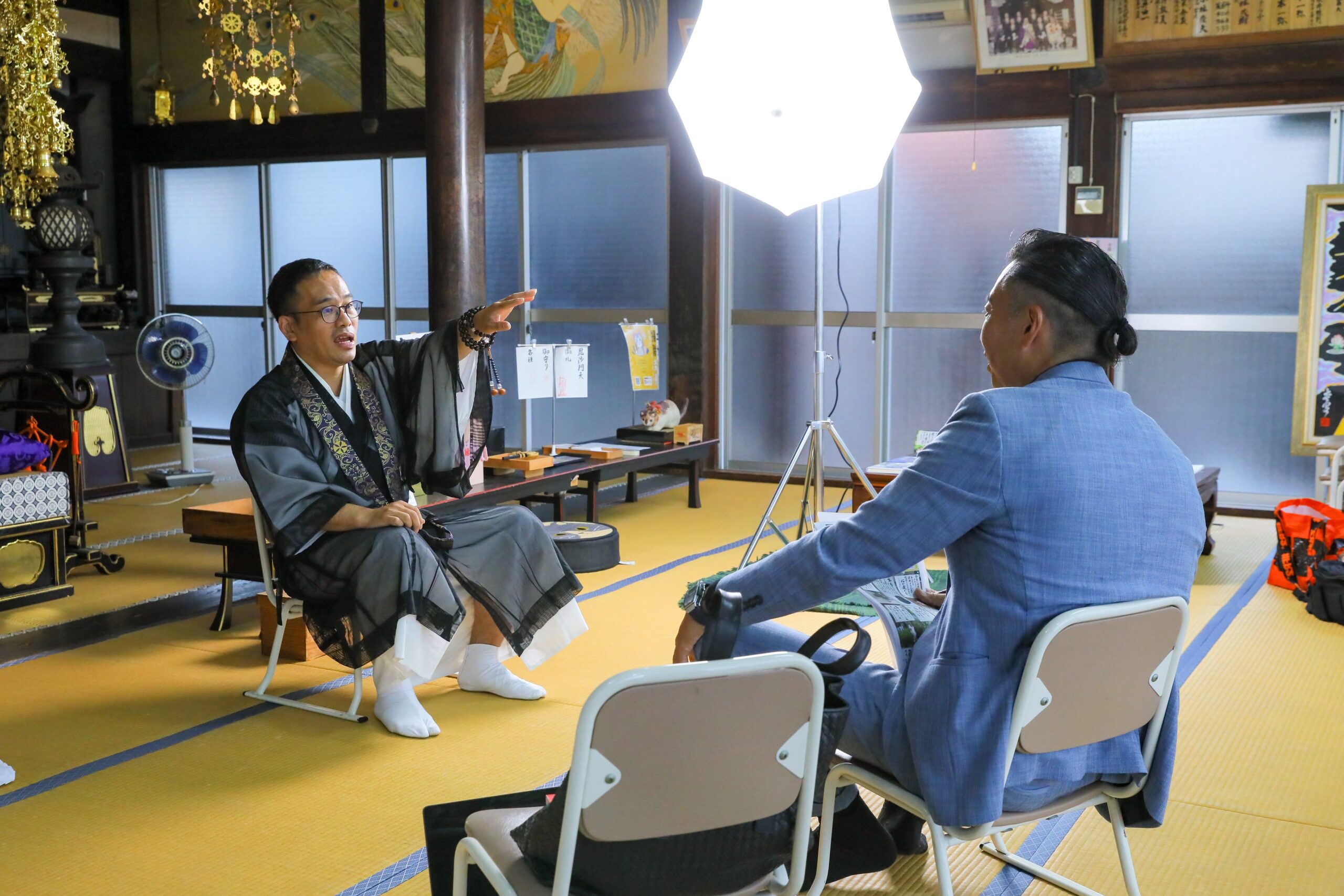
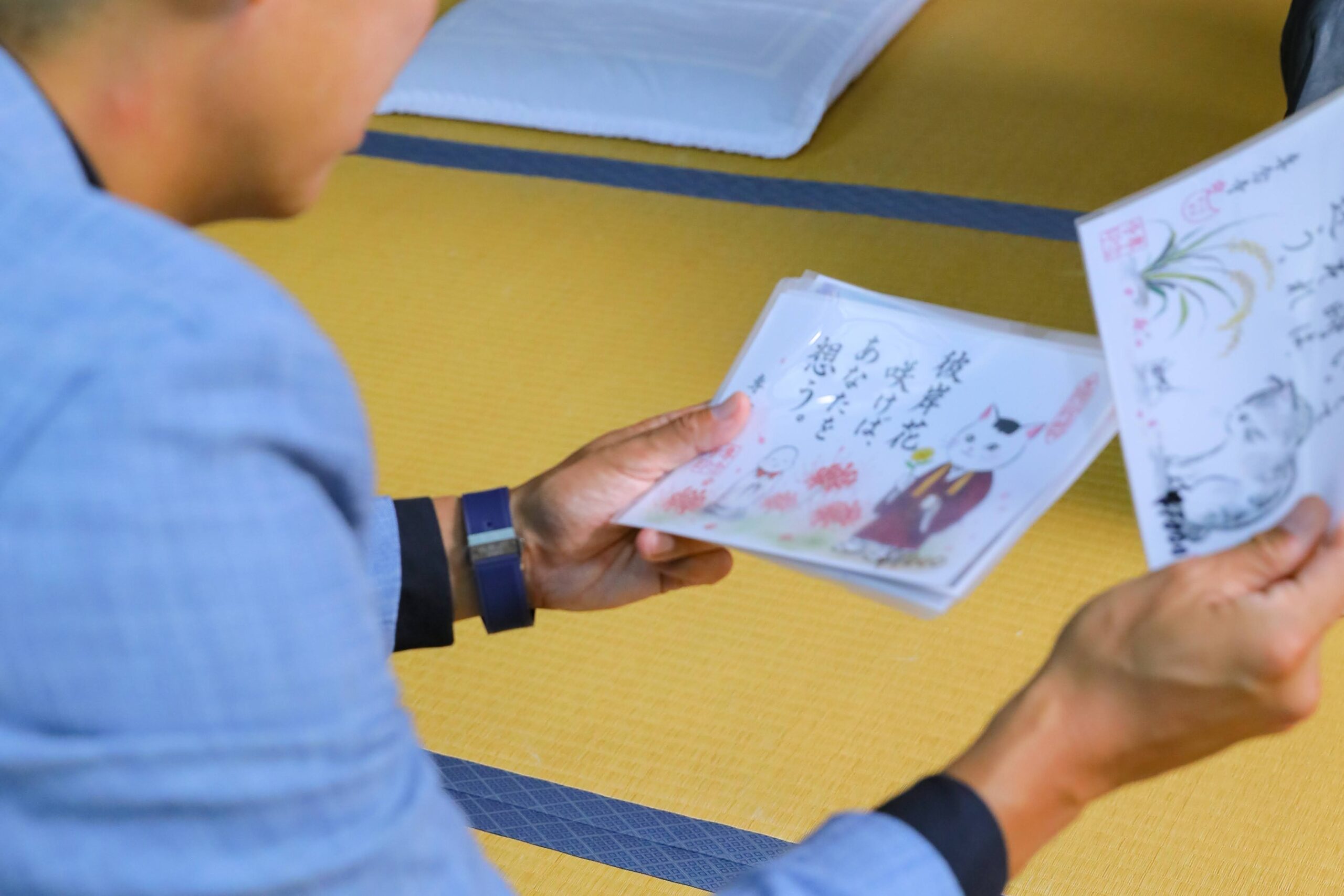

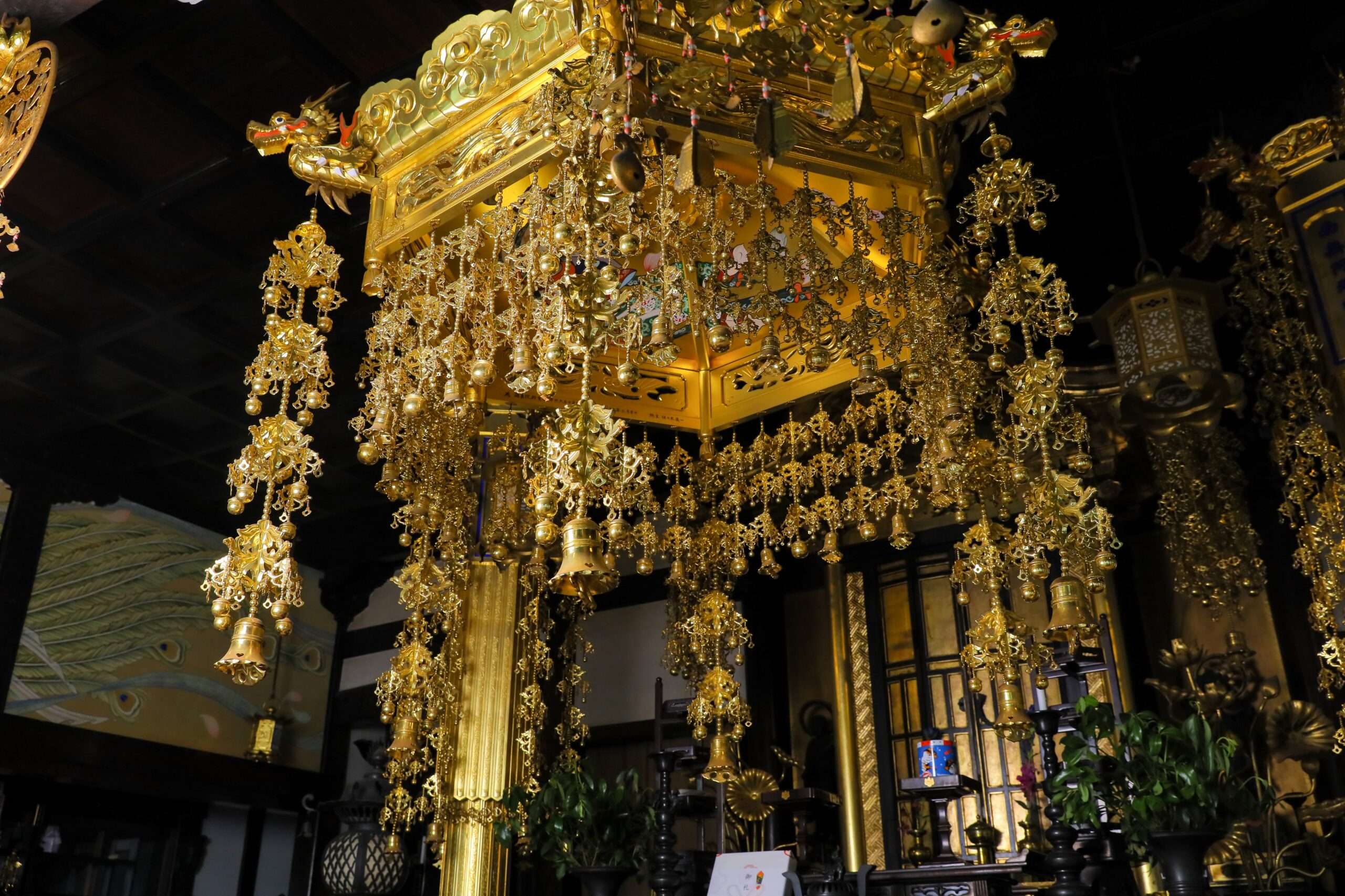
I have been following Neko Bozu, the “Cat Monk,” on Instagram for some time. I have always loved words, and his posts have so often made me think, “That makes sense,” or “That’s exactly right,” that reading them has become part of my daily routine. I have also long been drawn to the thoughtful messages displayed on noticeboards outside Buddhist temples.
I began to wonder: What kind of person is Mr. Yabumoto, the man behind these words? Looking into his story, I learned that he had lost his father at a young age and had reached where he is today with the support of those around him. That set off my familiar “I’d love to meet this person” radar. I sent him a direct message on Instagram, he warmly agreed to an interview, and I was off to Osaka for a day trip!
All four of my children attended Buddhist-affiliated kindergartens. I have also had opportunities to study Buddhism myself, and its way of thinking resonates deeply with me. Perhaps one reason I am drawn to Buddhist teachings is that they invite us to reflect on our everyday lives and our relationships with others.
When he became concerned about the temple’s future, he taught himself how to use social media, combining photographs of cats with handwritten messages and learning through trial and error. To carry a tradition forward, he has adapted to the times and taken action himself. And even when things are going well, he reminds himself to stay mindful and keep learning. That approach has relevance far beyond running a temple; it speaks to the way we approach our own work, too.
When something interests me, I look into it. When I want to meet someone, I reach out. Once again, that simple step led to a new connection. Sitting down with someone allows me to hear the stories behind their words—stories I could never discover simply by reading their social media posts. That is one of the joys of conducting interviews for My Philosophy.
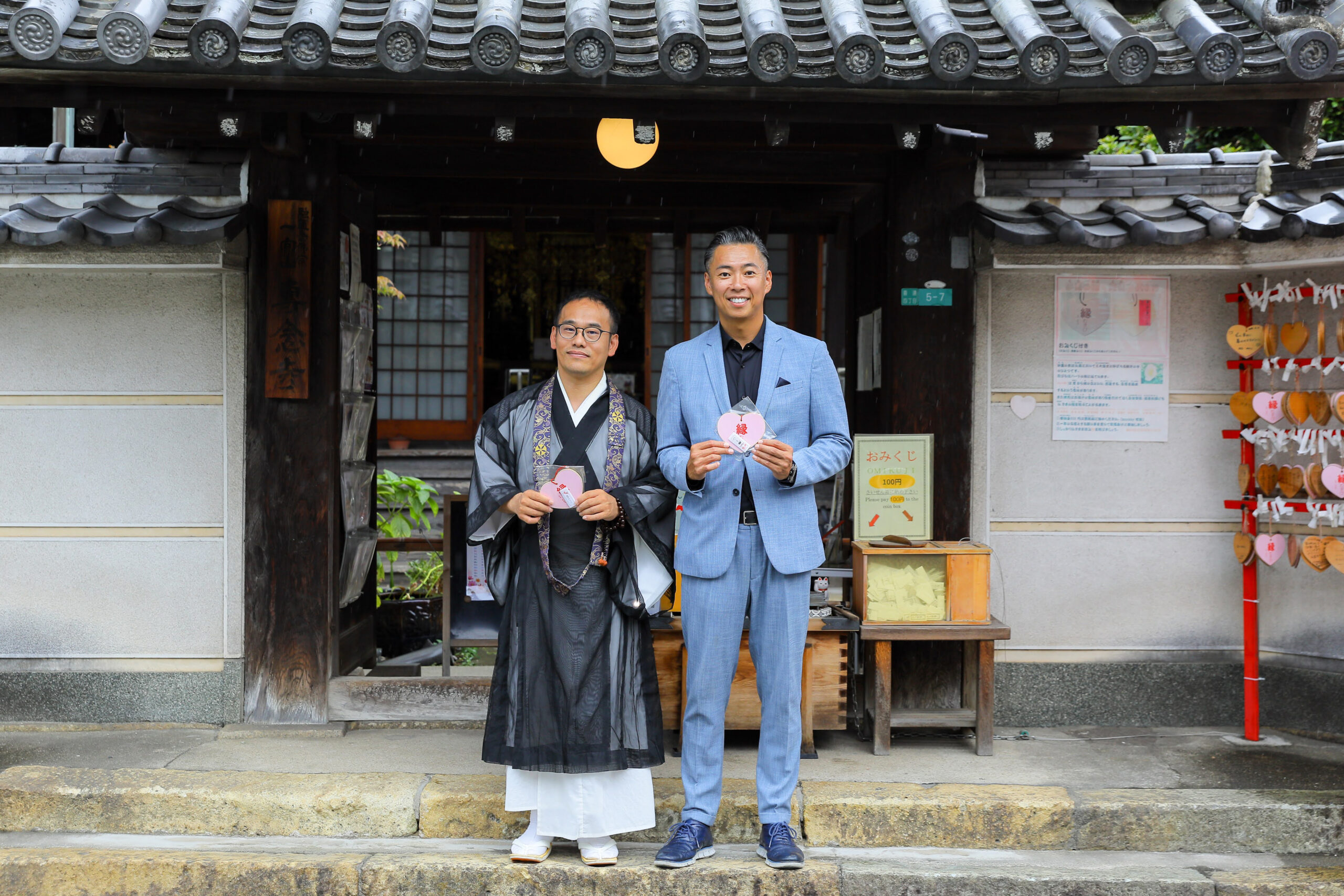
Mr. Yabumoto and I even posed together with a heart-shaped ema, a wooden wish plaque—a lighthearted moment to remember!
I am grateful for this connection, which began with words.
DK Sugiyama, Editor-in-Chief, My Philosophy
September 2026
At Sennenji Temple
Interview and Editing:DK Sugiyama
Project Manager: Chiho Ando
Words: Eri Shibata (Deputy Editor-in-Chief, My Philosophy)
Photography: Shinya Yamanaka
Produced by the My Philosophy®Editorial Team
Milestone (2007~)
View all Interviews
-
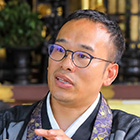
Vol.131 Shokei Yabumoto
25th Head Priest of Sennenji Temple
Yuzu Nembutsu Buddhist Tradition -
Vol.130 Mihoko Yamasaki
Creator of a Walking Method for Better Posture and Gut Health
-
Vol.129 Anis Uzzaman
Founder and CEO, Pegasus Tech Ventures
Founder and Chairman, Startup World Cup -
Vol.128 Nicolai Bergmann
Flower Artist
-
Vol.127 Hideki Wada
Psychiatrist
-

Vol.126 Hiroki Ogawa
General Manager, UMITO Kamakura Koshigoe|Chef, Le RESTAURANT
-
Vol.125 Seiichi Okada
Owner & Vice Chairman, Medical Corporation Seiseikai Inokuchinoma Hospital
President & CEO, Okada Medical Investment Co., Ltd. -
Vol.124 Masato Kato
President & CEO, Bechstein Japan Co., Ltd.
Klavierbaumeister -
Vol. 123 Akiko Yamamoto
Japan President, Van Cleef & Arpels, Richemont Japan
-
Vol.122 Akimi Fukuhara
Pianist
-
Vol.121 Sammy Miyamoto
Hairstylist & Entrepreneur / President, “momotaro salon”
-
Vol.120 Ryotaro Muramatsu
Artist / Founder of NAKED, INC. / Visiting Professor at Osaka University of Arts / Branding Director of Achi Village, Nagano
-
Vol.119 lecca
Singer-Songwriter
-
Vol.118 John Tanzella
President / CEO of the International LGBTQ+ Travel Association (IGLTA)
-
Vol.117 Marin Alsop
Conductor
-
Vol.116 Hajime Kinoko
Modern Artist, Kinbakushi (Rope Master), Rope Artist, Photographer
-
Vol.115 Shintaro Koizumi
Out Japan Co., Ltd Chairman
SK Travel Consulting Co., Ltd (Out Asia Travel) President
International LGBTQ+ Travel Association (IGLTA) Ambassador to Asia -
Vol.114 George Fujisawa
George Fujisawa, President of Fluid Power, Ltd.
-
Vol.113 Kazumi Arikawa
President, Albion Art Co., Ltd.
Founder, Albion Art Jewelry Institute
Chevalier of the Ordre des Arts et des Lettres (French Republic)
International Council Member, Metropolitan Museum of Art (New York) -
Vol.112 Leslie Kee
Photographer
-
Vol.111 Mitsuyuki Takada
President and CEO of Albalkan Corporation
-
Vol.110 Koji Sato
Head Chef of Yamagata Kappo Akasaka Ajisai
-

Vol.109 Krishna Ramachandra
Founder and Non-Executive Chairman of Digital Insights Ventures
-
Vol.108 Marc Einstein
Chief Analyst of ITR Corporation
-
Vol.107 Kentaro Sakai
President and CEO of Sakai Fish Farm Co., Ltd.
-
Vol.106 Ryuki Narita
President of Narita Koi Farm Co., Ltd.
-
No.105 Yoshihiro Tsumura
President and Group CEO, Aderans Co., Ltd.
-
Vol.104 Takatoshi Maruo
"Bali's Aniki (*Big Brother)"
-
Vol.103 Takashi Shimokawa
Principal of the preparatory school "Bulkan Juku" | President and CEO of Tass Group
-
Vol.102 Sayuri Yamaguchi
Ginza "CLUB GRÈS" Owner Mama
-
Vol.101 Koji Yamamoto
President and CEO of Global Partners Inc.
-
Vol.100 Tetsuo Gyotoku
Director of the Japan BE Research Institute
-
Vol.99 Kiyoshi Murano
Philosopher and Astronomer | Futurist
-
Vol.98 Hiroshi Yaegashi
Catalyst | Business Creator
-
Vol.97 Hiroyuki Sasaki
Chairman, Group Representative & CEO Pro Labo Holdings Co., Ltd.
-
Vol.96 Satoshi Yamaguchi
Chairperson of the Chitose Koyukai Social Welfare Corporation
-
Vol.95 Hideko Suzuki
Doctor of Literature | Critic
-
Vol.94 Kiyoshi Kurokawa
Doctor of Medicine | Honorary Professor at the National Graduate Institute for Policy Studies | Representative Director of the Health and Global Policy Institute
-
Vol.93 Hiroshi Senju
Japanese Painter | Professor at the Graduate School of Kyoto University of the Arts and Design
-
Vol.92 Takashi Yamane
Management Scholar | Certified Public Accountant | Professor at Waseda University Graduate School of Business and Finance (WBS) | Emeritus Professor at Keio University
-
Vol.91 Kazuo Noda
Honorary Chairman of the Japan Research Institute, a general incorporated foundation | Honorary Chairman of the Social Development Research Center, a general incorporated foundation | Honorary President of Tama University | Honorary President of The Graduate School of Project Design
-
Vol.90 Goichi Okada
Sales Office Manager, Prudential Life Insurance Co. | Senior Consulting Life Planner
-
Vol.89 Tatsumitsu Yamazaki
Honorary Chairman of the Japan Sailing Federation | Former Chairman of S&B Foods Inc.
-
Vol.88 Rick Blangiardi
Hawai‘i News Now Manager
-
Vol.87 Timothy Cottrell
Head of School, ‘Iolani School
-
Vol.86 John Gotanda
President of Hawai‘i Pacific University
-
Vol.85 George Ariyoshi
Former Governor of Hawaii
-
Vol.84 Taro Yoshida
President and CEO, Hawaii Hochi Ltd.
-
Vol.83 Naoki Kusano
President, HANAKEN | TOKYO TONKOTSU RA-MEN BANKARA Founder
-
Vol.82 Akira Kawashima
Doctor | Doctor of Medicine | Professor, Department of Acupuncture and Moxibustion, Faculty of Health Sciences, Tokyo Ariake University of Medical and Health Sciences
-
Vol.81 Reika Asai
President of Kirei Company, Inc.
-
Vol.80 Seiji Hayashi
President and CEO of Car Conveni Club Co., Ltd.
-
Vol.79 Shinichi Inoue
CEO of Peach Aviation Co., Ltd.
-
Vol.78 Katsuyoshi Fukuyama
President and CEO of Gardner Co., Inc.
-
Vol.77 Nahoko Ishikawa
Representative Director, Sixth Sense Labs, Inc.
-
Vol.76 Shin Yamagishi
Photographer
-
Vol.75 Mikio Kawai
Professional Surfer
-
Vol.74 Isao Aoki
Professional Golfer | Chairman, Japan Golf Tour Organization
-
Vol.73 Norihiko Sasaki
Executive Director, Editor-in-Chief of NewsPicks | Editor | Journalist
-
Vol.72 Yazaki Yasuhisa
Freelance Journalist | Editor
-
Vol. 71 Michael Anthony
Executive Chef, Gramercy Tavern
-
Vol.70 Kenji Takenaka
Flower Designer
-
Vol.69 Daniel T. Ebihara
Head of the New York Kendo Dojo, Entrepreneur, and Product Designer
-
Vol.68 Kyoko Gasha
Journalist | Film Director
-
Vol.67 Casey Taniguchi
President of Yomitime
-
Vol.66 Misao Ito
Writer | Art Producer
-
Vol.65 Narimasa Nakaoka
President and Representative Director, Suzukake Co., Ltd.
-
Vol.64 Takashi Sano
Chocolate Shop Owner-Chef
-
Vol.63 Toshiaki Kurosaka
Chairman of Porsche Japan K.K.
-
Vol.62 Taro Saito
Communication Designer. President and CEO of dof Inc., Co-CEO of CC Inc., Outside Director of VOYAGE GROUP Inc., Outside Director of Oceanize Inc., and Global Strategy Committee Member of the NPO TABLE FOR TWO.
-
Vol.61 Hideyuki Murakami
President and CEO of Iwataya Mitsukoshi Ltd. | Executive Vice President of Isetan Mitsukoshi Holdings Ltd.
-
Vol.60 Yoshiyuki Okuno
Owner-Chef of Ristorante La Brinca
-
vol.59 Rika Yukimasa
Culinary Researcher | CEO, REKIDS Co., Ltd.
-
Vol.58 Kazuko Tōdō
Manager and Proprietor of "Royal Box" and "Lindbergh" | Editor-in-Chief of 'LB Nakasu Newsletter
-
Vol.57 Takaharu Futaeda
CEO, Anny Group KFT
-

Vol.56 Kengo Kuma
Architect
-
Vol.55 August Hergesheimer
President and CEO of Abios Corporation | Ph.D. in Nutritional Science
-
Vol.54 Tomio Taki
Honorary Advisor, Takihyo Co., Ltd.
School Board Chairman, Taki Academy, Inc.
Board Member, Mikimoto (America) Inc. -
Vol.53 Tadashi Okura
President and CEO of Torikizoku Co., Ltd.
-
Vol.52 Hiroshi Sugimoto
Japanese Painter | Specially Appointed Professor at Yokohama University of Art and Design
-

Vol.51 Aureana Tseu
Hula Artist
-
Vol.50 Don Konishi
Fashion Designer | Visiting Professor, Nagoya University of Arts and Sciences
-
Vol.49 Sachio Senmoto
Chairman of the Board, Renova, Inc.
-
Vol.48 Naoyoshi Amari
Head Priest of Ichigyosan Senshuji Temple | Principal of Senshu Kindergarten
-
Vol.47 Takashi Maeno
Dean and Professor of the Graduate School of System Design and Management at Keio University.
-
Vol.46 Tomizo Yamaguchi
Third-Generation Head of Kyoto Confectionery "Suetomi"
-
Vol.45 Toshiharu Kokubun
Representative Director of Earth Holdings Co., Ltd.
-
Vol.44 Keita Obara
Professional boxer
-
Vol.43 Yuko Kibayashi Shin Kibayashi
Non-fiction writer and manga creator
-
Vol.42 “My Philosophy” Junki Yoshida
Chairman and CEO, Yoshida Group & Founder, Yoshida Sauce
-
Vol.41 Seisei Hanayama
Artist
-

Vol.40 Yoshiharu Sekino
Explorer | Anthropologist | Professor at Musashino Art University
-
Vol.39 Masaki Yokokawa
Representative of WELCOME Group
-
Vol.38 Tamami Sunoda
President and CEO of NOZZE (Marriage Information Center)| President, CEO, and Owner-Designer of Fashion Brand "JuviJuvi"
-
Vol.37 Shuichi Tsuji
Sports Doctor | CEO of Eminecross Co., Ltd.
-
Vol.36 Yuichiro Miura
Professional Skier | Principal of Clark Memorial International High School
-
Vol.35 Nobufumi Matsunaga
Educational Environment Setting Consultant | Founder of V-net Educational Consultation Office
-
Vol.34 Tetsu Mizutani
Suntory Beer Limited - President, Chief Executive Officer
-

Vol.33 Yukino Kikuma
Lawyer
-

Vol.32 Keiko Kouda
CEO of AsMama Co., Ltd.
-

Vol.31 Takami Hasebe
White Ship Inc. CEO | Art Producer
-

Vol.30 Aya Kinoshita
Representative Director of UHM Co., Ltd. | General Manager of Hotel Niwa Tokyo
-

Vol.29 Clara Komazaki
KoLabo Co., Ltd. Representative Director and President
-

Vol.28 Nobuko Tsutsumi
Lecturer at Showa Women's University, Aoyama Gakuin Women's Junior College, and Hosei University | Freelance Announcer | Essayist
-

Vol.27 Yu Kaida
Portrait photographer
-

Vol.26 Manabu Miyasaka
President and CEO, Yahoo Japan Corporation
-

Vol.25 Shuichiro Kimura
Representative Director of Boulangerie Eric Kayser Japon Inc.
-

Vol.24 Yohei Sadoshima
President and CEO of Cork, Inc.
-

Vol.23 Toshiaki Kanda
Representative of Kanda News Network | IT Journalist, Social Media Consultant
-

Vol.22 Emmy Suzuki Harris
Japanese Representative of Change.org
-

Vol.21 Masakazu Yanagisawa
Director of Global Prime Finance Sales at Deutsche Securities Inc. | Board Member of NPO good aging yells
-

Vol.20 Fumio Tateishi
Chairman of the Board of Directors, OMRON Corporation
-

Vol.19 Nobuyuki Idei
Founder & CEO, Representative Director of Quantum Leap Corporation
-

Vol.18 Rowland Kirishima
Photographer | Multi-Creator
-

Vol.17 Junko Masachika
Founder of Personal Styling | President and CEO of Fashion Rescue Ltd. | Dean of Personal Stylist Japan | Chairman of the Professional Personal Stylist Association
-

Vol.16 Kumiko Otsuka
President and Representative Director of Otsuka Kagu, Ltd.
-
Vol.15 Tsugihiko Fujiwara
President and CEO of AOI Pro. Inc.
-
Vol.14 Hideaki Inoue
President and CEO, Park Corporation
-
Vol.13 Edward Suzuki
Architect | Representative of Edward Suzuki Associates Inc.
-
Vol.12 Hiroshi Kato
Economist
-
Vol.11 Seiichi Shimada
Special Advisor at Nihon Unisys Ltd. | Former Chairman of the Japan Housing Finance Agency | Former Vice President of Mitsui & Co., Ltd. | Former President of Nihon Unisys Ltd.
-
Vol.10 Kanae Doi
Japan Representative, International NGO "Human Rights Watch" | Lawyer
-
Vol.9 Hitomi Kumasaka
Social Media Consultant | President and CEO of Social Media Research Institute Co., Ltd.
-
Vol.8 Yuriko Takahashi
CEO of E.OCT Inc.
-
Vol.7 Kazuhiro Hasegawa
Representative of the Corporate Power Institute | Senior Researcher at the Inter Professional Education Research Center, Chiba University of Commerce (CUC)
-
Vol.6 Kage
President and Representative Director of Caricature Japan, Ltd., and Representative Artist | Asian Ambassador for the National Caricaturist Network (NCN)
-
Vol.5 Fumi Sasada
President and CEO of BRAVIS International, Inc. | Chairman of the Japan Package Design Association
-
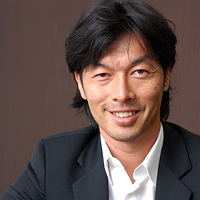
Vol.4 Kota Matsuda
Chairman of Tully's Coffee International | President of Quiznos Asia Pacific
-
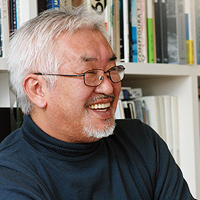
Vol.3 Shigeru Uchida
Interior Designer
-
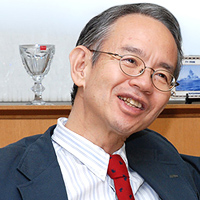
Vol.2 Naoyuki Agawa
Dean of the Faculty of Policy Management at Keio University.
-
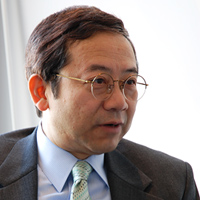
Vol.1 Hitoshi Suga
Venture Capitalist