



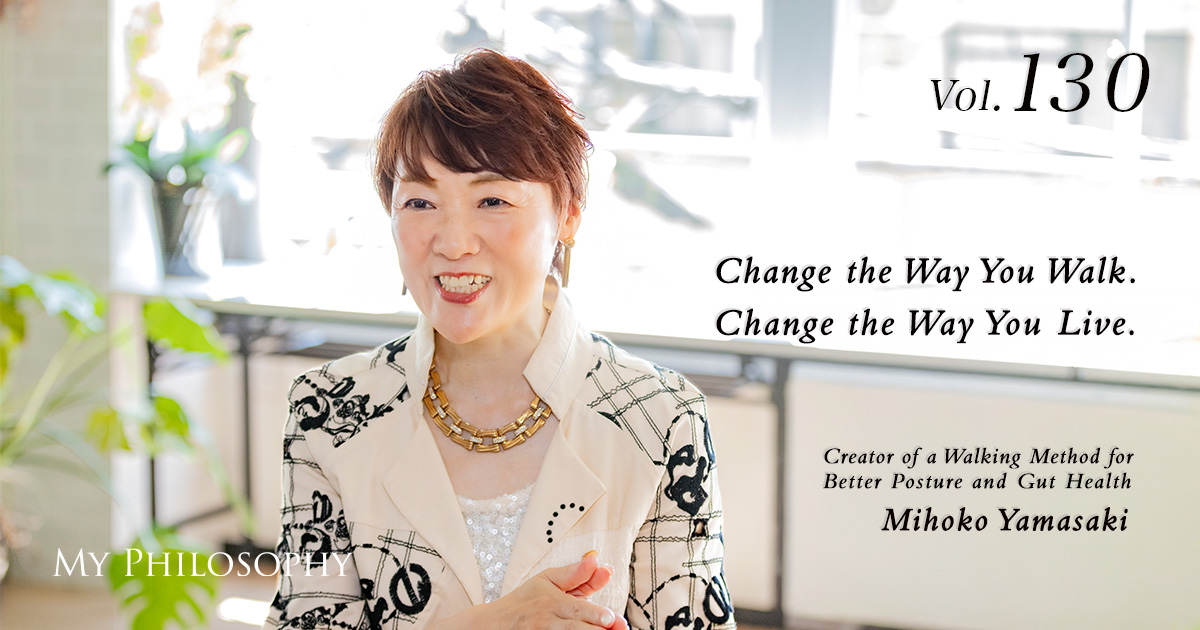
Mihoko Yamasaki is the creator of a walking method designed to improve posture and support gut health. Known in Japan as Kotsuban Chosei Walking, the method teaches proper walking technique to support healthy bowel function and help address hunched posture, bowed legs, and a protruding abdomen.
After 17 years as a full-time homemaker, concerns about her own changing figure set her on a new path—one that led her to develop the method at 50. She went on to open schools in Fukuoka, Tokyo, and Shimonoseki. More recently, she has taken her teaching online, reaching students across Japan and overseas. Her classes now draw a combined annual attendance of 18,000.
The leap from homemaker to entrepreneur, persistent losses in the early years, the crisis of the COVID-19 pandemic—none of these challenges stopped Yamasaki from moving forward. We spoke with her about the drive and philosophy that have sustained her along the way.
Profile
Vol.130 Mihoko Yamasaki
Creator of a Walking Method for Better Posture and Gut Health
Born in Shimonoseki, Yamaguchi Prefecture, in 1965, Mihoko Yamasaki moved with her family to the Kansai region, Shimonoseki, and Hiroshima as her father’s work took them to different parts of Japan. They moved to Fukuoka when she was 20. After nine and a half years at the Bank of Fukuoka, she left her job when she married and spent the next 17 years as a full-time homemaker.
At 46, she enrolled in a fitness-instructor training school. While working as a walking instructor and a therapist specializing in pelvic alignment and facial-contouring techniques, she studied the mechanics of human movement from a physical therapy perspective. In 2015, at 50, she developed her own walking method designed to improve posture and support gut health. Known in Japan as Kotsuban Chosei Walking, the method focuses on the relationship between the pelvis and the intestines. That same year, she became representative director of the Japan Posture Improvement Walking Association, a general incorporated association. In 2022, she founded Kotsuban Chosei Walking Co., Ltd.
Her work now centers on walking lessons and instructor training, delivered primarily online. She has also led numerous events hosted by major companies, universities, and local governments. Alongside her teaching, she hosts a radio program on FM Comiten, appears on television, and gives talks throughout Japan.
She is the author of Lose Weight at Last with Everyday Movement! Look 10 Years Younger with Walking for Better Posture and Gut Health (Sekai Bunka Publishing; published in Japanese; title translated).
You Don’t Need to Walk 10,000 Steps a Day
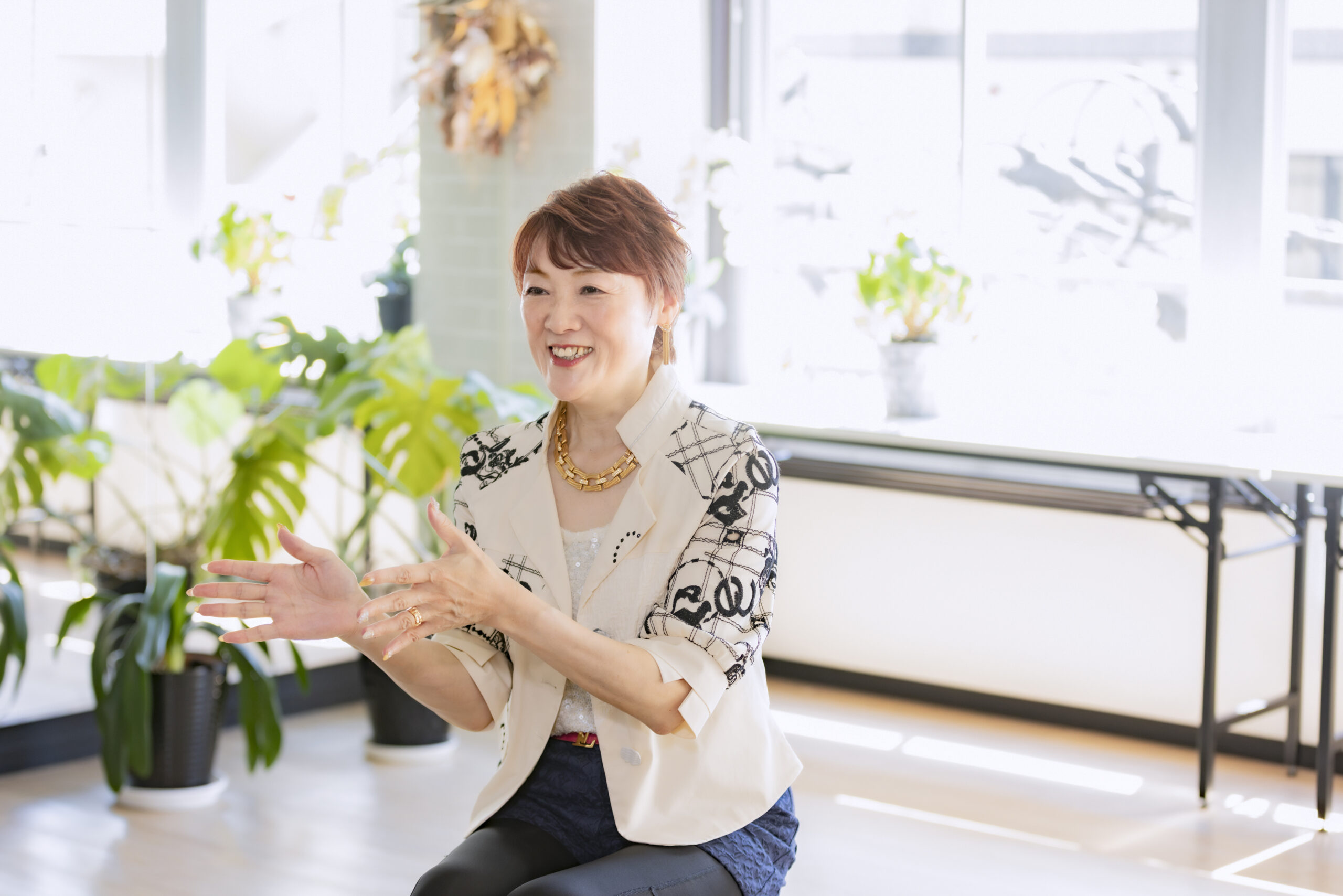
How many of us have said, “I’m trying to get my 10,000 steps in every day”?
But I don’t believe in walking simply to reach a number.
When you engage the right muscles, even a smaller number of steps can make a dramatic difference to your body.
Unfortunately, when I look around, I see very few people who walk with good form.
We have 600 muscles in our bodies. It seems such a waste to carry them around as “dead weight” instead of putting them to work.
The muscles along the back of the body are especially important.
Very few people fully engage the muscles at the back of the neck, around the shoulder blades, down the back, and through the buttocks, hamstrings, and calves. When those muscles are slack, gravity pulls the body forward, leading to a hunched posture and bowed legs. People sometimes notice their stomach sticking out and decide to work on their abs. But first, they need to wake up the muscles at the back of the body and bring themselves upright.
As your posture changes, your internal organs are lifted. Not only do those issues improve, but better skeletal alignment also gives your face a slimmer, more defined appearance. Even your expression changes. I watch people become more confident, vibrant, and youthful.
My first insight into this connection between posture and the muscles at the back of the body came from an unwelcome change in my own figure.
From the Perfect Homemaker to a Serial Dieter
“Dieting Was My Hobby. Gaining It Back Was My Specialty.”
At 20, I moved to Fukuoka when my father was transferred there for work. After graduating from junior college, I joined a local bank.
At the time, sexual harassment and workplace bullying were commonplace, and the sales targets were demanding. To be honest, I wanted to leave after my first year.
Yet just as I was about to raise it with my parents, my father was suddenly diagnosed with terminal cancer during a health check. Only a short time earlier, he had been delighted that his diet seemed to be working. He was 53. Less than a year later, he was gone. My brother and I were devastated, but my mother took it hardest. I simply couldn’t tell her I wanted to quit the bank. I was afraid it would be more than she could bear, so I put the idea aside.
Over time, staff transfers brought new people, circumstances changed, and I began to enjoy the work a little more. In the end, I stayed for nine and a half years, leaving when I married a colleague. Back then, women were expected to leave their jobs when they married, so I decided to become a full-time homemaker.
For the next 17 years, I was determined that my husband wouldn’t have to lift a finger at home. From cleaning and every other household chore to changing lightbulbs and taking out the trash, I handled it all.
I assumed I would carry on being a homemaker indefinitely. Then I ran into a problem. Between almost daily lunches with friends and potluck gatherings, I entered what you might call a “growth spurt”—only I was growing sideways.
Determined to lose the weight, I tried everything: the apple diet, the natto diet, the cabbage diet, Billy’s Boot Camp… Nothing worked. “Dieting was my hobby. Gaining it back was my specialty.” That summed me up perfectly.
Before long, I was sinking into an increasingly negative mindset: “I’m just a middle-aged woman anyway.”
Then I took up futsal, absolutely convinced that this time I would lose weight. But the gap between what I imagined and what my body could actually do was enormous. In my head, I was keeping up with the ball. In reality, I couldn’t catch it. I would step on it and go tumbling, and I kept suffering muscle strains and sprains. I began to think, “At this rate, I won’t lose weight—I’ll lose the ability to walk.”
A Healthier Way to Look Your Best: Walking for Better Posture and Gut Health
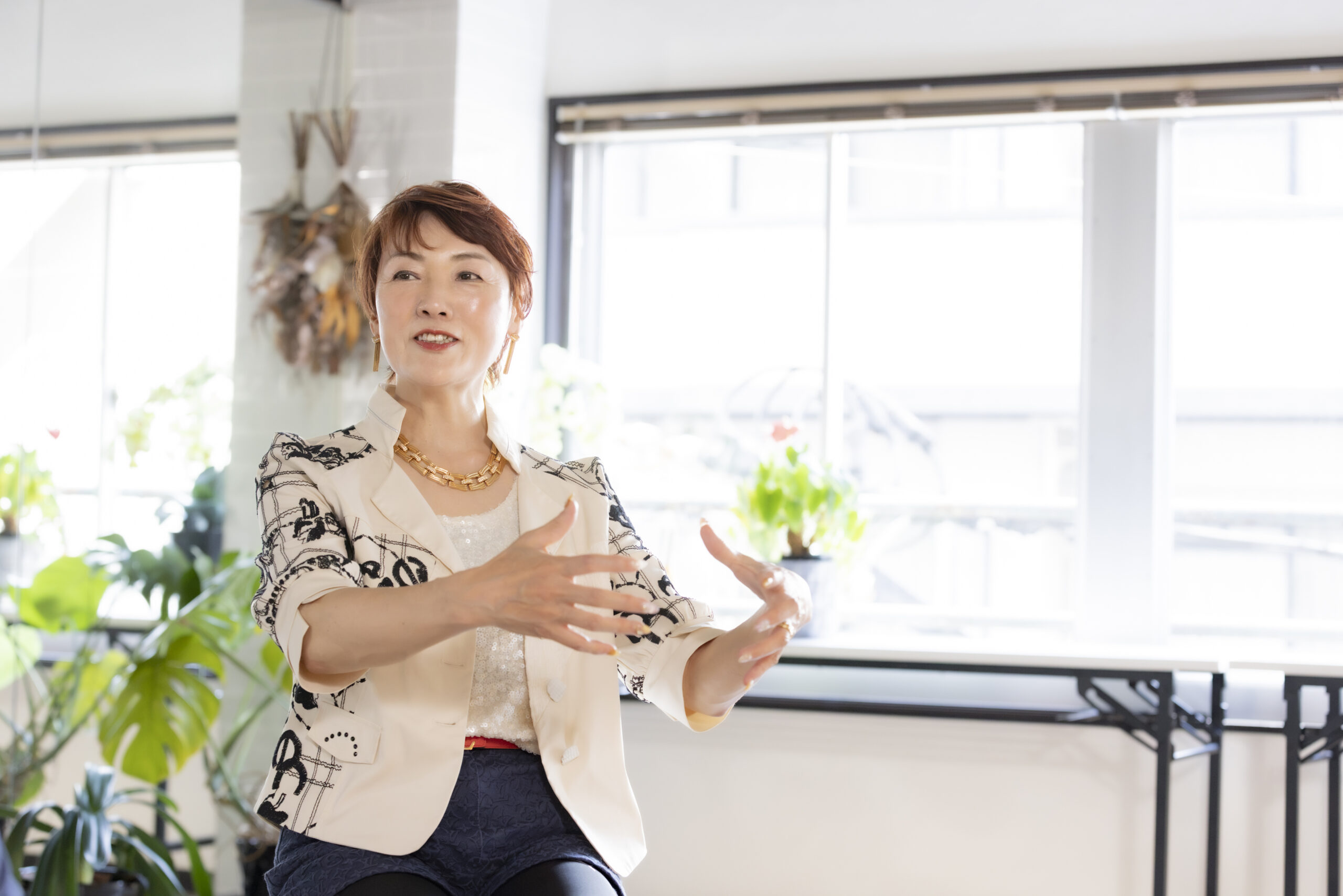
One day, a flyer for a fitness-instructor training school landed in my mailbox. Alongside exercise physiology and anatomy, the curriculum included walking. “If I go here, I can learn how to walk properly!” I thought. I promptly quit my part-time office job, took the entrance exam, and enrolled. I was 46.
I loved the walking classes from the moment they began. After graduating, I decided to work with the instructor who had taught me. But the focus was on the kind of runway walk you might see at Miss Universe. That wasn’t what I truly wanted to teach. I wanted a way of walking that brought body and mind into balance and allowed confidence to emerge from within. Once I recognized that we were heading in different directions, I decided to go out on my own.
Later, I met a physical therapist who specialized in pelvic alignment. Studying with this new teacher gave me a deeper understanding of how the body works.
“Why not combine these pelvic-alignment techniques with the walking I’ve been teaching?”
The idea suddenly came to me.
That was how, at 50, I developed my own walking method designed to improve posture and support gut health. In Japan, it is known as Kotsuban Chosei Walking.
Rather than simply saying, “Walk like this,” my approach is, “To walk like this, you need to use these muscles.” Our muscles all work together. By learning to engage different parts of the body—from the ankles to the buttocks—we build a body that functions as a team. To teach that, I divided the body into eight sections and designed my lessons around them.
From Packed Classes to Mounting Losses—and Debt
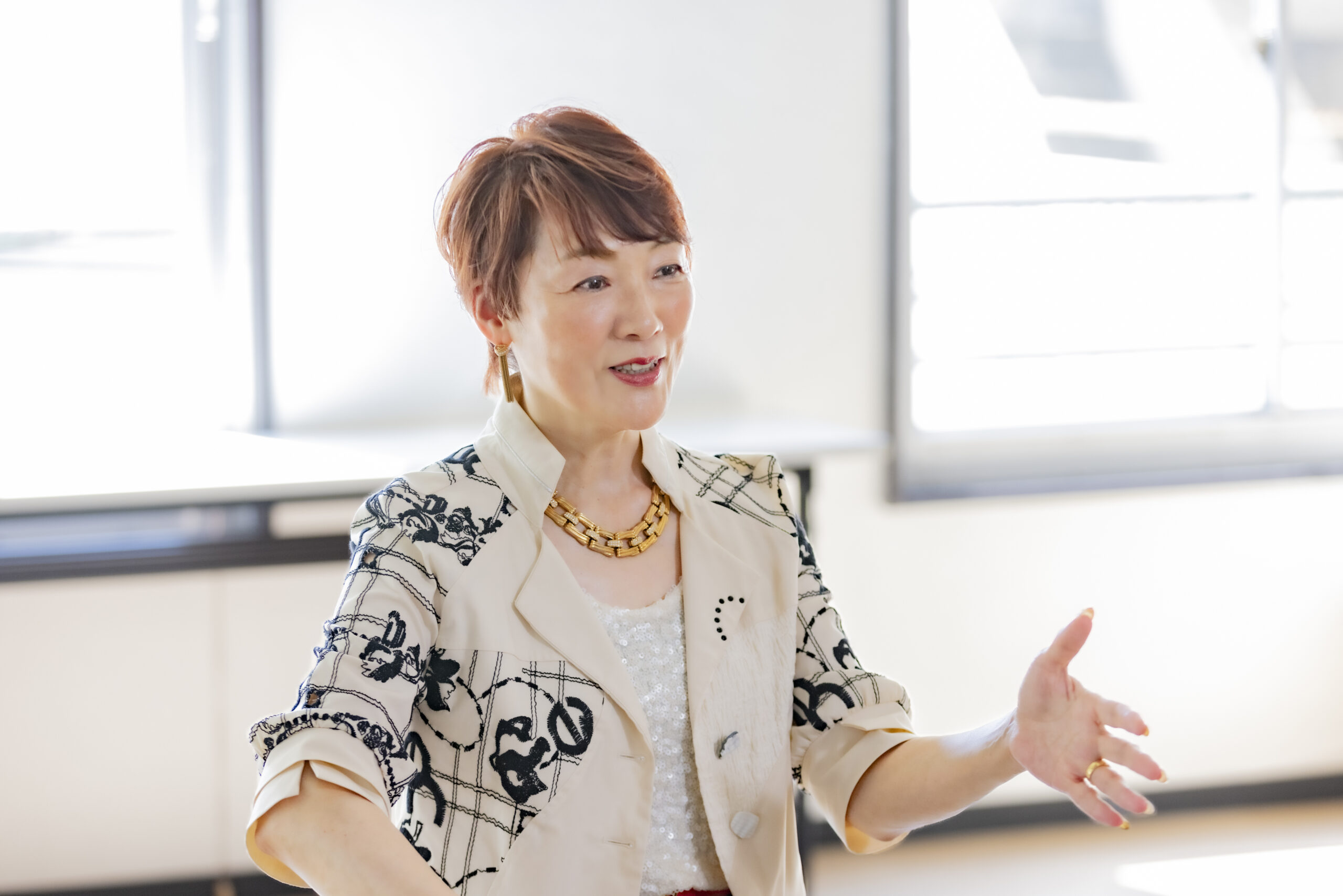
Going independent was one thing. Finding students was another. At first, I had no idea how to attract them. I rented a corner of a small café, with barely enough room to take a few steps, and started quietly with one or two students. Word of mouth gradually brought more people. Eventually, I began renting studio space in Fukuoka and training instructors, too.
At one point, someone I respected invited me to an expensive seminar outside my home prefecture. My child was still young, so I would need to arrange childcare, and having only recently been a full-time homemaker, I didn’t have money to spare. I nearly gave up on the idea. Then I thought, “If I keep using money and time as reasons not to do things, I’ll spend my whole life doing nothing.” I made up my mind and said, “I’m going!”
The seminar organizer was moved by my passion for walking and introduced me to someone at a health magazine. I immediately pitched an idea. It was accepted, and suddenly my work was being featured across 12 full-color pages.
“It’s a miracle!” I thought. Riding that momentum, I rented studio space in Nishi-Shinjuku and brought my lessons to Tokyo.
At first, the magazine coverage filled the classes. But the effect was temporary. Attendance gradually fell, and I began losing substantial amounts of money on every lesson. Still, two or three students kept coming. I decided, “As long as they’re here, I’ll keep going.”
There were plenty of painful moments: running through snowy Nishi-Shinjuku in my short-sleeved teaching clothes to find a student who had lost their way, or sitting in an empty studio, waiting for people who never came.
Then came an unexpected turning point.
Through an introduction from a student, I was given a regular column on a women’s magazine website. Everything changed. Trial classes filled immediately, and the waiting list grew to 240.
With the business growing steadily in both Fukuoka and Tokyo, I thought, “This is it. Now we’re really getting started.” I opened my own studio in April 2020.
The timing could not have been worse: it coincided with the COVID-19 state of emergency. The studio closed immediately. We couldn’t bring students in. It was just us, working quietly behind closed doors in our masks. Meanwhile, money kept draining out of my account each month to cover the high rent and repayments for the renovation work. In the end, I took out pandemic-relief loans and found myself almost ¥30 million in debt.
There Was Only One Option: Find a Way
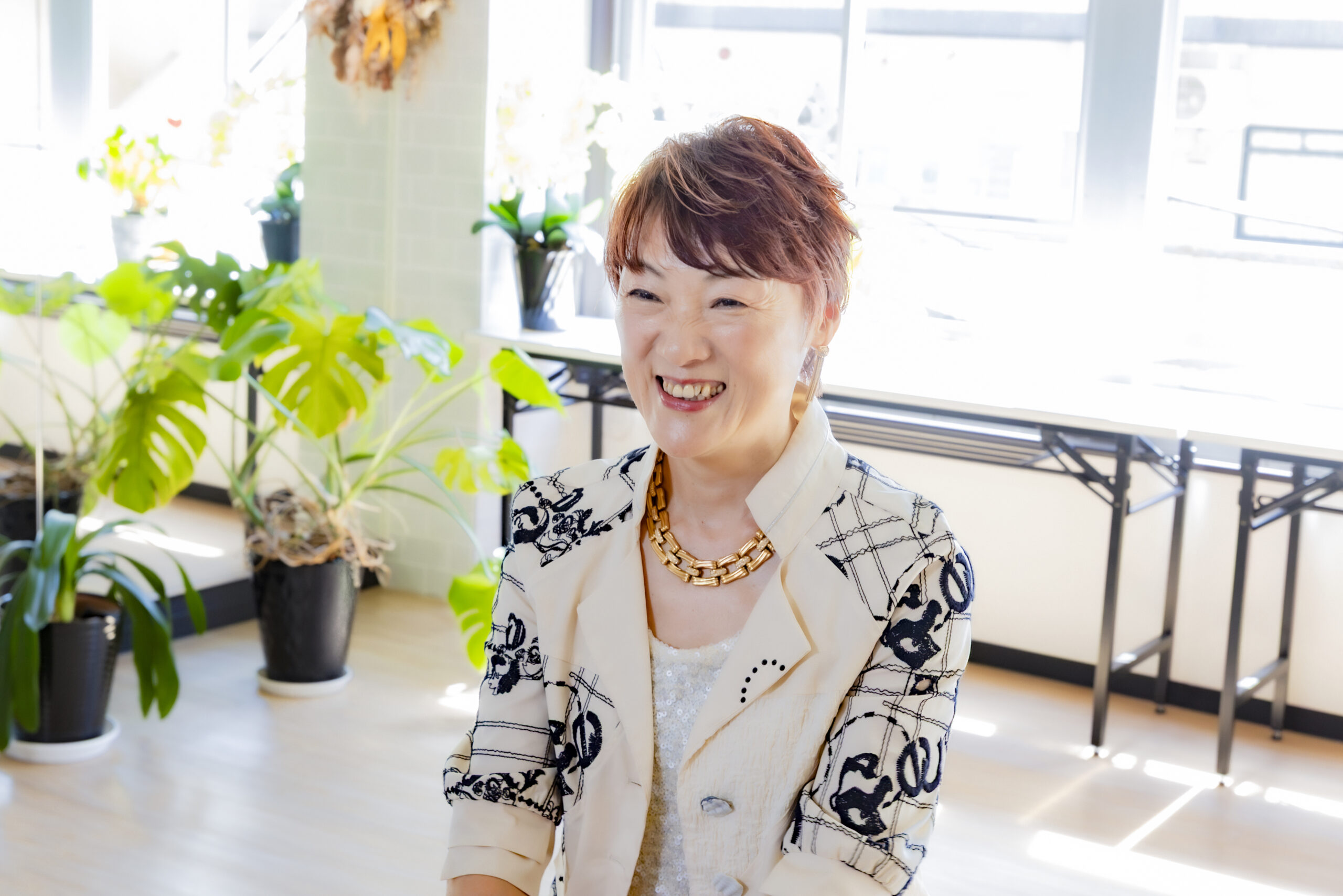
Sitting and waiting wasn’t going to repay those loans. “I have to find a way,” I told myself, and took the plunge into online lessons. Until then, I had been convinced it was impossible to teach walking online. Absolutely impossible. But now I committed myself to making it work.
If I was going to do it, I wanted results even better than those from in-person lessons. I spent a year rebuilding the program and putting the online system in place.
At first, nothing worked. Again and again, people told me, “I just can’t see myself doing this online.” But I refused to give up. I kept pitching the lessons from morning to night, until my voice gave out, and reached out to former students, too.
I built in extensive support: three months of unlimited lessons, written materials, and video recordings to review students’ form.
Today, we have students not only across Japan but overseas as well, and our network has grown to more than 260 instructors.
Without the pandemic, I think I would simply have worn myself out traveling back and forth between Fukuoka and Tokyo. I doubt this work would ever have reached so far.
To Walk Is to Live
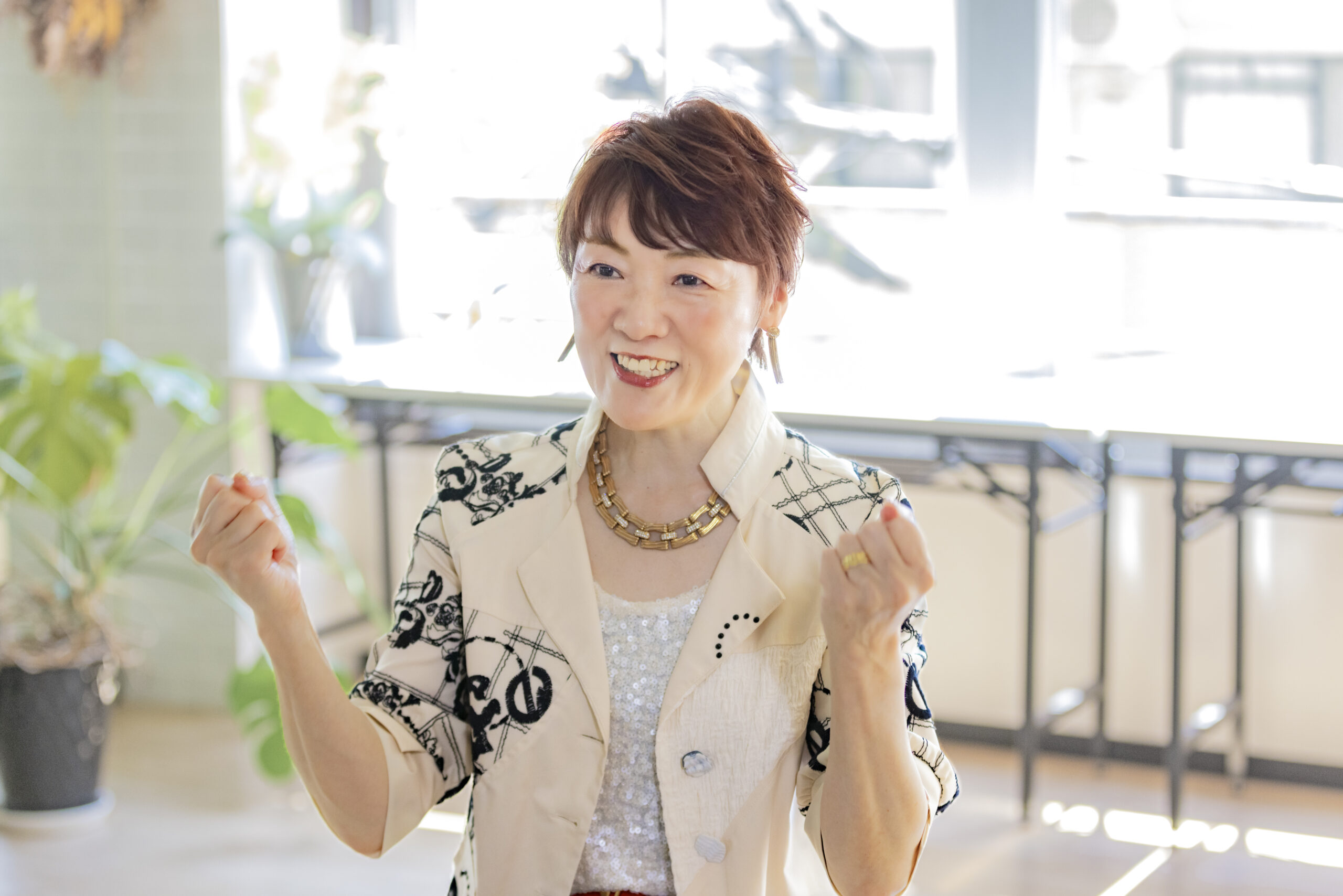
Even with the debt and all the hardships that followed, I was able to keep going because, to me, walking is living.
When I had neither money nor time, when the business kept losing money, and when the pandemic left me deeper in debt, one conviction never wavered: “I will spend the rest of my life teaching this way of walking.”
What I teach isn’t simply a walking technique. It’s confidence in yourself. When you keep working with your body rather than giving up on it, it responds. In many ways, I feel that describes my own life, too.
At school, we’re taught how to hold chopsticks, but no one teaches us how to walk.
The way the body works is directly connected to the way the mind works. Change how you walk, and your posture changes. Your body changes. Eventually, that changes your outlook and your confidence in life.
I don’t want people to walk with rounded shoulders and their eyes on the ground, as if to say, “Please don’t look at me.” I want them to bring their bodies into alignment, open their chests, and walk tall, facing forward with the confidence to say, “Look at me!”
There is no reason to give up because you think you’re too old or you’ve never been good at exercise. Wake up your muscles, and your body can change at any age. You can stay youthful.
As long as there are people walking on two feet, I will keep taking this message to the world. To stand firmly on your own feet and keep walking with vitality throughout your life—that is the confidence I want to pass on to as many people as I can.
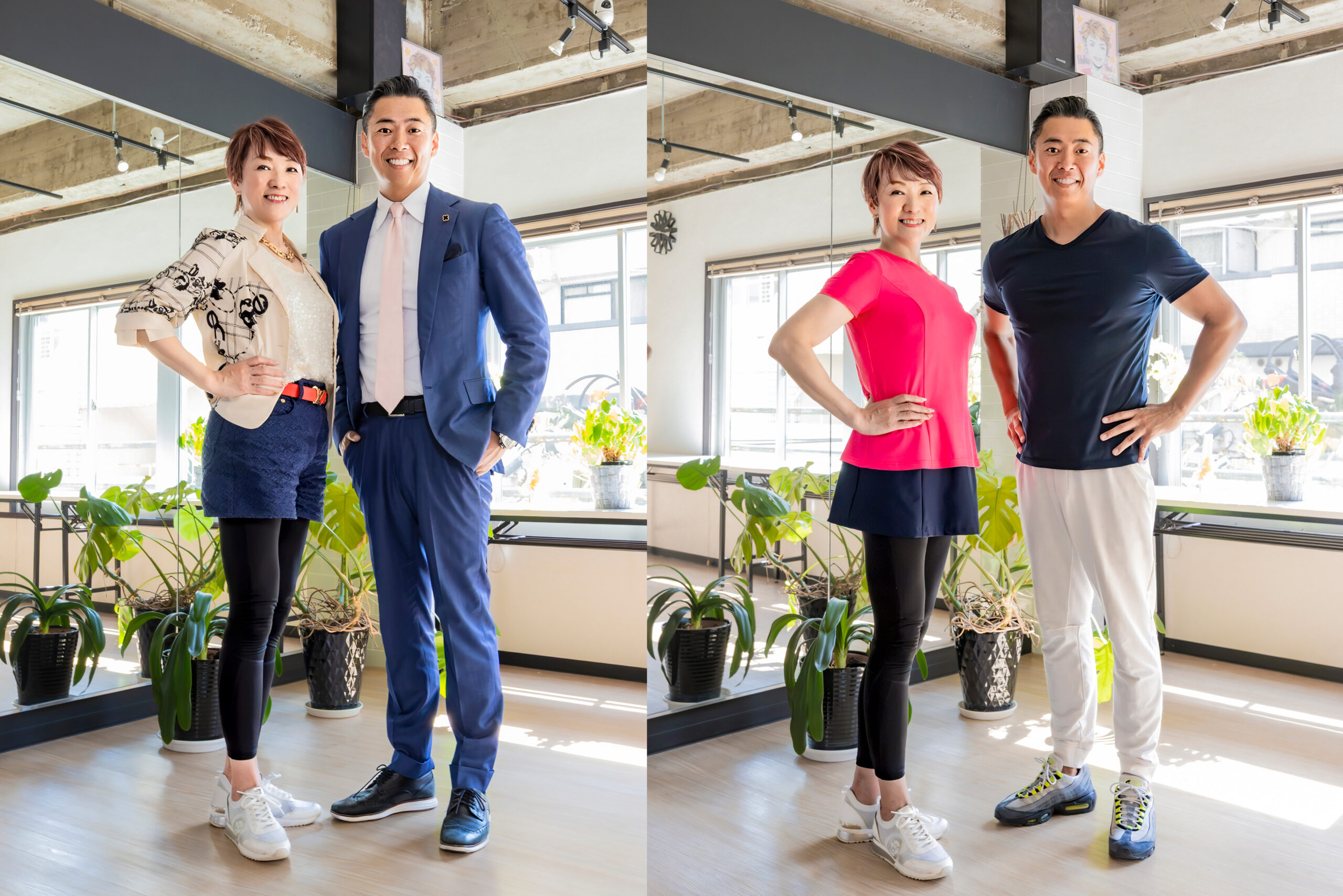
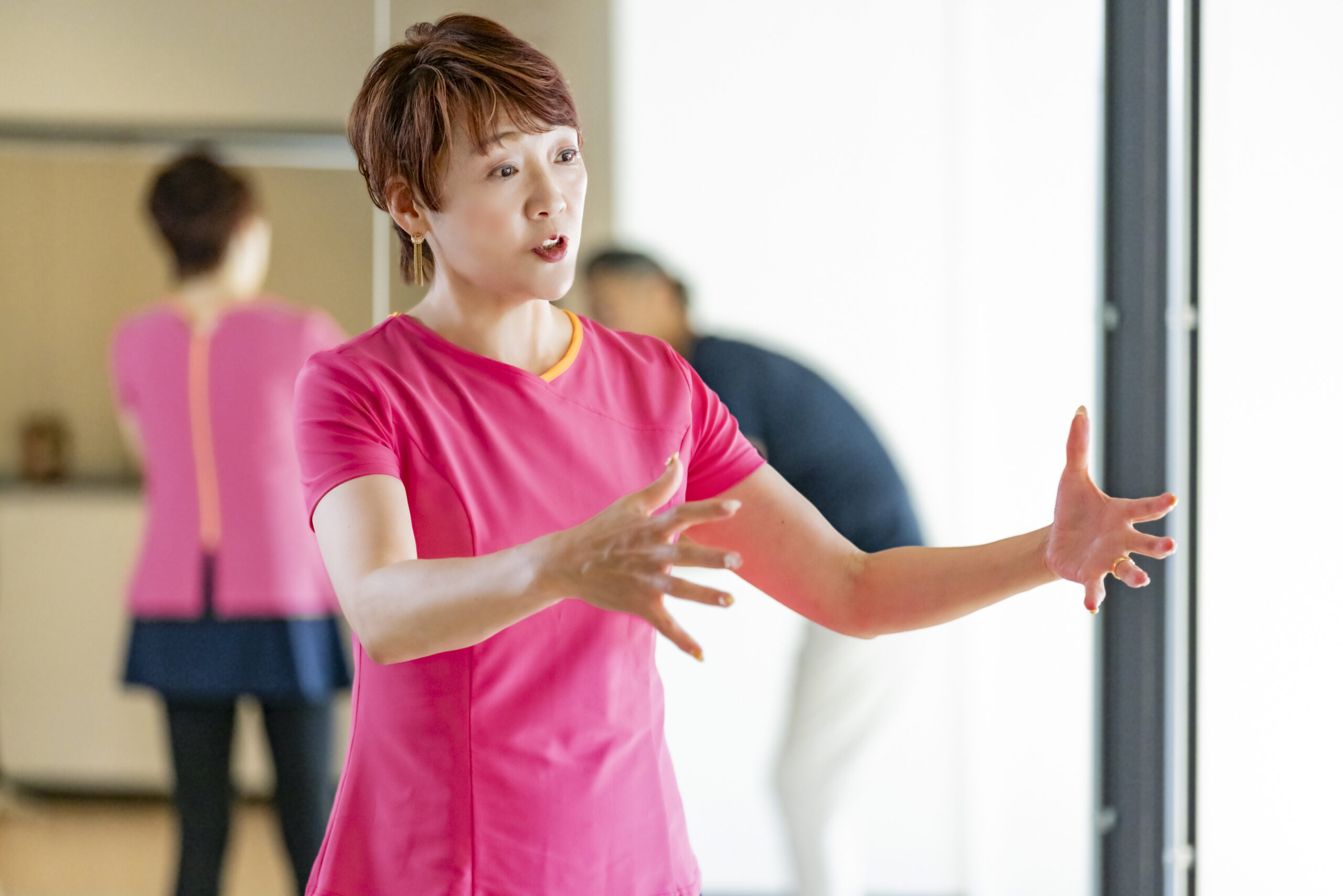

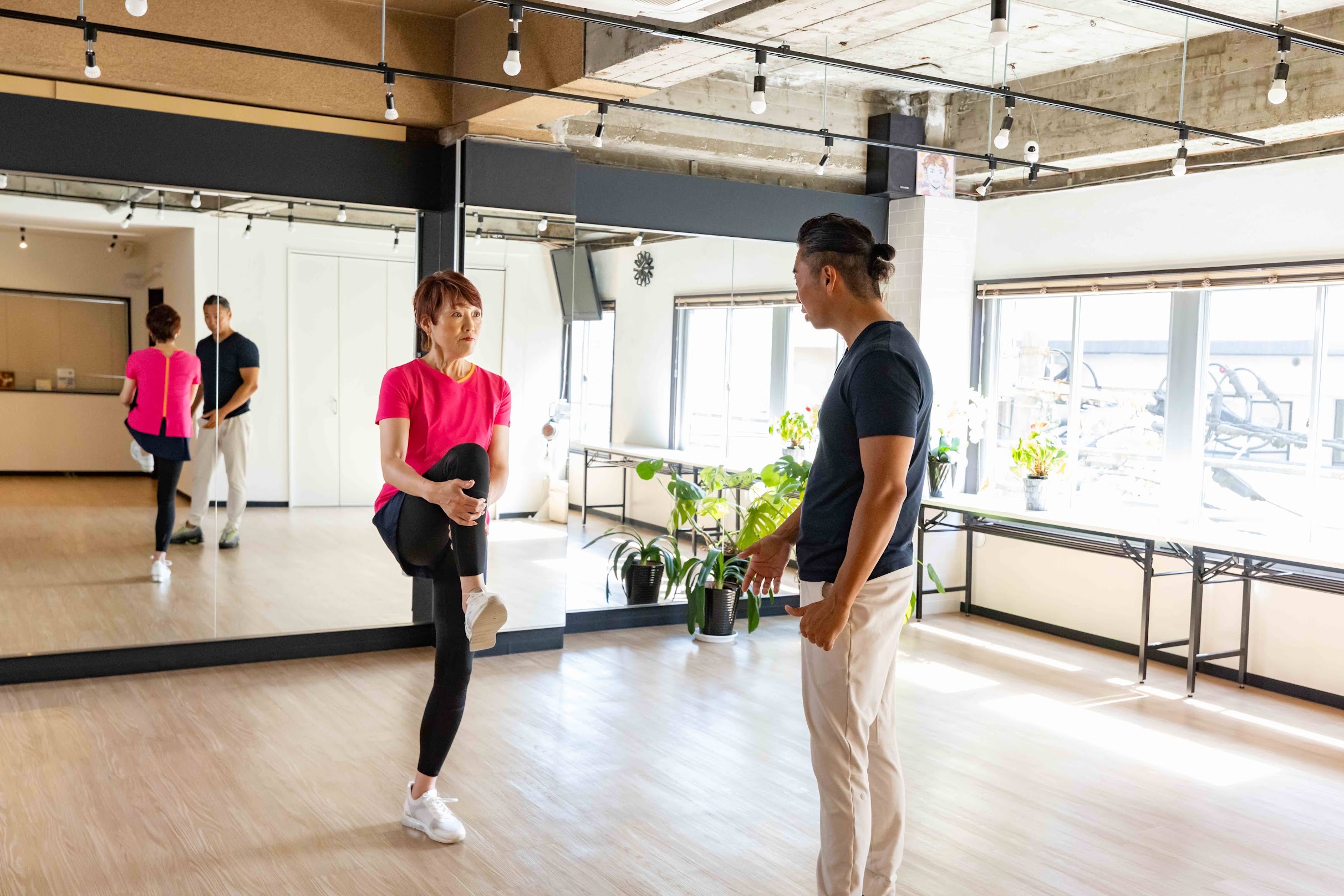
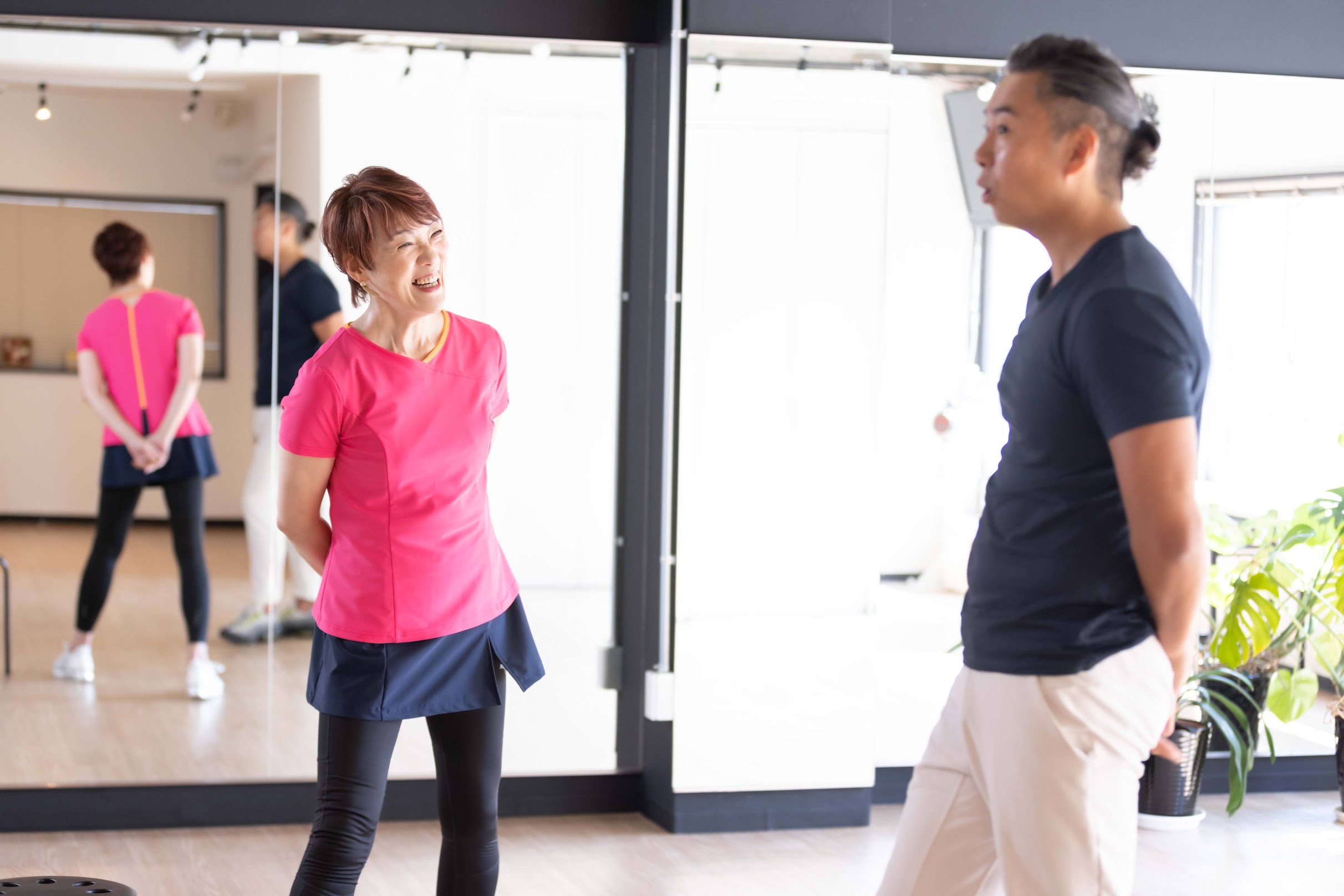
My appearance in My Philosophy came about through a recommendation from Takaharu Futaeda, who was featured in Interview No. 57.
What struck me first was Daisuke’s extraordinary, upbeat energy. The questions and ideas kept coming, one after another. I was amazed at how quickly his mind worked.
The main reason I wanted to teach walking was that changing the way I walked had transformed my own body and mind.
But there was another reason, too: my father, who died far too young.
When my father was in the hospital and could still walk, he talked about what he wanted to eat and where he wanted to go once he got out. But as soon as he lost the muscle strength to walk, he stopped talking about any of those things. In the end, he had just one wish: “I want to walk on my own two feet again.”
Watching him made me understand, deep down, that to walk is to live.
That is what has carried me through one hardship after another: the desire to help more people keep walking on their own feet until the very end of their lives.
There is another saying I hold close: “It’s not about never stopping. It’s about never giving up.”
When you push yourself too hard to keep going, you end up blaming yourself whenever you fall short.
So you manage three days and then stop? That’s fine! As long as you don’t give up altogether, a way forward will open. Believing that, and moving ahead patiently at my own pace, has brought me to where I am today.
Instead of looking for reasons something cannot be done, I always ask, “How can I make it happen?” It took facing real hardship to teach me that what we assume is impossible may hold entirely new possibilities.
With that conviction, I will keep sharing my walking method with as many people as possible.
Mihoko Yamasaki, Creator of a Walking Method for Better Posture and Gut Health


Listening to Mihoko Yamasaki reminded me of something important: you don’t have to wait for the conditions to be right to start changing your life. After 17 years as a full-time homemaker, she went back to school at 46 and created her own method at 50. That willingness to act—to turn a personal struggle into something that helps others—resonated deeply with me.
Even when the business was losing money, she kept showing up for the students in front of her. When the pandemic closed her studio, she took her lessons online—something she had once dismissed as “absolutely impossible.” What matters is not holding on to how you do things, but staying true to why you do them.
“It’s not about never stopping. It’s about never giving up.” There is a kindness in those words that helps people move forward. It is all right to pause; you can always take another step. What she offers, I believe, is not only a way of walking but also the courage not to give up on our own potential. Whatever your age, you can begin right where you are. The step that changes your life can always be taken today. Since our interview, I have been putting her advice into practice whenever I walk. It occurred to me that no one had ever actually taught me how to walk properly, and I would like to explore this field further. Mihoko, keep taking your walking method from Fukuoka to the world!
DK Sugiyama, Editor-in-Chief, My Philosophy
August 2026
At Kotsuban Chosei Walking Co., Ltd.
Interview and editing: DK Sugiyama
Project manager: Chiho Ando
Written by Eri Shibata, Deputy Editor-in-Chief, My Philosophy
Photography: Misa Shigematsu
Production: My Philosophy® Editorial Team
Milestone (2007~)
View all Interviews
-
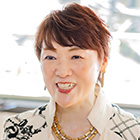
Vol.130 Mihoko Yamasaki
Creator of a Walking Method for Better Posture and Gut Health
-
Vol.129 Anis Uzzaman
Founder and CEO, Pegasus Tech Ventures
Founder and Chairman, Startup World Cup -
Vol.128 Nicolai Bergmann
Flower Artist
-
Vol.127 Hideki Wada
Psychiatrist
-

Vol.126 Hiroki Ogawa
General Manager, UMITO Kamakura Koshigoe|Chef, Le RESTAURANT
-
Vol.125 Seiichi Okada
Owner & Vice Chairman, Medical Corporation Seiseikai Inokuchinoma Hospital
President & CEO, Okada Medical Investment Co., Ltd. -
Vol.124 Masato Kato
President & CEO, Bechstein Japan Co., Ltd.
Klavierbaumeister -

Vol. 123 Akiko Yamamoto
Japan President, Van Cleef & Arpels, Richemont Japan
-
Vol.122 Akimi Fukuhara
Pianist
-
Vol.121 Sammy Miyamoto
Hairstylist & Entrepreneur / President, “momotaro salon”
-
Vol.120 Ryotaro Muramatsu
Artist / Founder of NAKED, INC. / Visiting Professor at Osaka University of Arts / Branding Director of Achi Village, Nagano
-
Vol.119 lecca
Singer-Songwriter
-
Vol.118 John Tanzella
President / CEO of the International LGBTQ+ Travel Association (IGLTA)
-
Vol.117 Marin Alsop
Conductor
-
Vol.116 Hajime Kinoko
Modern Artist, Kinbakushi (Rope Master), Rope Artist, Photographer
-
Vol.115 Shintaro Koizumi
Out Japan Co., Ltd Chairman
SK Travel Consulting Co., Ltd (Out Asia Travel) President
International LGBTQ+ Travel Association (IGLTA) Ambassador to Asia -
Vol.114 George Fujisawa
George Fujisawa, President of Fluid Power, Ltd.
-
Vol.113 Kazumi Arikawa
President, Albion Art Co., Ltd.
Founder, Albion Art Jewelry Institute
Chevalier of the Ordre des Arts et des Lettres (French Republic)
International Council Member, Metropolitan Museum of Art (New York) -
Vol.112 Leslie Kee
Photographer
-
Vol.111 Mitsuyuki Takada
President and CEO of Albalkan Corporation
-
Vol.110 Koji Sato
Head Chef of Yamagata Kappo Akasaka Ajisai
-

Vol.109 Krishna Ramachandra
Founder and Non-Executive Chairman of Digital Insights Ventures
-
Vol.108 Marc Einstein
Chief Analyst of ITR Corporation
-
Vol.107 Kentaro Sakai
President and CEO of Sakai Fish Farm Co., Ltd.
-
Vol.106 Ryuki Narita
President of Narita Koi Farm Co., Ltd.
-
No.105 Yoshihiro Tsumura
President and Group CEO, Aderans Co., Ltd.
-
Vol.104 Takatoshi Maruo
"Bali's Aniki (*Big Brother)"
-
Vol.103 Takashi Shimokawa
Principal of the preparatory school "Bulkan Juku" | President and CEO of Tass Group
-
Vol.102 Sayuri Yamaguchi
Ginza "CLUB GRÈS" Owner Mama
-
Vol.101 Koji Yamamoto
President and CEO of Global Partners Inc.
-
Vol.100 Tetsuo Gyotoku
Director of the Japan BE Research Institute
-
Vol.99 Kiyoshi Murano
Philosopher and Astronomer | Futurist
-
Vol.98 Hiroshi Yaegashi
Catalyst | Business Creator
-
Vol.97 Hiroyuki Sasaki
Chairman, Group Representative & CEO Pro Labo Holdings Co., Ltd.
-
Vol.96 Satoshi Yamaguchi
Chairperson of the Chitose Koyukai Social Welfare Corporation
-
Vol.95 Hideko Suzuki
Doctor of Literature | Critic
-
Vol.94 Kiyoshi Kurokawa
Doctor of Medicine | Honorary Professor at the National Graduate Institute for Policy Studies | Representative Director of the Health and Global Policy Institute
-
Vol.93 Hiroshi Senju
Japanese Painter | Professor at the Graduate School of Kyoto University of the Arts and Design
-
Vol.92 Takashi Yamane
Management Scholar | Certified Public Accountant | Professor at Waseda University Graduate School of Business and Finance (WBS) | Emeritus Professor at Keio University
-
Vol.91 Kazuo Noda
Honorary Chairman of the Japan Research Institute, a general incorporated foundation | Honorary Chairman of the Social Development Research Center, a general incorporated foundation | Honorary President of Tama University | Honorary President of The Graduate School of Project Design
-
Vol.90 Goichi Okada
Sales Office Manager, Prudential Life Insurance Co. | Senior Consulting Life Planner
-
Vol.89 Tatsumitsu Yamazaki
Honorary Chairman of the Japan Sailing Federation | Former Chairman of S&B Foods Inc.
-
Vol.88 Rick Blangiardi
Hawai‘i News Now Manager
-
Vol.87 Timothy Cottrell
Head of School, ‘Iolani School
-
Vol.86 John Gotanda
President of Hawai‘i Pacific University
-
Vol.85 George Ariyoshi
Former Governor of Hawaii
-
Vol.84 Taro Yoshida
President and CEO, Hawaii Hochi Ltd.
-
Vol.83 Naoki Kusano
President, HANAKEN | TOKYO TONKOTSU RA-MEN BANKARA Founder
-
Vol.82 Akira Kawashima
Doctor | Doctor of Medicine | Professor, Department of Acupuncture and Moxibustion, Faculty of Health Sciences, Tokyo Ariake University of Medical and Health Sciences
-
Vol.81 Reika Asai
President of Kirei Company, Inc.
-
Vol.80 Seiji Hayashi
President and CEO of Car Conveni Club Co., Ltd.
-
Vol.79 Shinichi Inoue
CEO of Peach Aviation Co., Ltd.
-
Vol.78 Katsuyoshi Fukuyama
President and CEO of Gardner Co., Inc.
-
Vol.77 Nahoko Ishikawa
Representative Director, Sixth Sense Labs, Inc.
-
Vol.76 Shin Yamagishi
Photographer
-
Vol.75 Mikio Kawai
Professional Surfer
-
Vol.74 Isao Aoki
Professional Golfer | Chairman, Japan Golf Tour Organization
-
Vol.73 Norihiko Sasaki
Executive Director, Editor-in-Chief of NewsPicks | Editor | Journalist
-
Vol.72 Yazaki Yasuhisa
Freelance Journalist | Editor
-
Vol. 71 Michael Anthony
Executive Chef, Gramercy Tavern
-
Vol.70 Kenji Takenaka
Flower Designer
-
Vol.69 Daniel T. Ebihara
Head of the New York Kendo Dojo, Entrepreneur, and Product Designer
-
Vol.68 Kyoko Gasha
Journalist | Film Director
-
Vol.67 Casey Taniguchi
President of Yomitime
-
Vol.66 Misao Ito
Writer | Art Producer
-
Vol.65 Narimasa Nakaoka
President and Representative Director, Suzukake Co., Ltd.
-
Vol.64 Takashi Sano
Chocolate Shop Owner-Chef
-
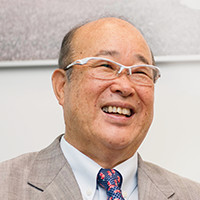
Vol.63 Toshiaki Kurosaka
Chairman of Porsche Japan K.K.
-
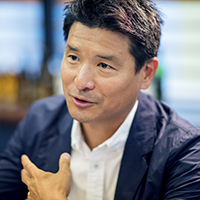
Vol.62 Taro Saito
Communication Designer. President and CEO of dof Inc., Co-CEO of CC Inc., Outside Director of VOYAGE GROUP Inc., Outside Director of Oceanize Inc., and Global Strategy Committee Member of the NPO TABLE FOR TWO.
-
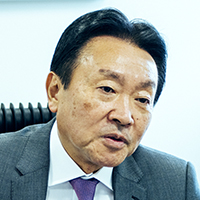
Vol.61 Hideyuki Murakami
President and CEO of Iwataya Mitsukoshi Ltd. | Executive Vice President of Isetan Mitsukoshi Holdings Ltd.
-
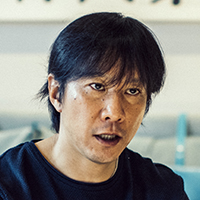
Vol.60 Yoshiyuki Okuno
Owner-Chef of Ristorante La Brinca
-
vol.59 Rika Yukimasa
Culinary Researcher | CEO, REKIDS Co., Ltd.
-
Vol.58 Kazuko Tōdō
Manager and Proprietor of "Royal Box" and "Lindbergh" | Editor-in-Chief of 'LB Nakasu Newsletter
-
Vol.57 Takaharu Futaeda
CEO, Anny Group KFT
-

Vol.56 Kengo Kuma
Architect
-
Vol.55 August Hergesheimer
President and CEO of Abios Corporation | Ph.D. in Nutritional Science
-
Vol.54 Tomio Taki
Honorary Advisor, Takihyo Co., Ltd.
School Board Chairman, Taki Academy, Inc.
Board Member, Mikimoto (America) Inc. -
Vol.53 Tadashi Okura
President and CEO of Torikizoku Co., Ltd.
-
Vol.52 Hiroshi Sugimoto
Japanese Painter | Specially Appointed Professor at Yokohama University of Art and Design
-

Vol.51 Aureana Tseu
Hula Artist
-
Vol.50 Don Konishi
Fashion Designer | Visiting Professor, Nagoya University of Arts and Sciences
-
Vol.49 Sachio Senmoto
Chairman of the Board, Renova, Inc.
-
Vol.48 Naoyoshi Amari
Head Priest of Ichigyosan Senshuji Temple | Principal of Senshu Kindergarten
-
Vol.47 Takashi Maeno
Dean and Professor of the Graduate School of System Design and Management at Keio University.
-
Vol.46 Tomizo Yamaguchi
Third-Generation Head of Kyoto Confectionery "Suetomi"
-
Vol.45 Toshiharu Kokubun
Representative Director of Earth Holdings Co., Ltd.
-
Vol.44 Keita Obara
Professional boxer
-
Vol.43 Yuko Kibayashi Shin Kibayashi
Non-fiction writer and manga creator
-
Vol.42 “My Philosophy” Junki Yoshida
Chairman and CEO, Yoshida Group & Founder, Yoshida Sauce
-
Vol.41 Seisei Hanayama
Artist
-

Vol.40 Yoshiharu Sekino
Explorer | Anthropologist | Professor at Musashino Art University
-
Vol.39 Masaki Yokokawa
Representative of WELCOME Group
-
Vol.38 Tamami Sunoda
President and CEO of NOZZE (Marriage Information Center)| President, CEO, and Owner-Designer of Fashion Brand "JuviJuvi"
-
Vol.37 Shuichi Tsuji
Sports Doctor | CEO of Eminecross Co., Ltd.
-
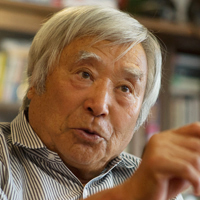
Vol.36 Yuichiro Miura
Professional Skier | Principal of Clark Memorial International High School
-
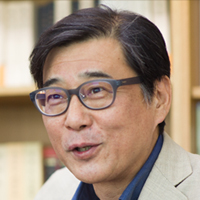
Vol.35 Nobufumi Matsunaga
Educational Environment Setting Consultant | Founder of V-net Educational Consultation Office
-
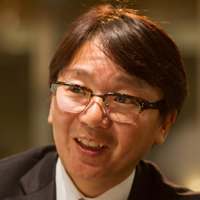
Vol.34 Tetsu Mizutani
Suntory Beer Limited - President, Chief Executive Officer
-

Vol.33 Yukino Kikuma
Lawyer
-

Vol.32 Keiko Kouda
CEO of AsMama Co., Ltd.
-

Vol.31 Takami Hasebe
White Ship Inc. CEO | Art Producer
-

Vol.30 Aya Kinoshita
Representative Director of UHM Co., Ltd. | General Manager of Hotel Niwa Tokyo
-

Vol.29 Clara Komazaki
KoLabo Co., Ltd. Representative Director and President
-

Vol.28 Nobuko Tsutsumi
Lecturer at Showa Women's University, Aoyama Gakuin Women's Junior College, and Hosei University | Freelance Announcer | Essayist
-

Vol.27 Yu Kaida
Portrait photographer
-

Vol.26 Manabu Miyasaka
President and CEO, Yahoo Japan Corporation
-

Vol.25 Shuichiro Kimura
Representative Director of Boulangerie Eric Kayser Japon Inc.
-

Vol.24 Yohei Sadoshima
President and CEO of Cork, Inc.
-

Vol.23 Toshiaki Kanda
Representative of Kanda News Network | IT Journalist, Social Media Consultant
-

Vol.22 Emmy Suzuki Harris
Japanese Representative of Change.org
-

Vol.21 Masakazu Yanagisawa
Director of Global Prime Finance Sales at Deutsche Securities Inc. | Board Member of NPO good aging yells
-

Vol.20 Fumio Tateishi
Chairman of the Board of Directors, OMRON Corporation
-

Vol.19 Nobuyuki Idei
Founder & CEO, Representative Director of Quantum Leap Corporation
-

Vol.18 Rowland Kirishima
Photographer | Multi-Creator
-

Vol.17 Junko Masachika
Founder of Personal Styling | President and CEO of Fashion Rescue Ltd. | Dean of Personal Stylist Japan | Chairman of the Professional Personal Stylist Association
-

Vol.16 Kumiko Otsuka
President and Representative Director of Otsuka Kagu, Ltd.
-
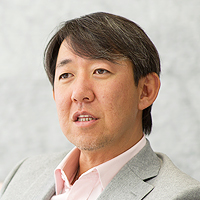
Vol.15 Tsugihiko Fujiwara
President and CEO of AOI Pro. Inc.
-
Vol.14 Hideaki Inoue
President and CEO, Park Corporation
-
Vol.13 Edward Suzuki
Architect | Representative of Edward Suzuki Associates Inc.
-
Vol.12 Hiroshi Kato
Economist
-
Vol.11 Seiichi Shimada
Special Advisor at Nihon Unisys Ltd. | Former Chairman of the Japan Housing Finance Agency | Former Vice President of Mitsui & Co., Ltd. | Former President of Nihon Unisys Ltd.
-
Vol.10 Kanae Doi
Japan Representative, International NGO "Human Rights Watch" | Lawyer
-
Vol.9 Hitomi Kumasaka
Social Media Consultant | President and CEO of Social Media Research Institute Co., Ltd.
-
Vol.8 Yuriko Takahashi
CEO of E.OCT Inc.
-
Vol.7 Kazuhiro Hasegawa
Representative of the Corporate Power Institute | Senior Researcher at the Inter Professional Education Research Center, Chiba University of Commerce (CUC)
-
Vol.6 Kage
President and Representative Director of Caricature Japan, Ltd., and Representative Artist | Asian Ambassador for the National Caricaturist Network (NCN)
-
Vol.5 Fumi Sasada
President and CEO of BRAVIS International, Inc. | Chairman of the Japan Package Design Association
-
Vol.4 Kota Matsuda
Chairman of Tully's Coffee International | President of Quiznos Asia Pacific
-
Vol.3 Shigeru Uchida
Interior Designer
-
Vol.2 Naoyuki Agawa
Dean of the Faculty of Policy Management at Keio University.
-
Vol.1 Hitoshi Suga
Venture Capitalist