


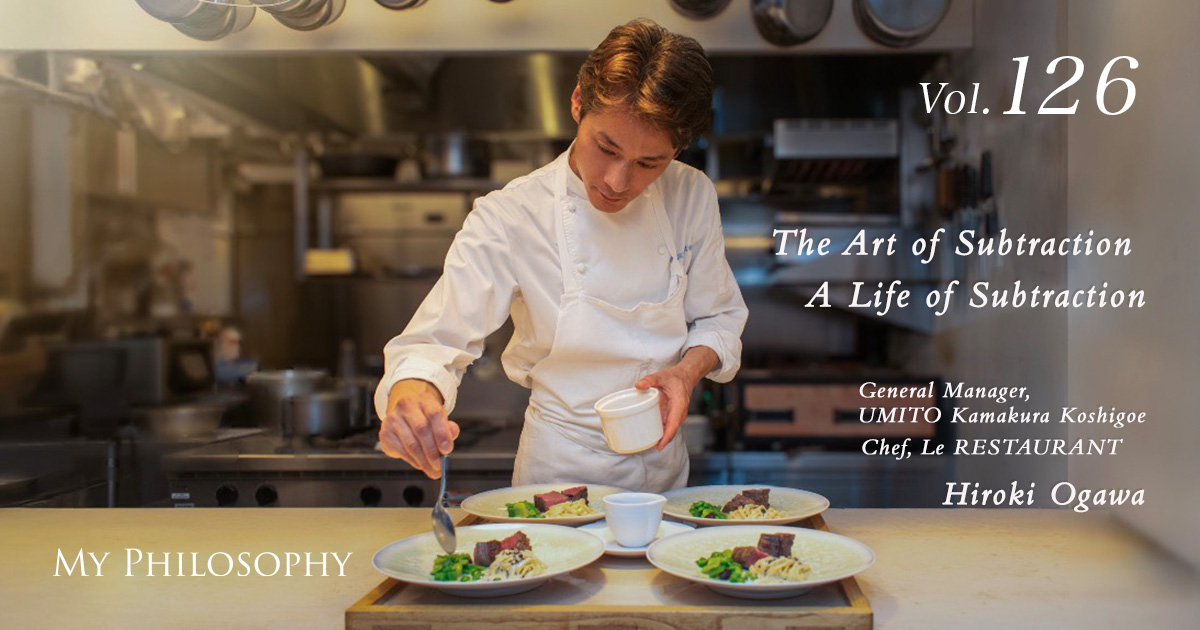
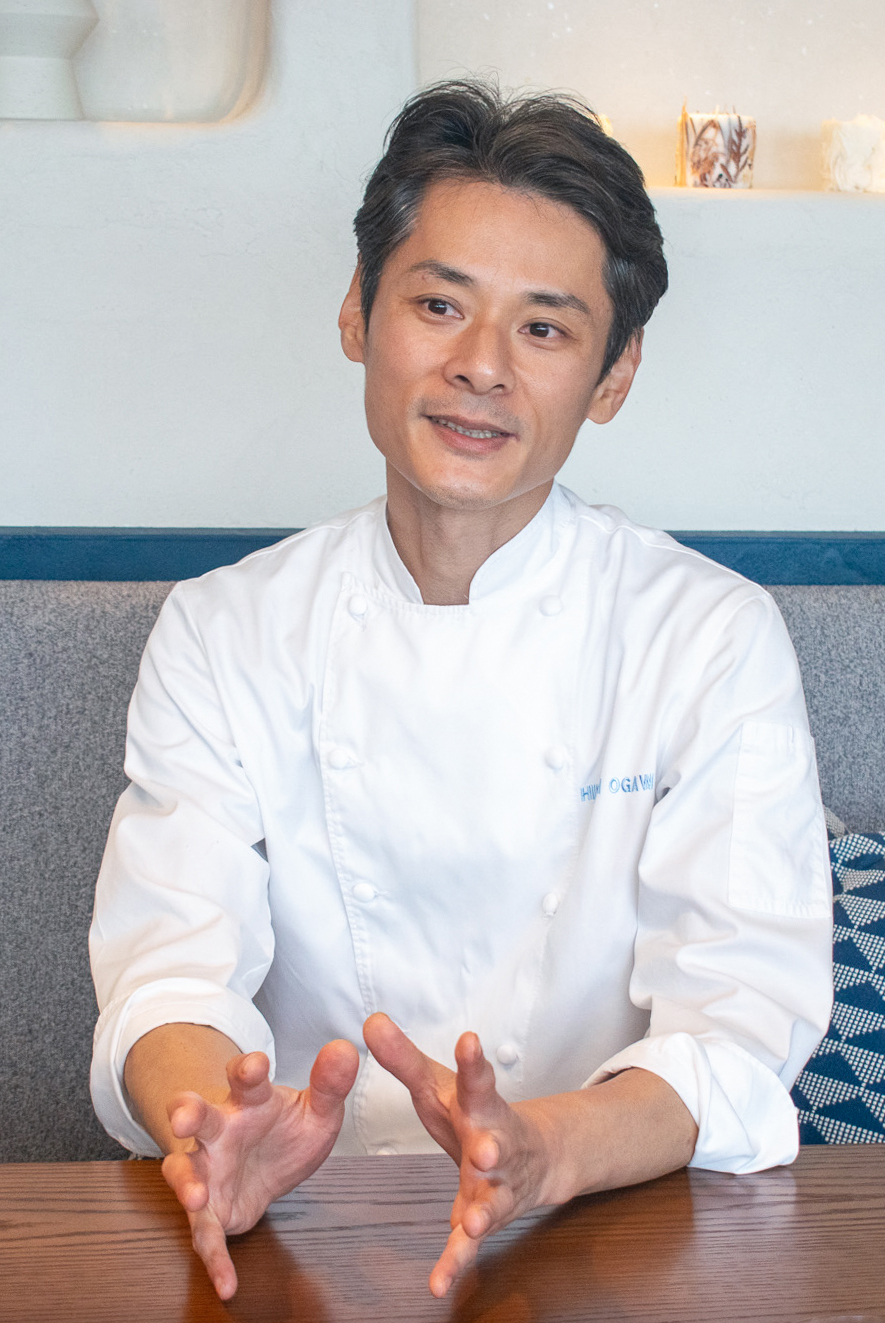
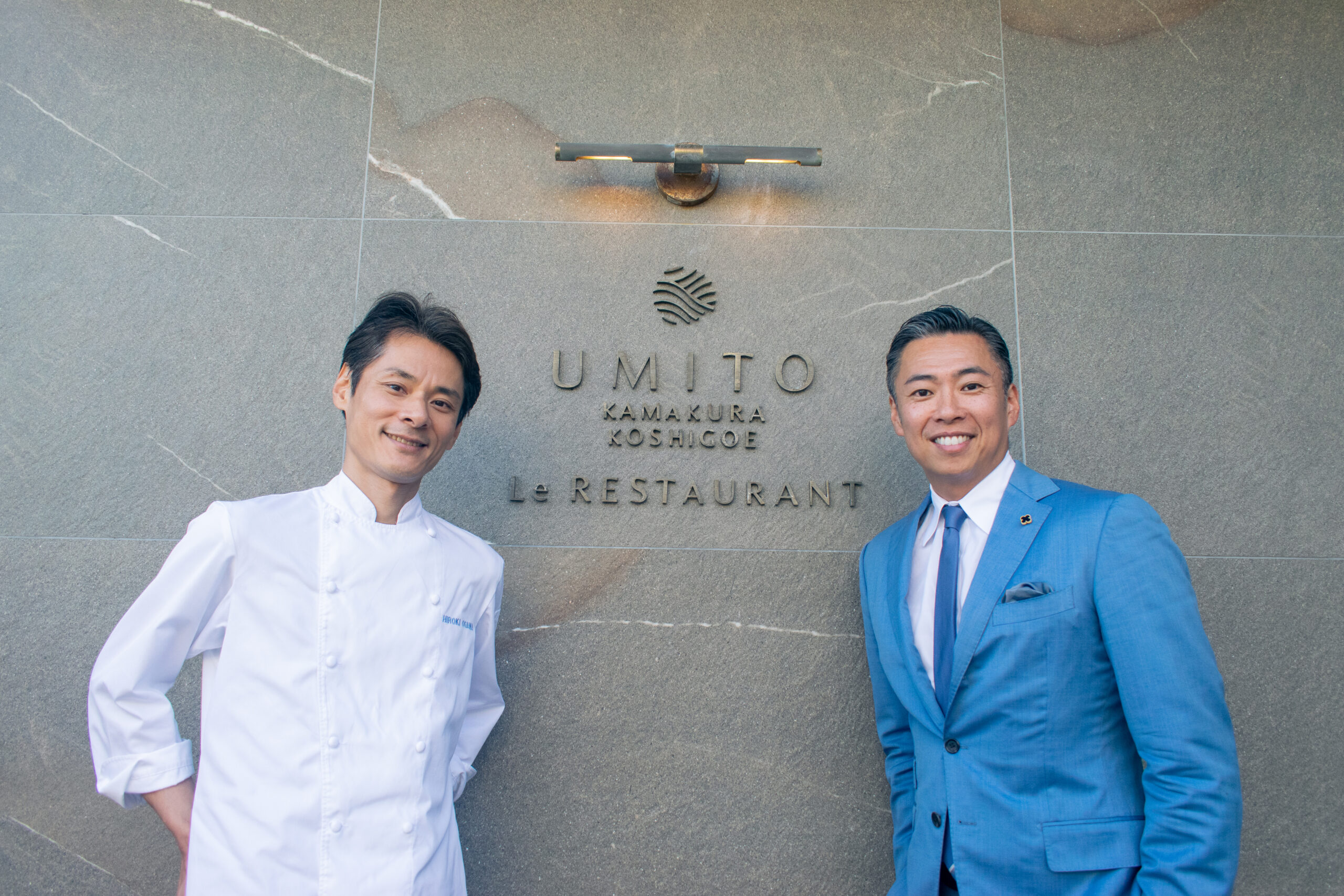
Hiroki Ogawa served for eight years as Executive Chef of the flagship Hiroo restaurant of Hiramatsu, one of Japan’s most renowned French dining establishments. Although his career appeared to be on a smooth and successful trajectory, a pivotal decision led him to walk away from everything he had built. Following the COVID-19 pandemic, Ogawa began a new chapter as Chef of Le RESTAURANT, the auberge restaurant at UMITO, a small luxury hotel overlooking the sea of Kamakura and the iconic island of Enoshima. In this interview, he reflects on the emotions behind that life-changing decision, shares his philosophy of “subtracting rather than adding,” and discusses the new perspective that emerged on the other side of letting go.
Profile
Vol.126 Hiroki Ogawa
General Manager, UMITO Kamakura Koshigoe|Chef, Le RESTAURANT
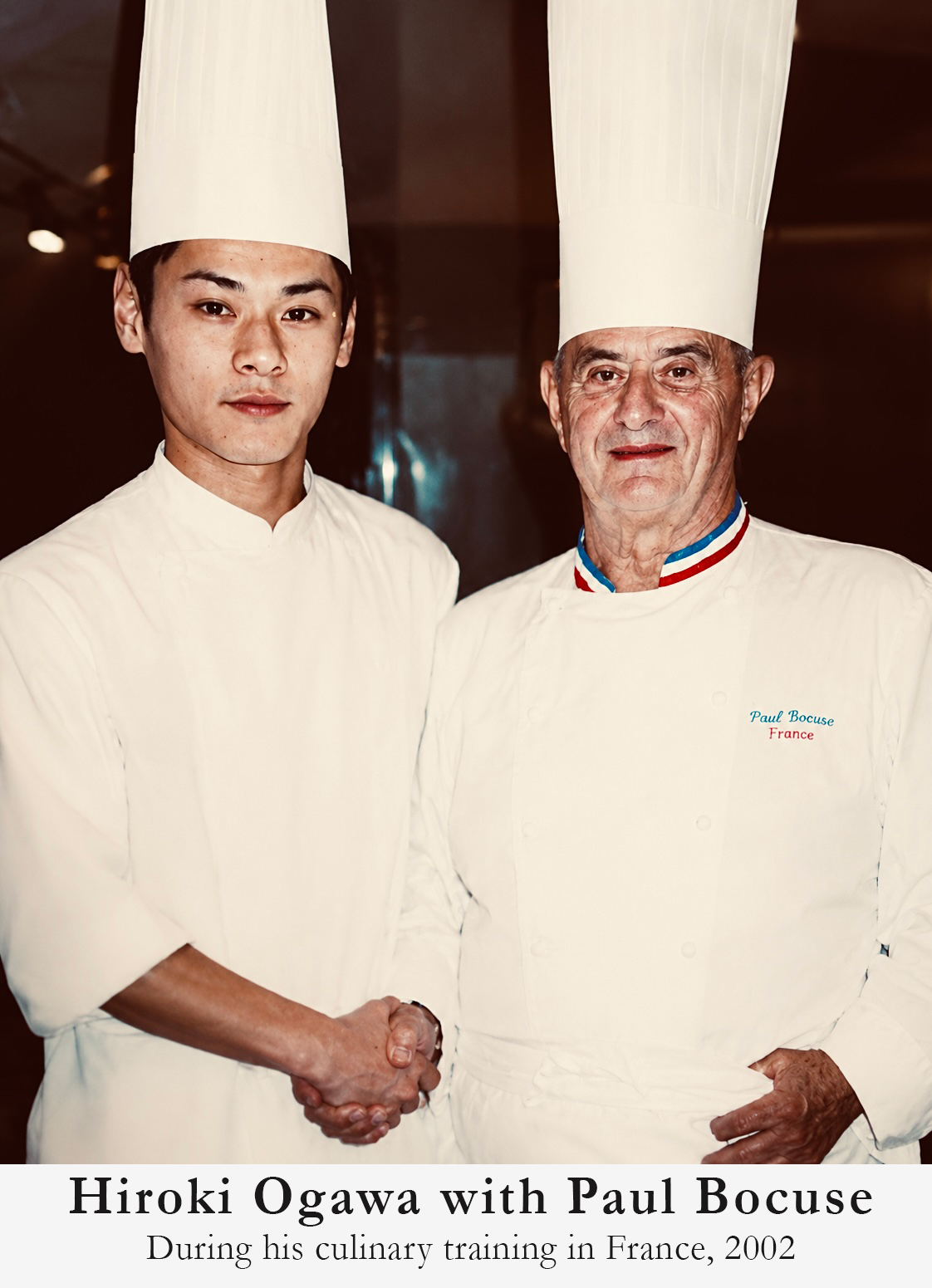
Born in Osaka in 1981 and raised in Hiroshima, Hiroki Ogawa studied French cuisine at Tsuji Culinary Institute before moving to France at the age of 19. After training at the three-Michelin-starred Les Prés d'Eugénie - Michel Guérard, he joined Hiramatsu Inc. and later returned to France to further his training at its Paris restaurant, while also completing stages at Paul Bocuse and L'Auberge de l'Ill. He served as Executive Chef of Restaurant Hiramatsu Hiroo for eight years before leaving the company in 2020. In 2024, he became Chef of Le RESTAURANT at UMITO Kamakura Koshigoe.
UMITO Kamakura Koshigoe
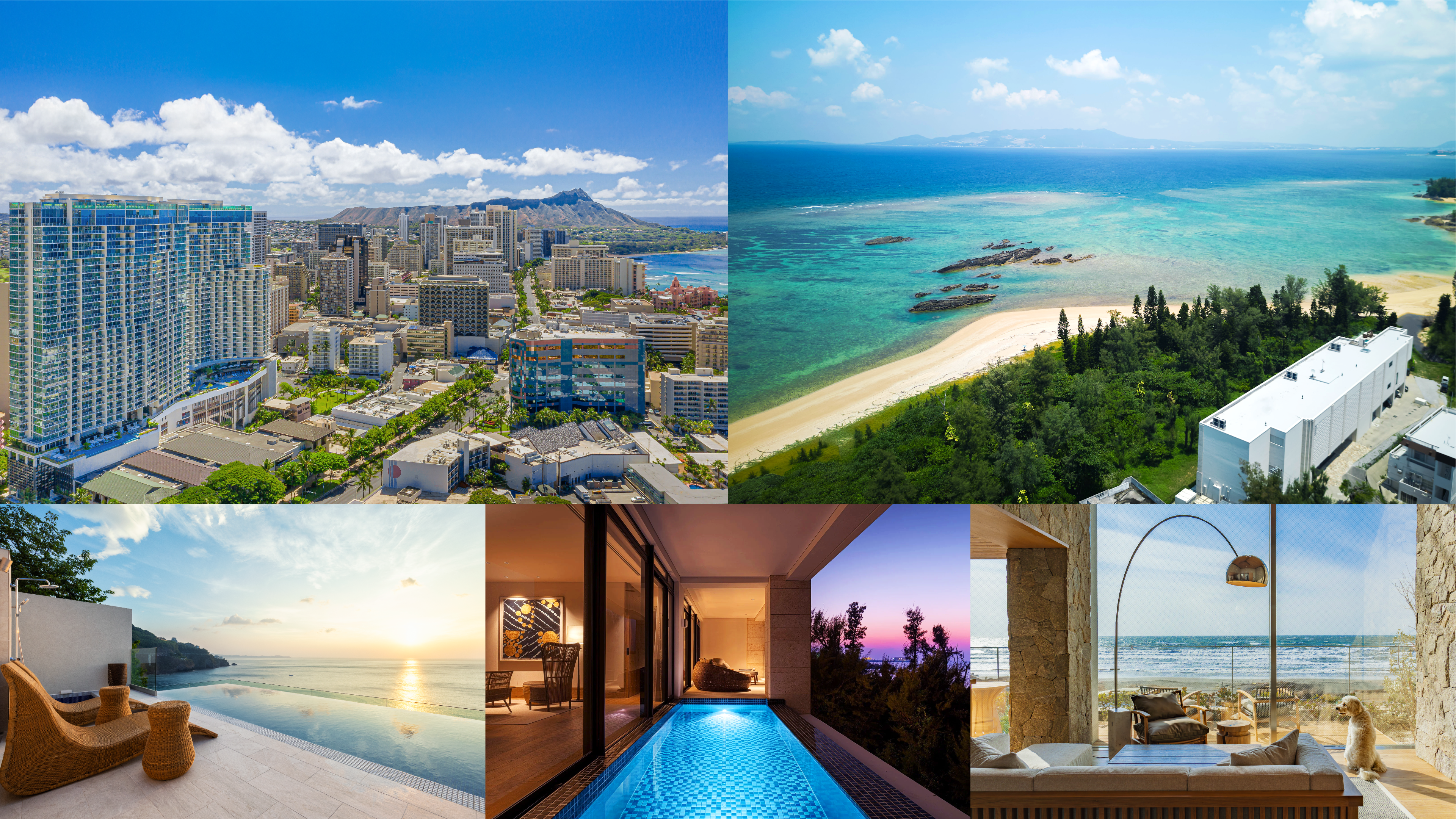
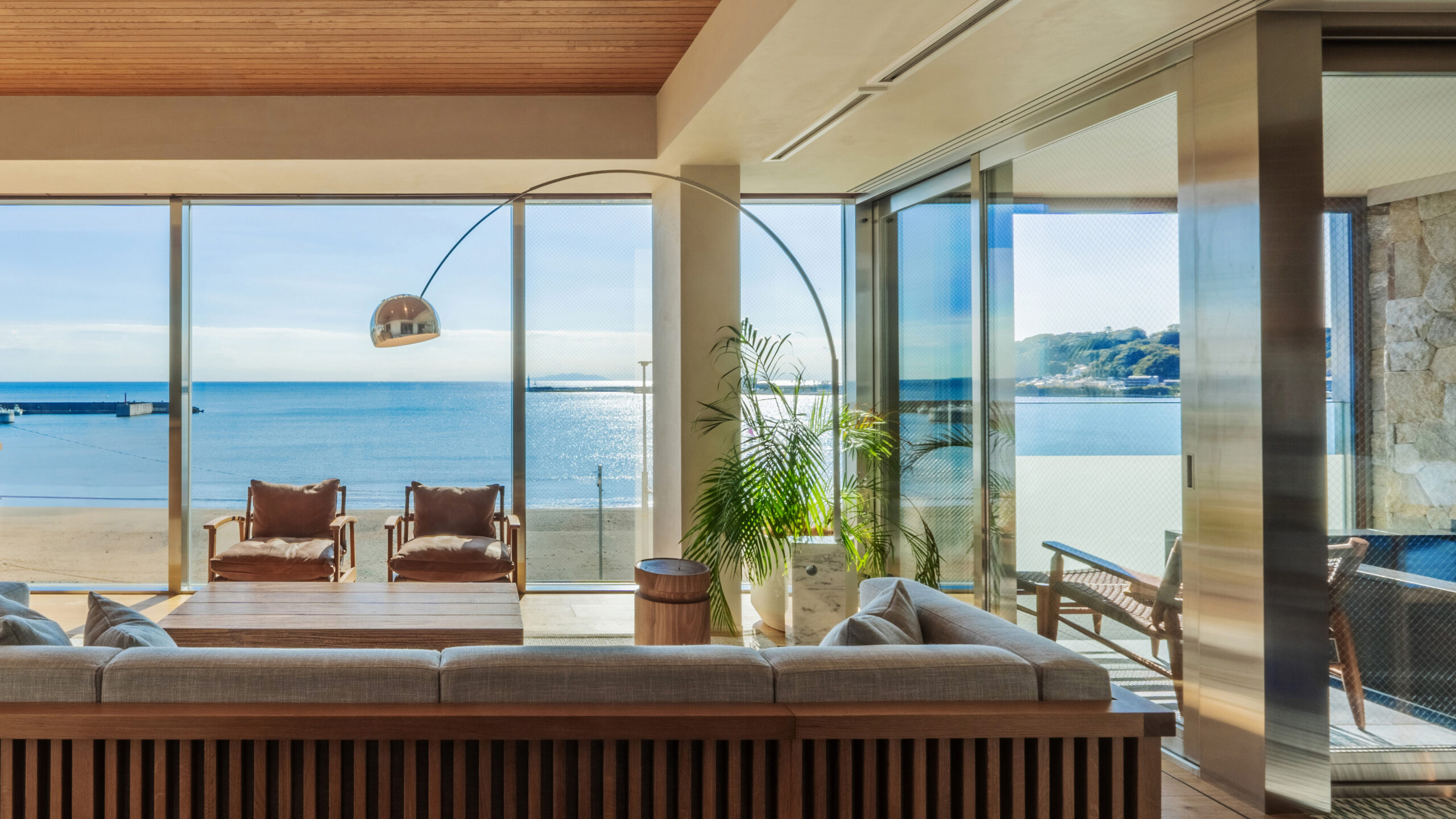
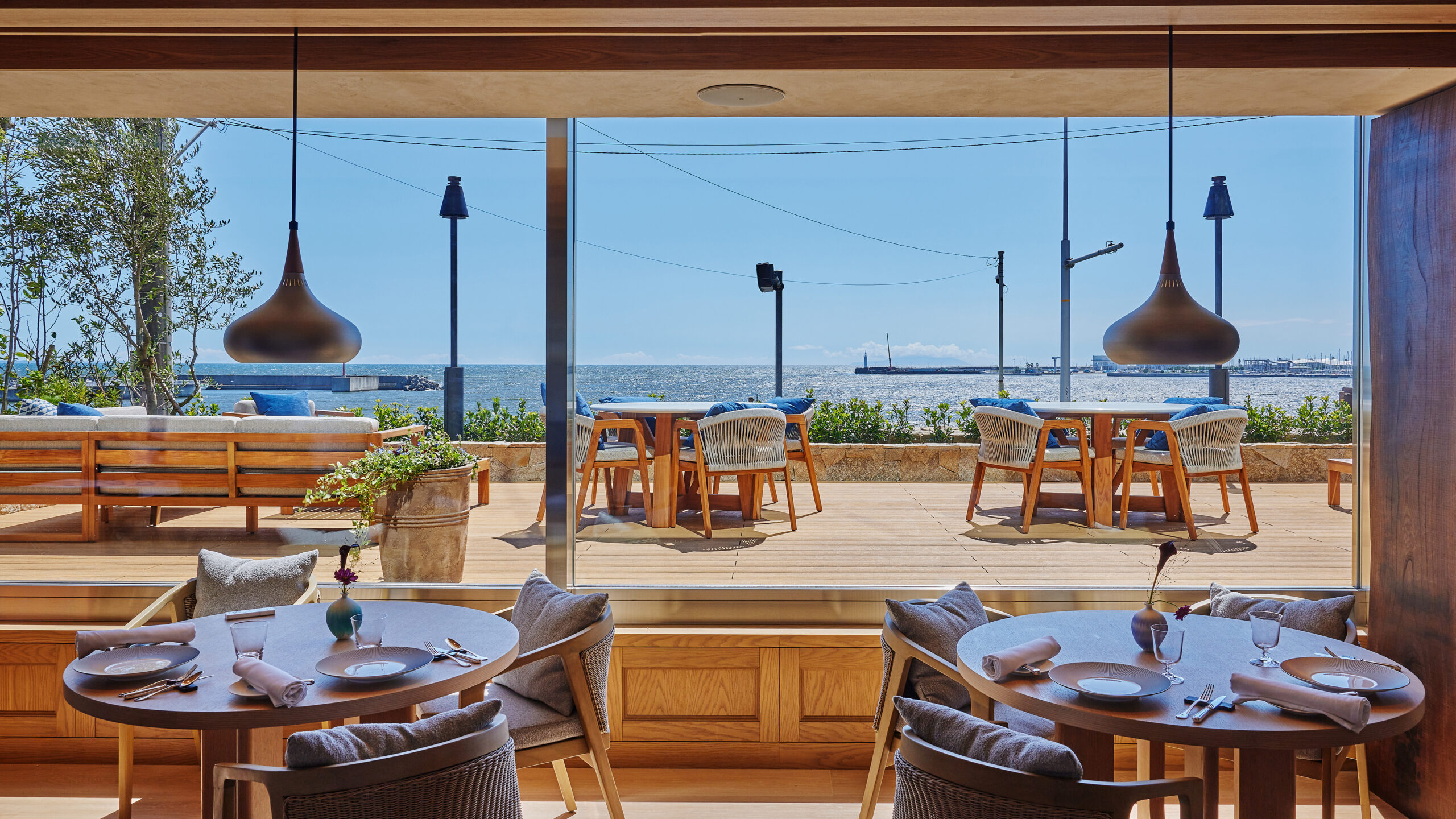
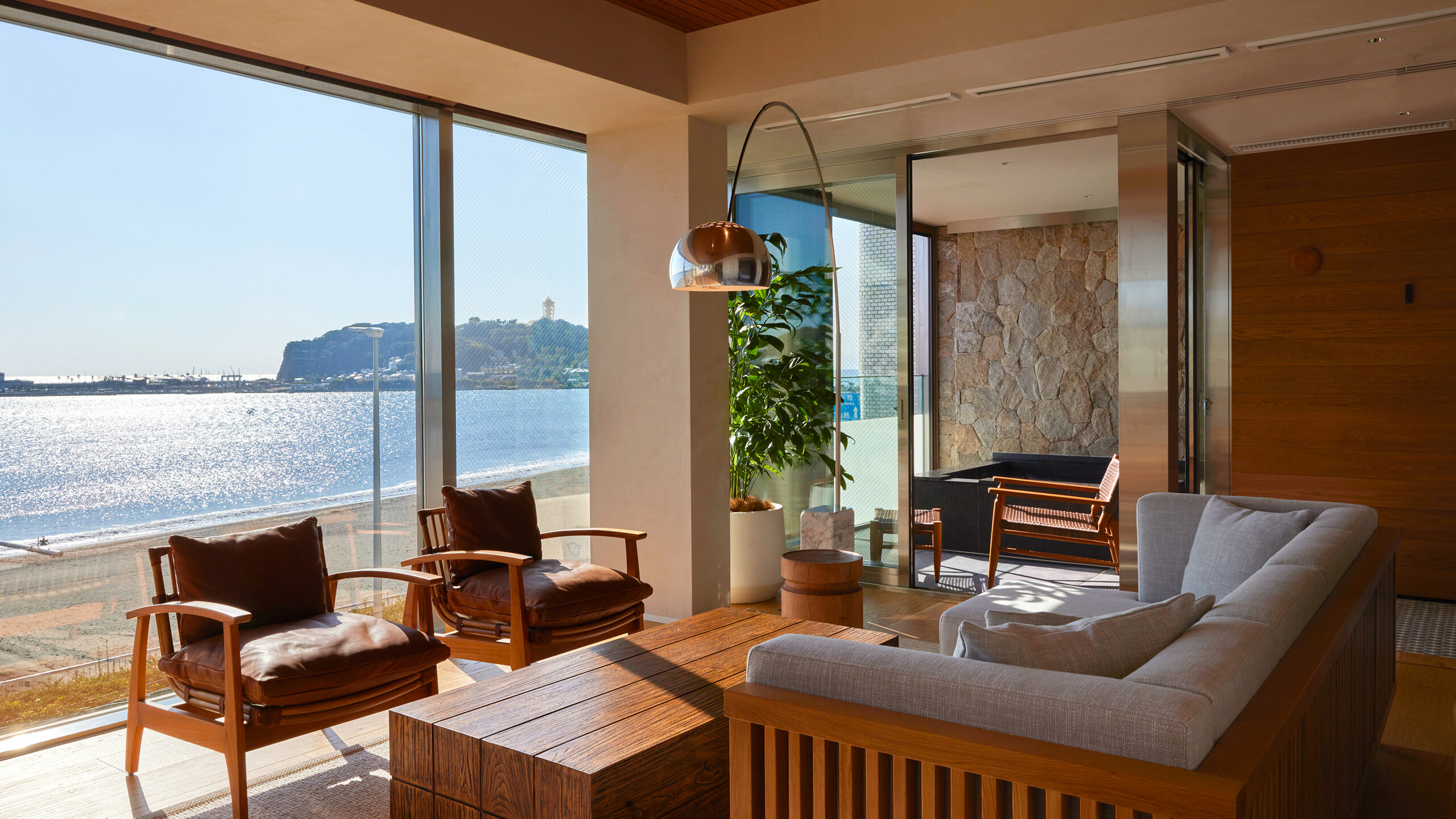
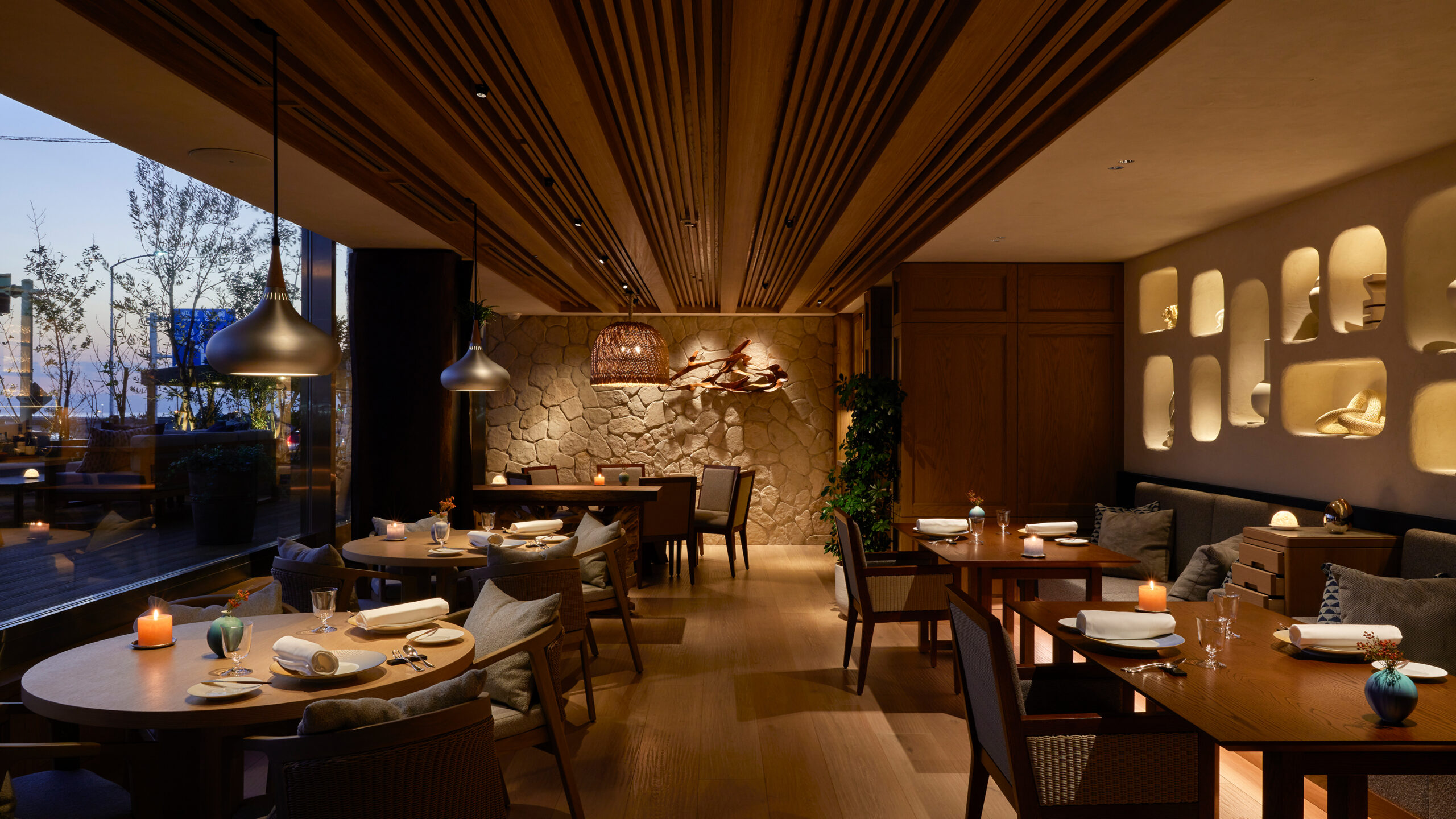
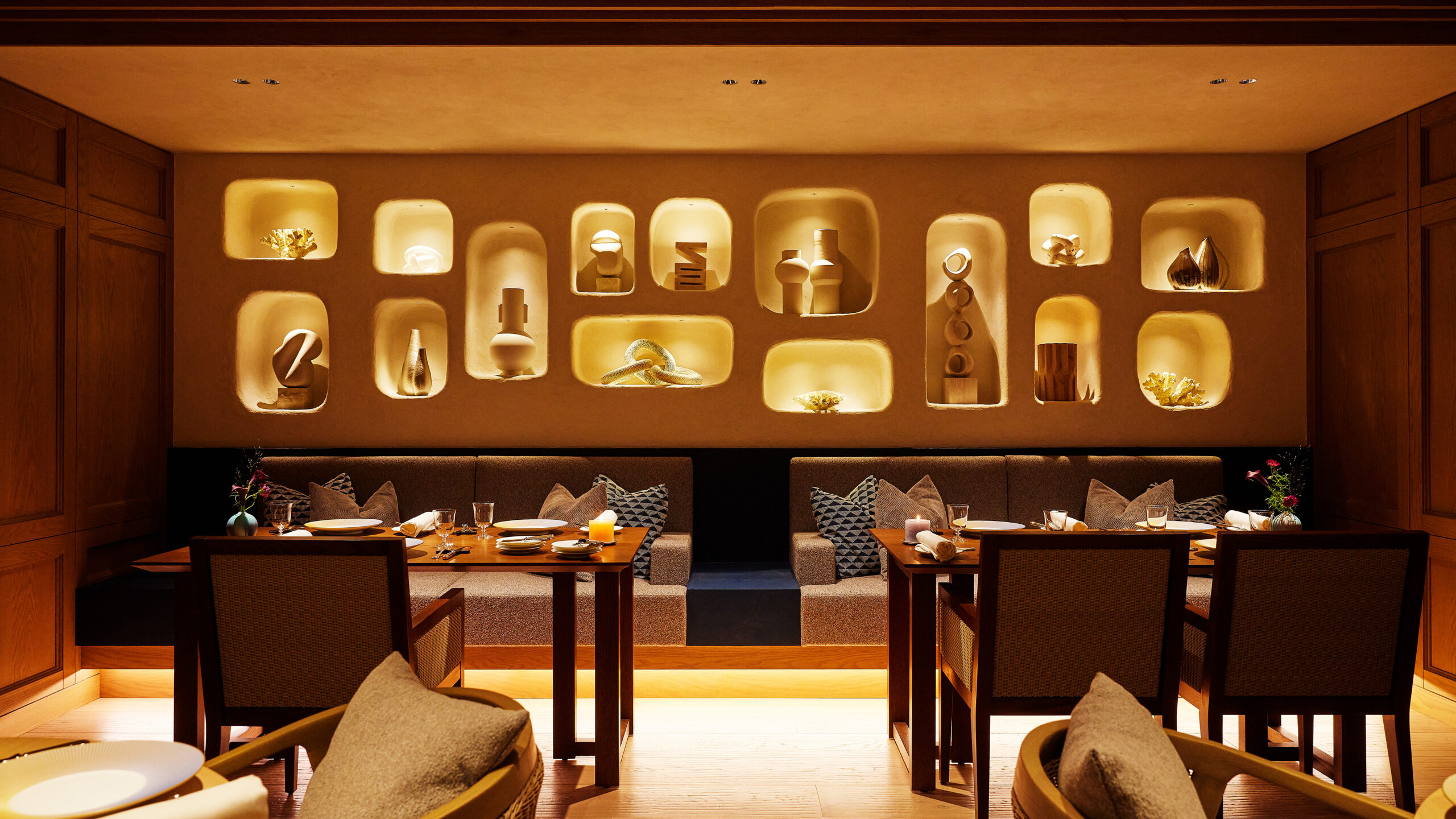
Located directly in front of Koshigoe Beach in Kamakura, UMITO Kamakura Koshigoe is an intimate small luxury hotel with just two guest rooms, each occupying an entire floor. Every room offers panoramic views of Enoshima Island and the horizon beyond, allowing guests to unwind to the soothing sound of the waves. Featuring private open-air baths and an ocean-view sauna, the property offers a tranquil seaside retreat that feels worlds away from the city, despite being only about an hour from central Tokyo. It is a place where guests can experience a quieter, more refined side of Shonan.
An Admiration for Craftsmanship, Learned from My Grandfather’s Back
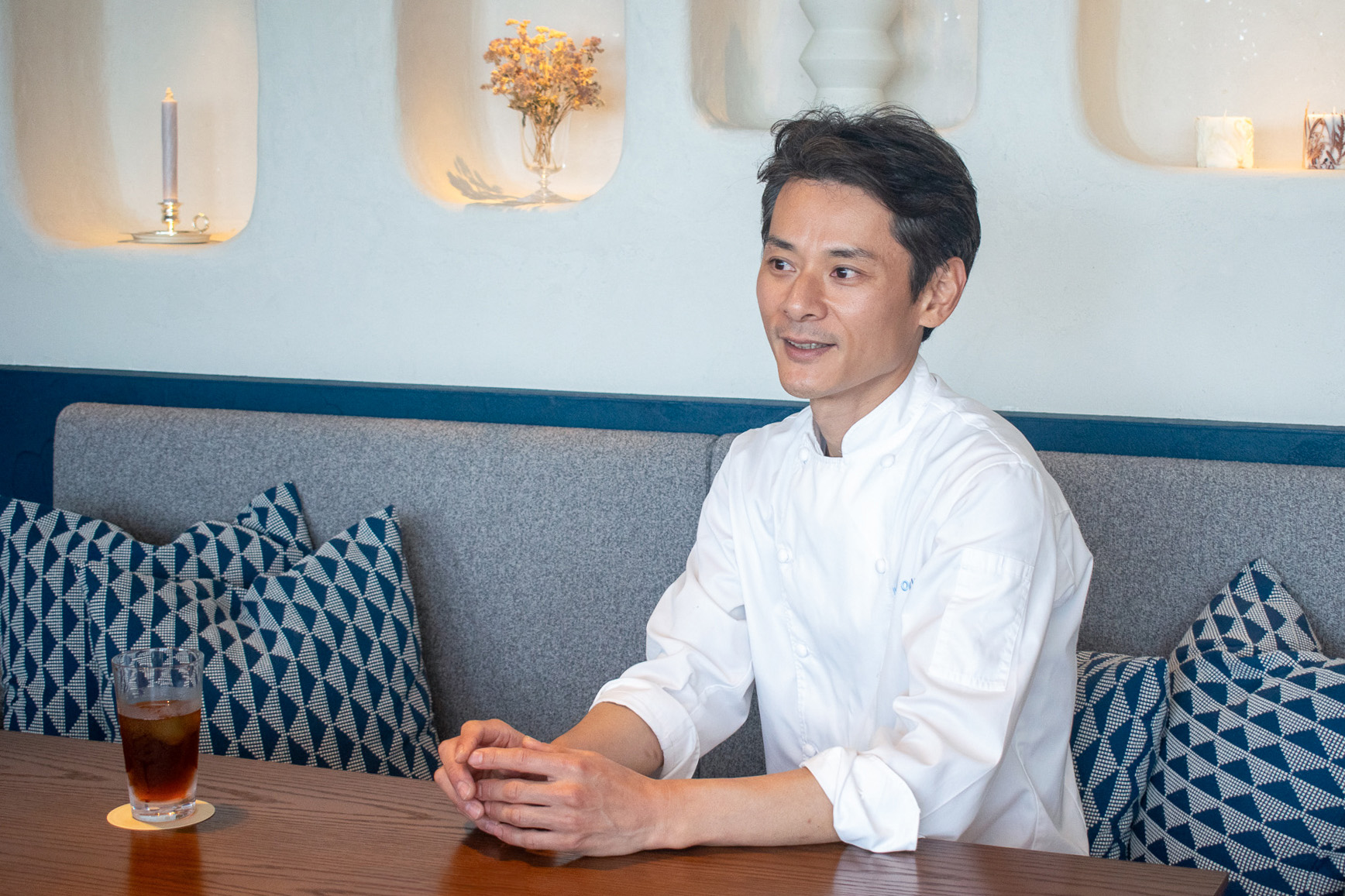
My paternal grandfather was a Miyadaiku (temple carpenter). He was the kind of person who could make anything he needed with his own hands—houses, desks, shelves. Even as a child, I was overwhelmed by the sight of him at work, and I admired him deeply.
I always had this feeling that I wanted to become a craftsman like my grandfather. One day, I asked him, “How can I become a craftsman like you?” He told me, “Architecture is the shortest path.” So I chose to study architecture in high school. But to be honest, I didn’t find much joy in drawing plans. My heart simply did not move.
The turning point came during my first year of high school. I began working part-time at a Japanese izakaya, and there I was taught how to cook, including how to fillet fish. The more I used my hands, the more fascinating it became. It was a sensation I had never felt in my architecture classes.
At Seventeen, I Drew the “Shortest Path” to France
The idea that I wanted to go to France came from a television program I happened to be watching. The moment I saw a chef standing in the center of a kitchen surrounded entirely by French cooks, I instinctively thought, “I want to stand there too!” The refined world of French cuisine and French culture seemed unlike anything in my everyday life up to that point, and I made up my mind: “I want to become a top French cuisine chef.”
How could I work at a three-star restaurant in France? First, I thought about the shortest possible path. I learned that if I entered a culinary school and earned top grades, there would be opportunities to train at leading restaurants in France. That meant I first needed a high school diploma in order to enter culinary school. Staying at my current school for two more years felt far too long. Once I worked backward from where I wanted to be, the steps I needed to take became obvious..
In my second year of high school, I left the architecture program, worked at the izakaya, and obtained my high school qualification as quickly as possible through correspondence courses. I then entered the French cuisine program at Tsuji Culinary Institute. There, I earned the opportunity to study at an advanced culinary school in France, and at the age of 19, I secured my ticket to France.
In France, I was assigned to train at Michel Guérard, a three-star Michelin restaurant tucked away in the mountains and the farthest placement from the culinary school. Looking back, I suspect the reasoning was, “He’s resilient enough to make it anywhere.” I could barely speak the language, but culinary terminology is surprisingly limited, so I learned through observation, repetition, and instinct. The kitchen was multinational, and I was often shouted at, yet I found the experience endlessly fascinating. When your purpose is clear, you discover just how much you are capable of enduring.
※
Paul Bocuse
Born in 1926, Paul Bocuse was a legendary chef representing Lyon, France, and was often referred to as the “Emperor of French Cuisine.” As a central figure in nouvelle cuisine, he had a profound influence on global food culture. His restaurant maintained three Michelin stars for many years, and he became an aspirational figure for chefs around the world.
Inheriting the Hiramatsu Name, and Letting It Go
After returning to Japan, I joined Hiramatsu Inc. I had a dream of working in Paris, so I chose a company that operated a restaurant there. It happened to be a time when the Paris restaurant was relocating and expanding from the 4th arrondissement to the 16th, and they needed staff on the ground. Fortunately, after a year and a half with the company, I was given the opportunity to move to Paris.
After honing my skills at Hiramatsu’s Paris restaurant, I trained at the three-Michelin-starred Paul Bocuse at the age of 26 and L’Auberge de l’Ill at 28. Throughout my twenties, I steadily advanced through the ranks while gaining experience at three Michelin three-star restaurants.
It was a demanding environment, but because I had a clear goal of becoming a first-class chef, I was able to face every hardship positively. A French kitchen, in some ways, resembles an orchestra. The chef is the conductor. It is not about individual performance; each person plays the necessary sound from their own station, and only then is the dish completed. I learned that structure with my body.
After returning to Japan, I was appointed Executive Chef of Restaurant Hiramatsu Hiroo, the flagship restaurant. Before long, a major conversation began to move forward: I would “inherit Hiramatsu.” Through adoption, I took on the Hiramatsu name. I wanted to protect the Hiramatsu brand. For its prosperity, I was prepared to keep fighting, even if it meant wearing myself down.
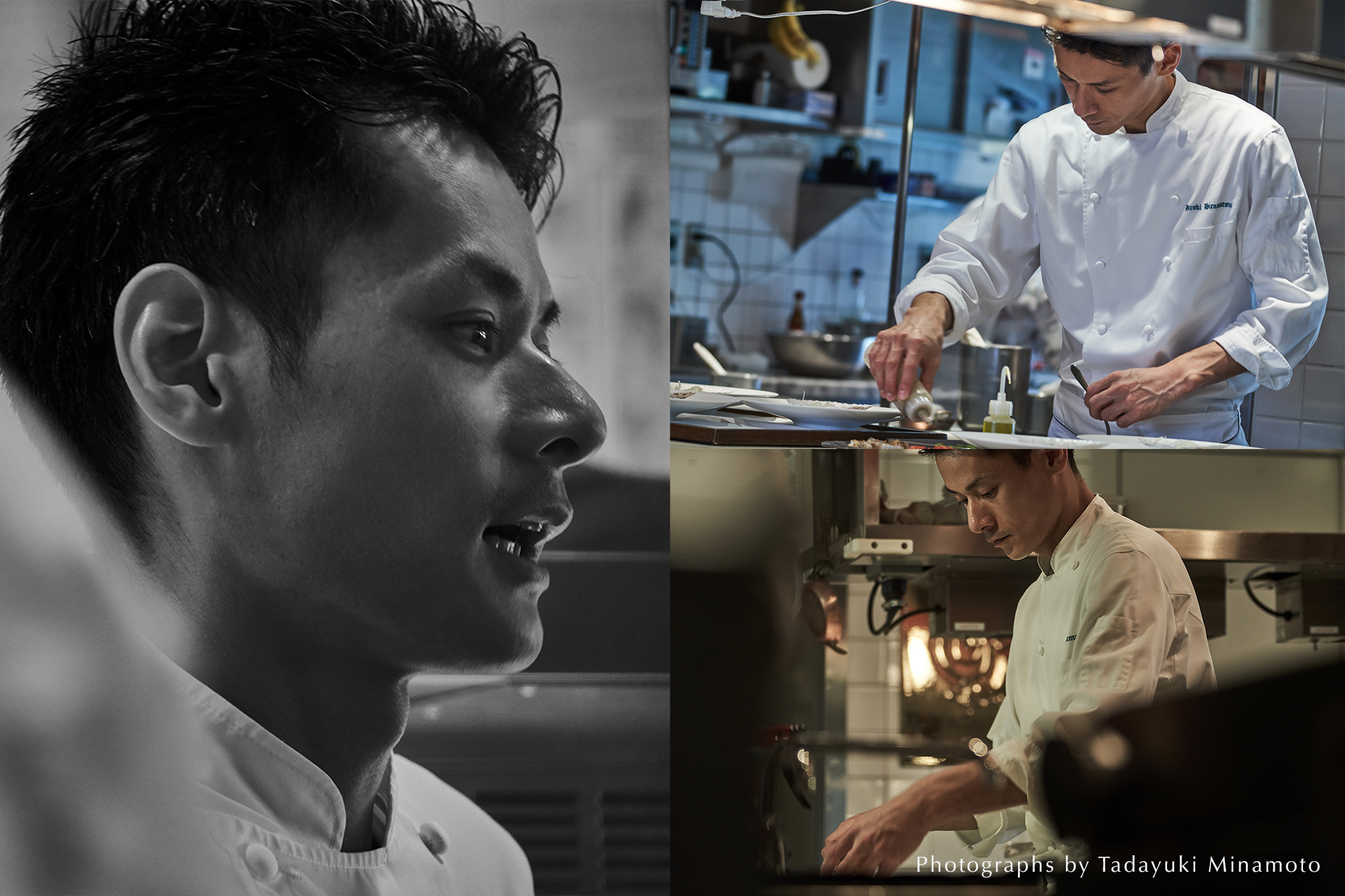
Looking back now, however, I feel that I had willingly stepped onto rails laid out for me and was merely overlaying myself onto the ideal image of “Chef Hiramatsu.” I had lost sight of who I truly was and where I truly wanted to go.
Then one day, a conflict arose between my former home, Hiramatsu Inc., and the independent Hiramatsu Research Institute. I was forced to choose which side to take. But to me, both were important. I could not choose one over the other. I kept saying, “Is there no way we can work together?” But that wish did not come true. In the end, I said, “Then I will be the one to step away,” and that very day, I left the Hiramatsu kitchen.
Still, when I thought of the guests who had reservations the next day, I could not simply walk away. At 3 a.m., I returned to the kitchen and quietly completed the preparations so that the guests would be satisfied. I left behind one final letter, and then quietly left the kitchen.
Looking back now, sometimes I think, “Maybe I could have made a bit more noise” (laughs).
But at that time, I could think only about the restaurant, not about myself.
What I Regained by Losing Everything
At that time, the passion I had poured so intensely into cooking suddenly deflated, as if a thread had snapped. To be honest, after giving everything I had, I had come to dislike cooking itself. At the same time, it felt as though even my sense of self-worth had vanished like foam. I had lost sight of what I should live for.
So, what should I do now? Just as I was asking myself that question, the COVID-19 pandemic arrived.
I decided to return to my father.
My mother had passed away at the age of 55, and since then, my father had been alone. And yet, using “I’m busy with work” as an excuse, I had barely gone to see him for the past ten years.
During that period when I could go nowhere, the days I spent quietly with my father were unexpectedly happy. Over that time, my feelings toward cooking, which I had come to hate, gradually began to recover. Then, all at once, a sense of frustration welled up inside me. “After training so desperately and working so hard, what am I doing now?” Around the time I began to think, “I want to stand on the stage once again as a chef,” UMITO representative Teppei Hori reached out to me. He said, “We want to create an auberge—a hotel centered around a restaurant—in a place overlooking the sea in Kamakura. Would you join us?” The oceanfront location, the concept of an auberge where guests enjoy their stay through food, and the challenge of creating new value—all of it overlapped with my own desire to pursue a dream once again.
“I want to put everything I have into building this place.”
I felt that without hesitation.
There were certainly things I lost. But I was able to regain time with my father, and I found the strength to move toward my dream once more. In the end, I now feel that I received something far greater than what I had lost.
The Chef Is a Conductor; Cooking Is an Experiment
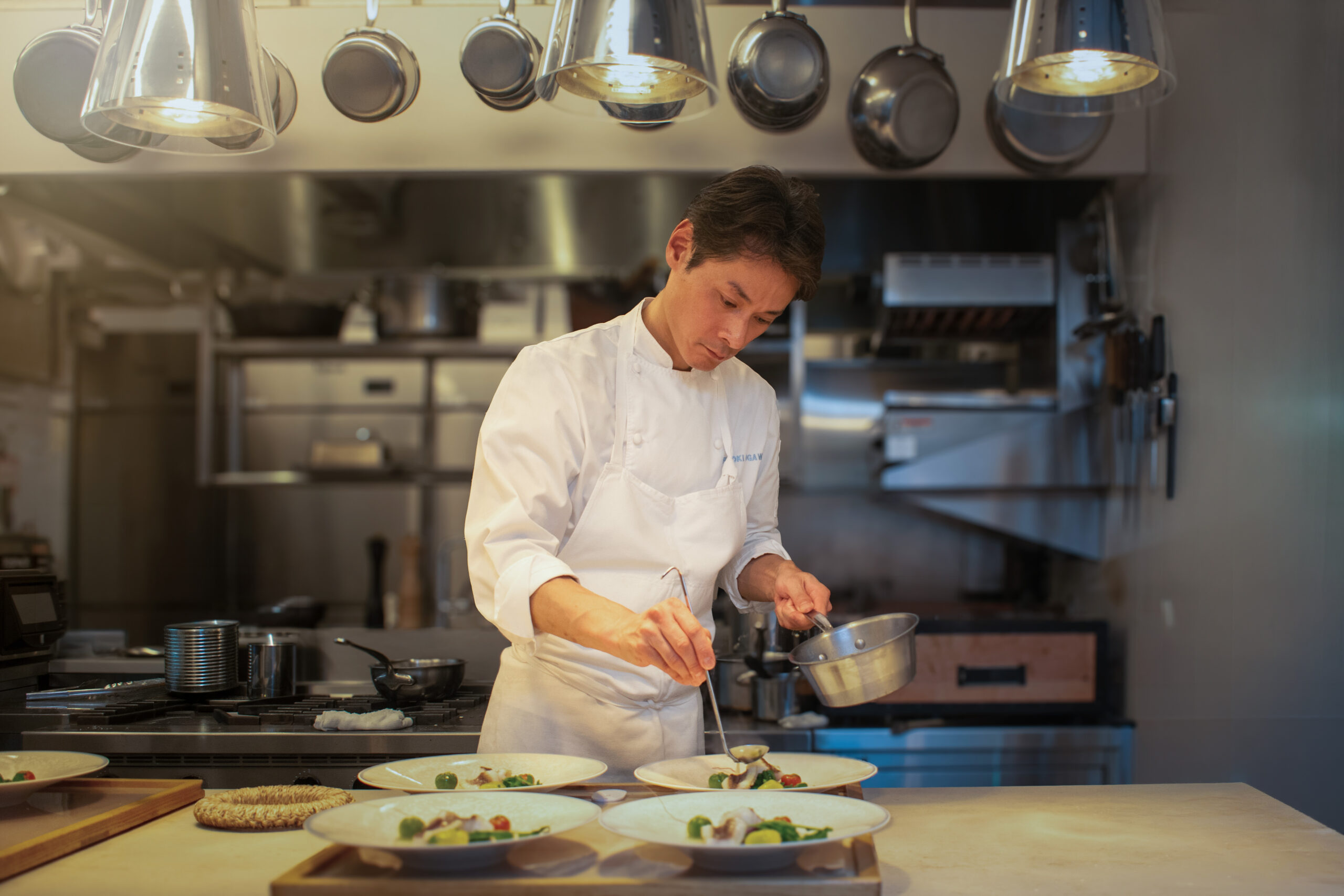
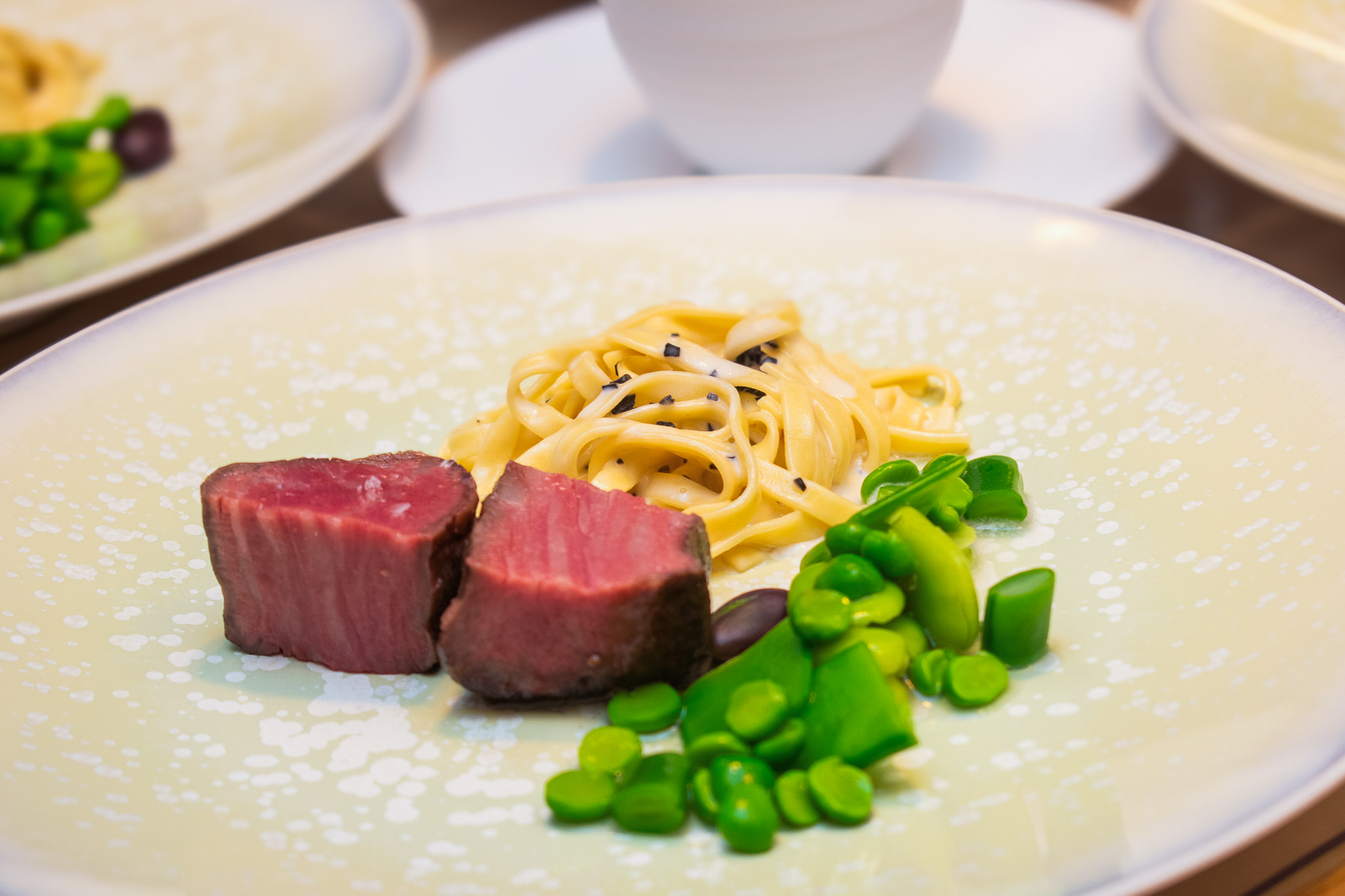
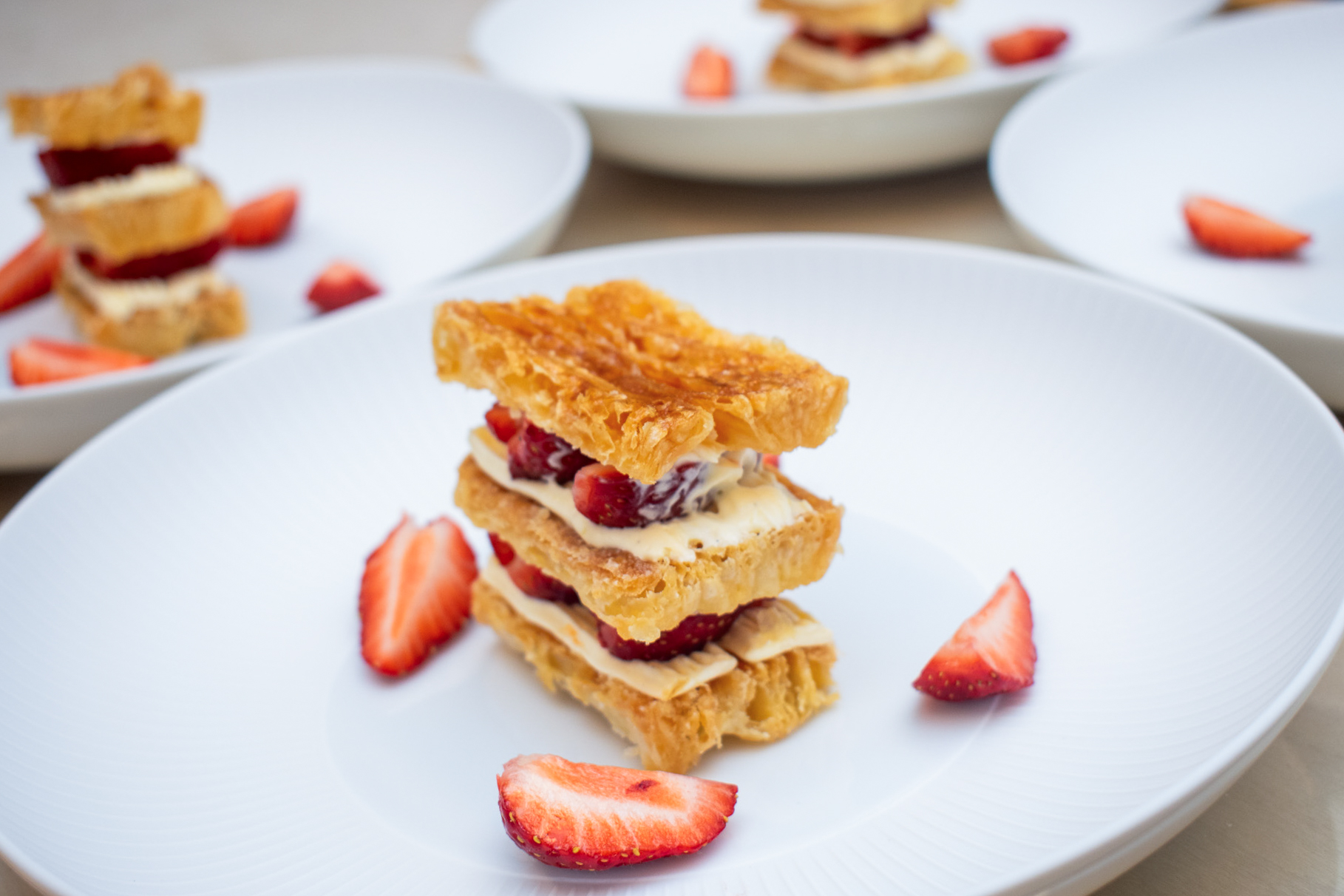
The cooking at UMITO Kamakura Koshigoe’s Le RESTAURANT is completely different from before, starting with the way we create dishes.
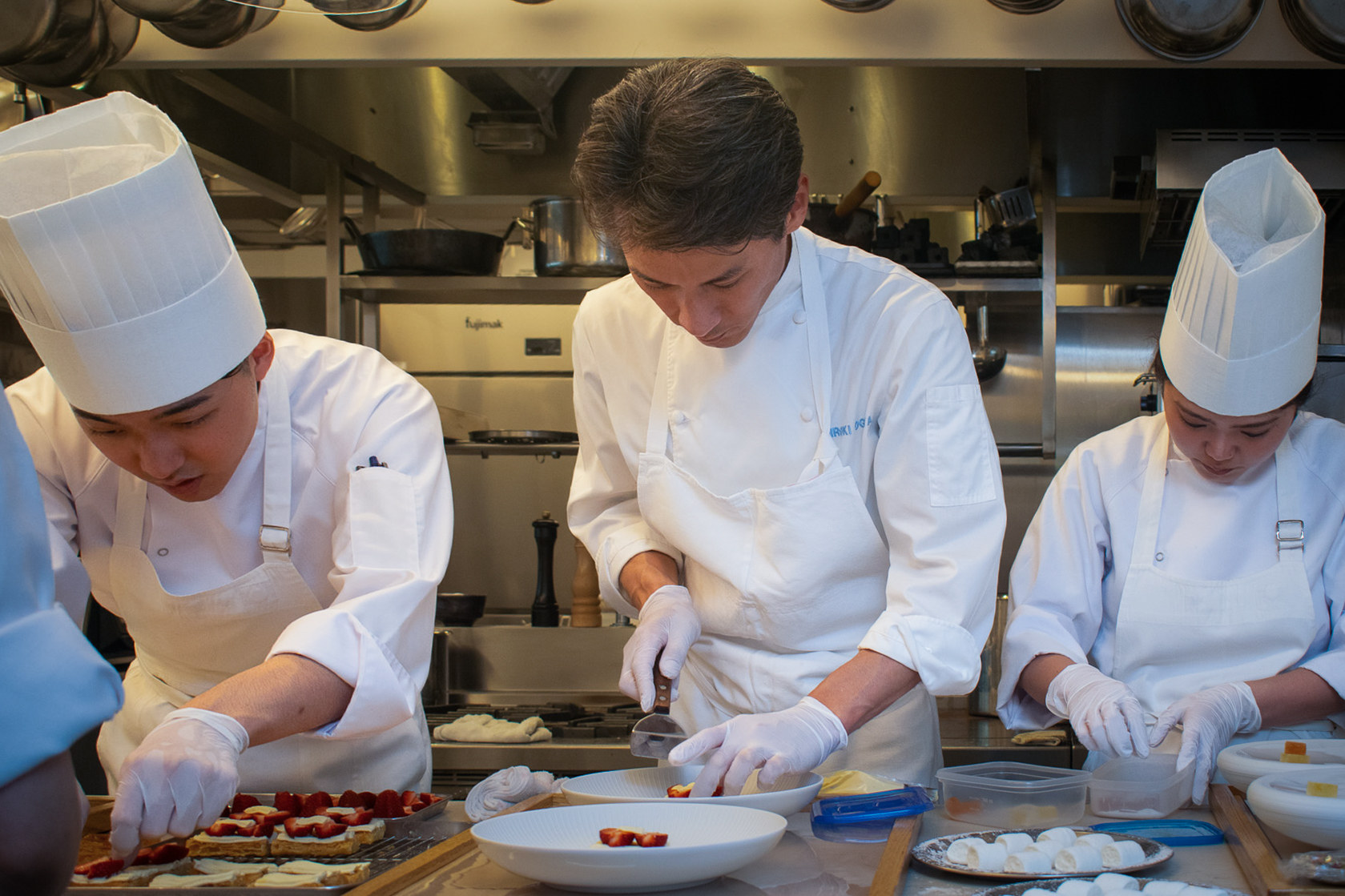
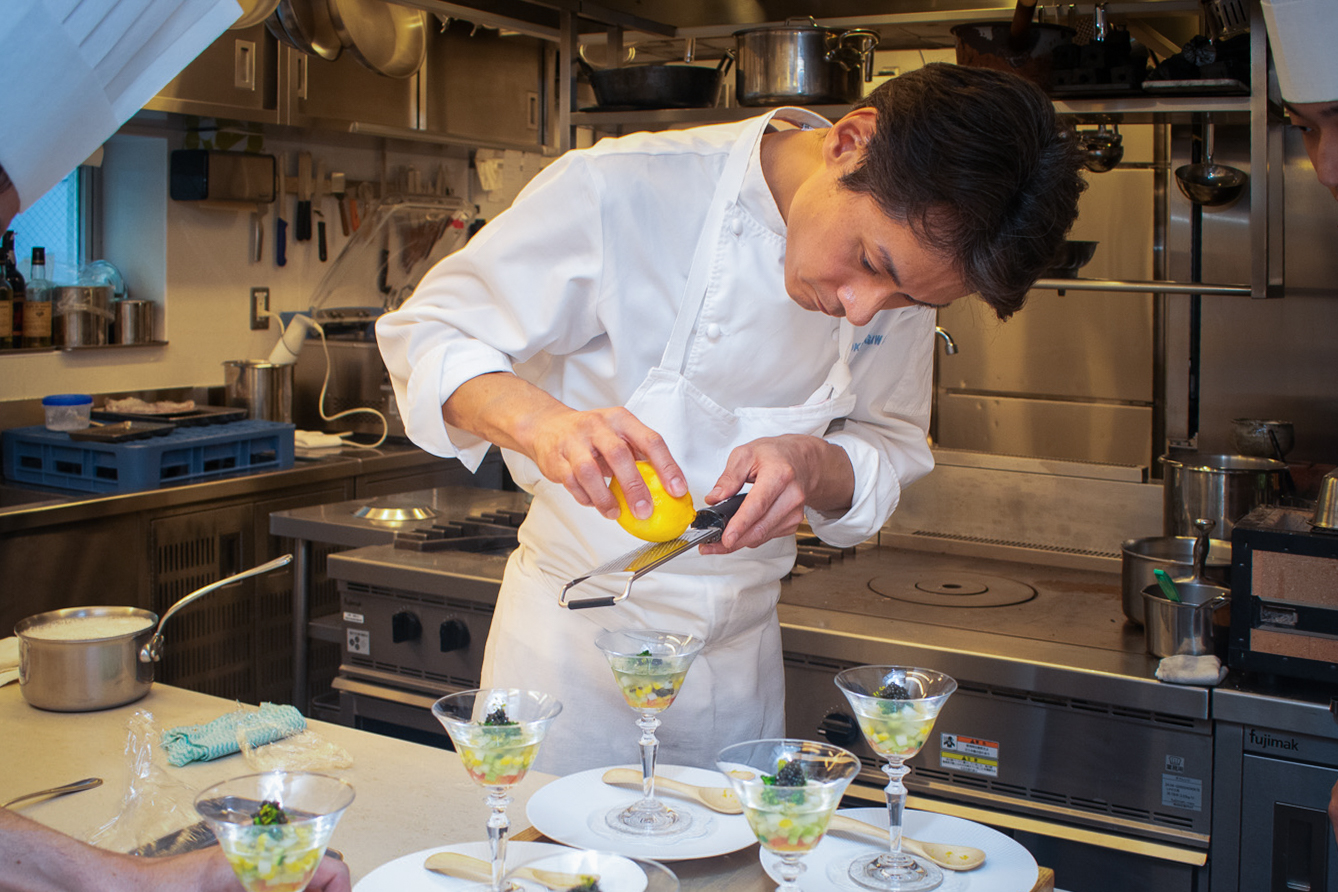
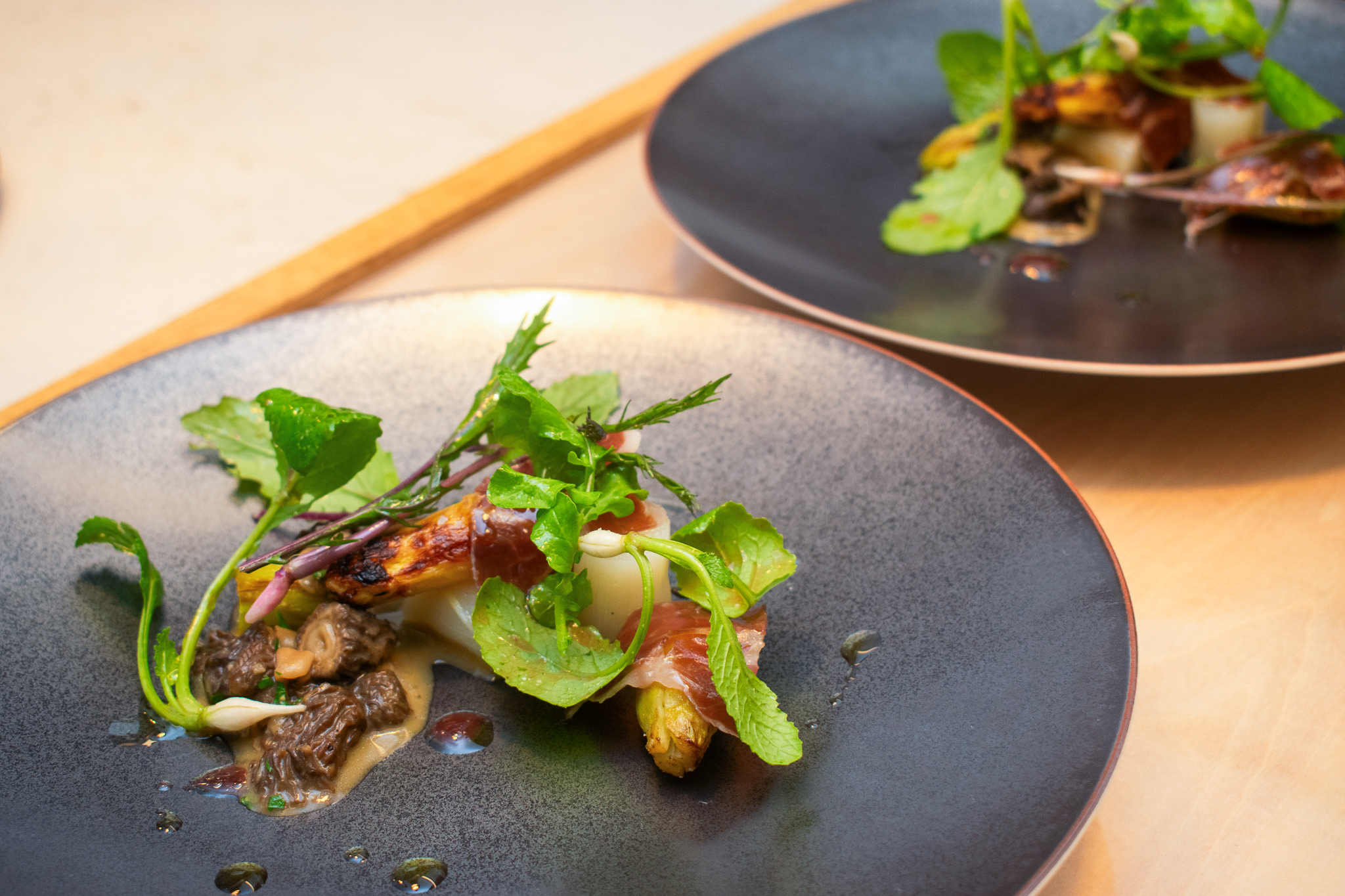
In the past, I would first imagine what I wanted to make, then source ingredients from around the world to match that vision. Now, it is the opposite. Facing the vegetables that arrive each morning and the local ingredients I encounter by going to the market myself, I ask, “What can I create with these?” I imagine and decide the menu while engaging directly with the ingredients. The true excitement of cooking exists within those constraints.
When chefs feel uncertain, they tend to add something in order to feel reassured. Just after returning from France, I lacked confidence as a chef, and I used to manipulate ingredients in many ways to create my dishes. Looking back now, I think that was a form of disguise. Stripping away the unnecessary, subtracting again and again, and facing the ingredient itself with sincerity—that is what I mean by “subtractive cuisine.” It is also a concept at the root of Japanese cuisine. As with sashimi, the question is how to simply draw out the inherent power of the ingredient. To me, that is the essence of cooking.
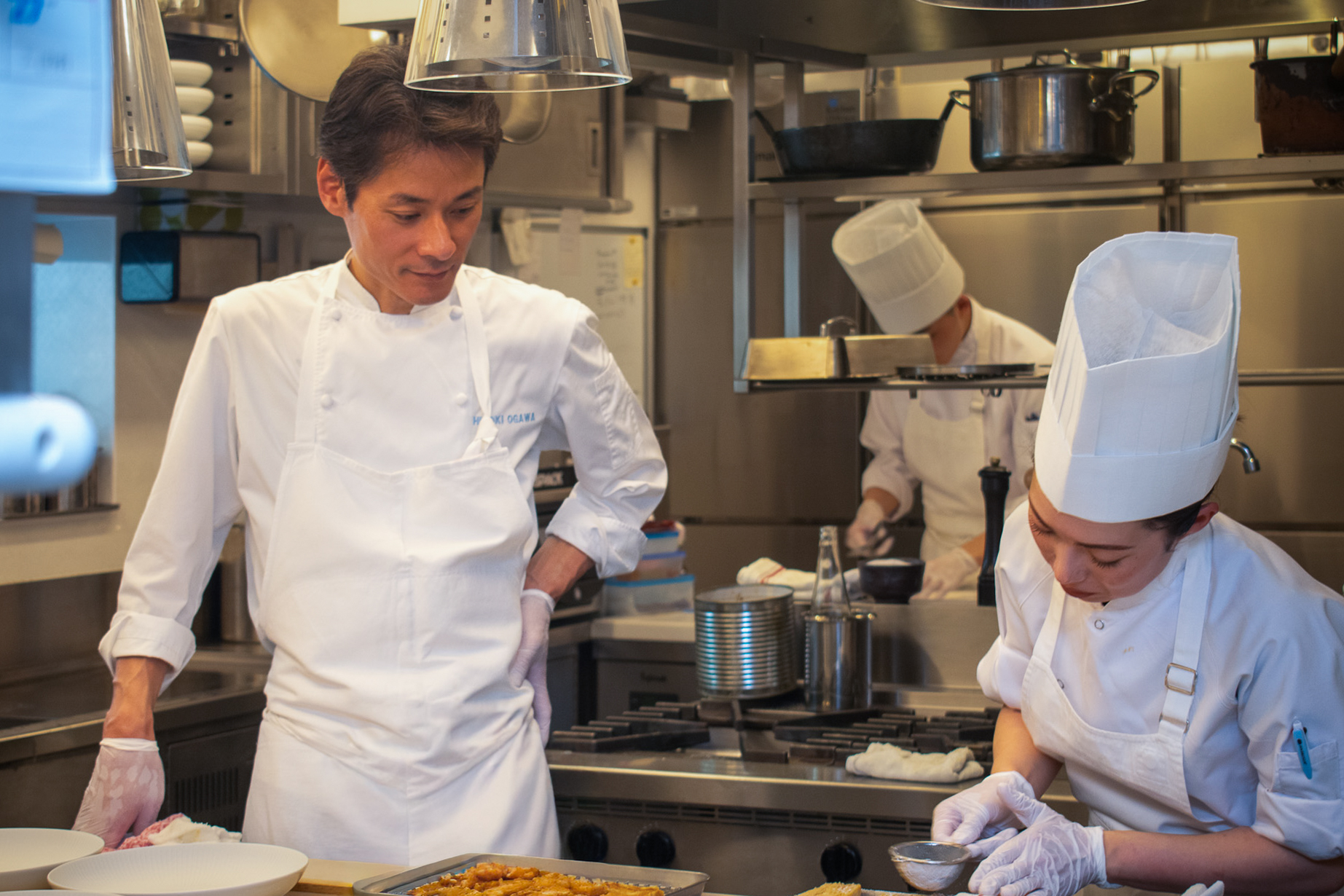
The phrase I learned during my training in France—“the chef is a conductor”—finally makes sense to me now. In the past, I believed, “I decide everything. I don’t listen to other people’s opinions. That is what it means to be a chef.” But now, I believe my role is to bring out the strengths of each member of the staff. I exist because of the people around me. Just as with cooking, my way of relating to people has also become one of subtraction. I feel I have become gentler, both toward others and toward myself.
I tell young staff members, “Cooking is not a challenge; it is an experiment. So don’t be afraid. Try many things.” If you think of it as a challenge, failure becomes frightening. But if it is an experiment, every result becomes a discovery. I want them to face cooking more freely, without fear.
From now on, I want to keep building a life in which I can make the person in front of me happy. I believe that beyond that, there is a place where I can truly shine.
Having my life up to this point brought together in an article like this has given me a precious opportunity to look back once again. The words Daisuke once shared with me—“Ningen banji saio ga uma,” meaning that fortune and misfortune are unpredictable—still remain deeply in my heart. Looking back, I feel that the phrase may well describe my life itself. And the fact that we, who had once lost contact, were able to meet again in this way also feels like fate. I am truly happy about it.
Becoming the chef of a French grande maison, something I had dreamed of since I was young, and spending eight years there was an irreplaceable period in my life. From the outside, it may have looked like a smooth and successful path. But the higher I stood, the heavier the struggle became, and there was a time when I lost sight of myself. Even after letting go of almost everything I had believed to be my value, I am who I am today because of the people who supported me at each moment, the new encounters that came my way, and my father and friends who quietly watched over me back in my hometown.
My desire “to become a French cuisine chef” and “to lead the kitchen like a conductor” has changed shape, but it still remains at my core. Through this interview, I was able to recognize that origin once again. I also feel that everything—my training in France, my years as Chef Hiramatsu, and even the time I spent away from cooking—has led to the way I now face both cuisine and people.
I am sincerely grateful to be able to take on the challenge of being a chef once again in this new place called UMITO. Rather than carrying everything alone as I once did, I now feel great joy in creating each plate together with all of our staff and producers.
I would be happy if this article becomes an opportunity not only to share my own journey, but also to convey to someone that even after losing something, people can face forward again.
General Manager, UMITO Kamakura Koshigoe
Chef, “Le RESTAURANT”
Hiroki Ogawa
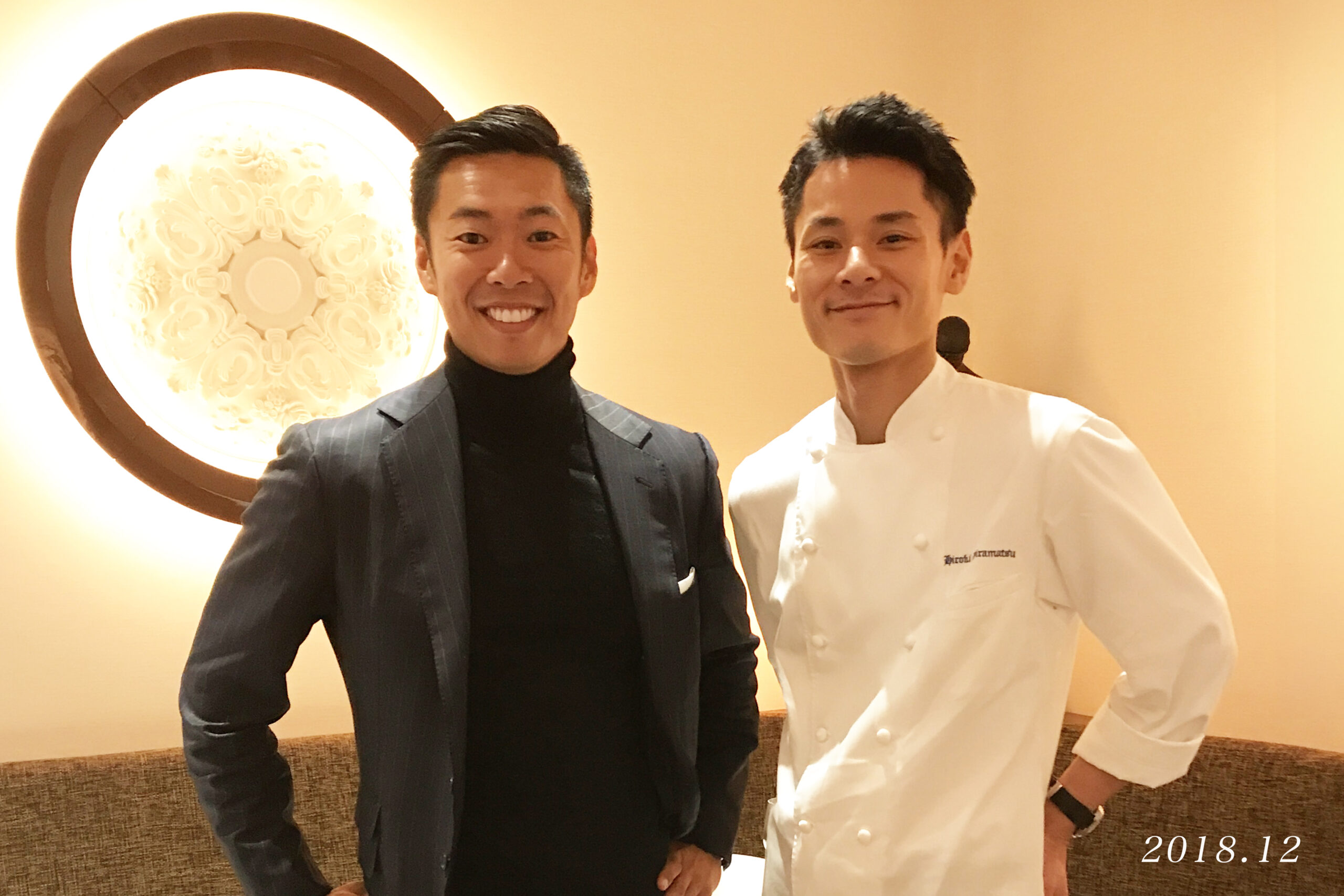
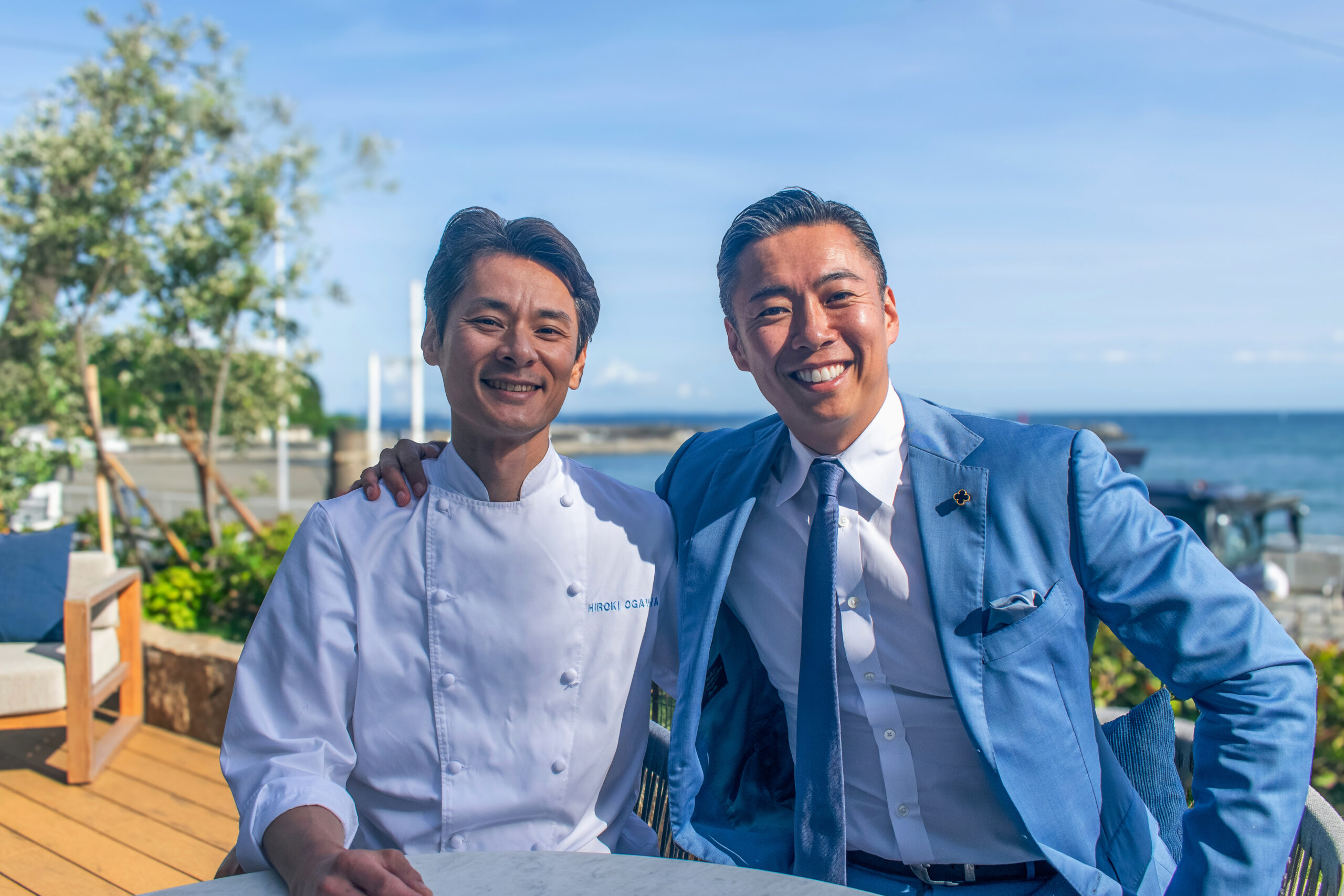
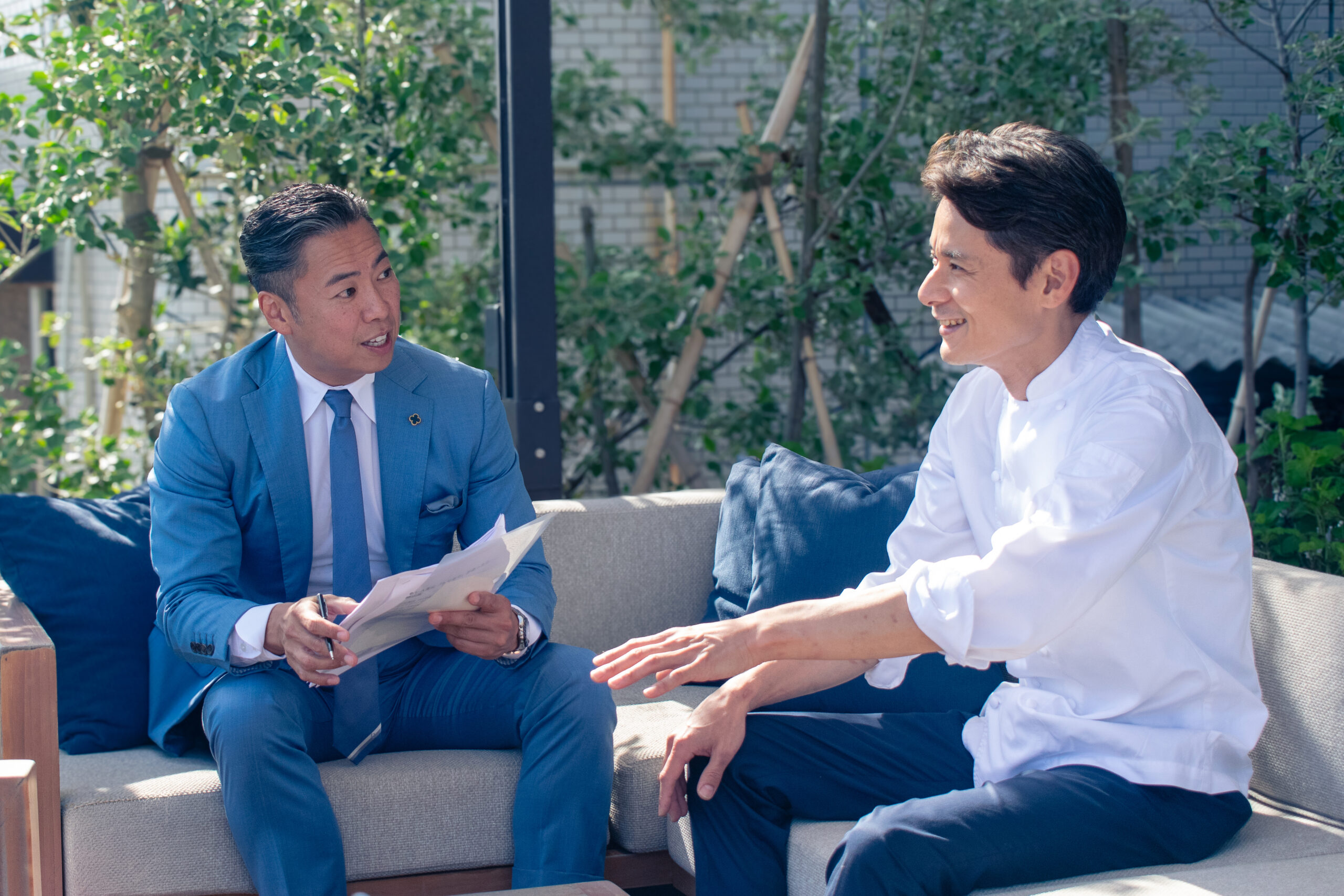
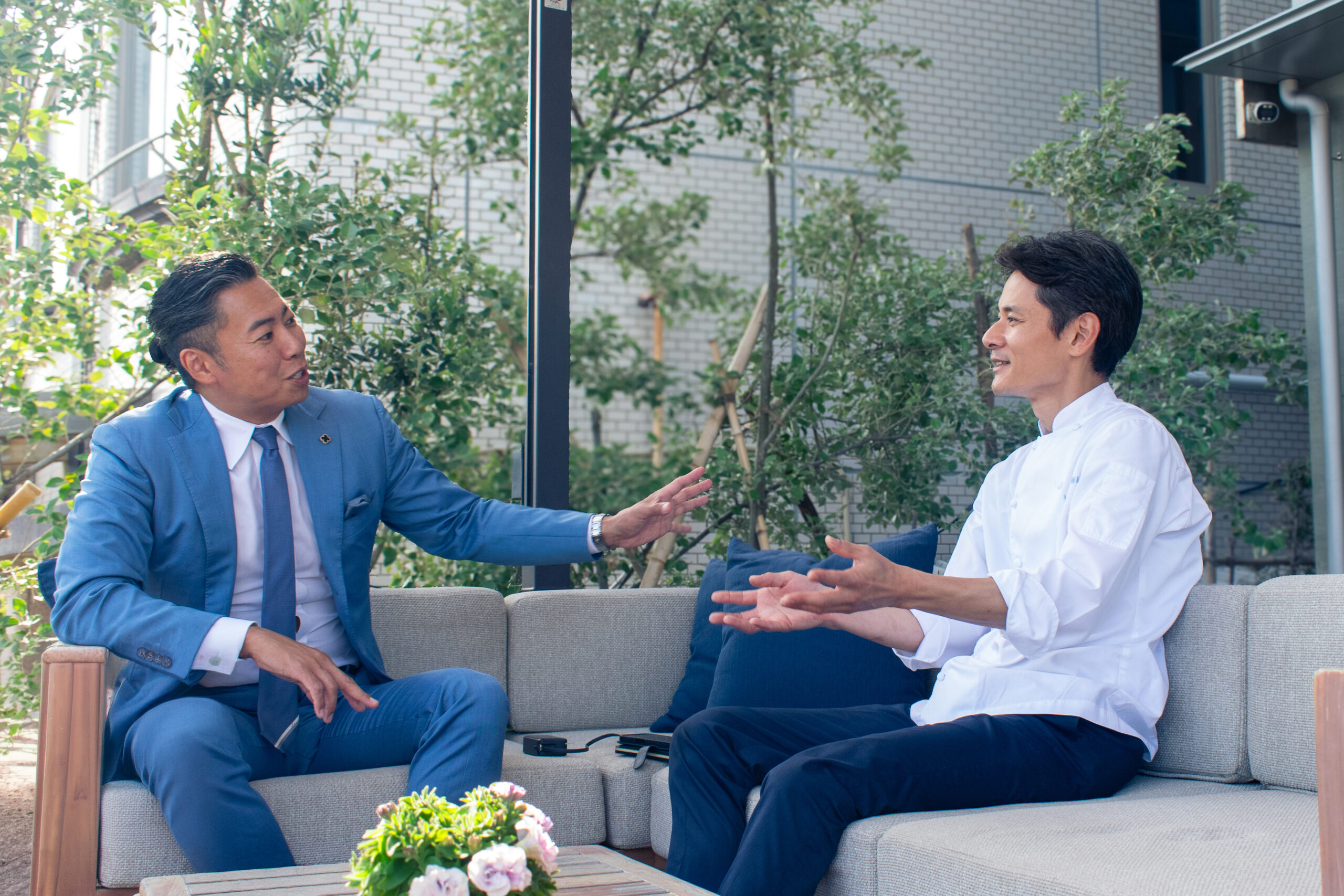
For me, this interview was, in a sense, a story of reunion.
I first met Chef Hiroki when I was involved in work related to Hiramatsu. Even within the culinary world, he had a reputation as someone “in a class of his own,” the kind of chef whose name many other chefs would mention with respect.
Later, in 2018, while on a business trip to Fukuoka, I had the opportunity to meet him again at Hiramatsu Fukuoka. I made a reservation at the last minute and had his cuisine. I still vividly remember being overwhelmed by the philosophy and tension that lived in each dish, and thinking, “Cuisine can reveal this much of a person’s humanity.”
And then, Hiroki suddenly disappeared.
Time passed, and one day, while scrolling through Instagram, I happened to see an advertisement for UMITO. There he was—not as “Hiroki Hiramatsu,” but as Hiroki Ogawa, Chef of “Le RESTAURANT.”
The moment I saw it, I contacted him immediately. What did it mean to return to his original name? What had he found after letting go of everything? What kind of view was he seeing now? I wanted to hear it directly from him.
In that sense, this interview was also, for me, a kind of “proof of life” for Hiroki.
What I felt through the interview was the loneliness and pressure behind a brilliant career, and the scenery that became visible precisely because he had lost so much. His philosophy of moving toward the essence not by adding, but by subtracting, seems to apply not only to cuisine, but to life itself.
When I met Hiroki again at UMITO Kamakura Koshigoe, he had the same sharpness as before, but now it was accompanied by a greater depth and gentleness as a person. Seeing him standing in the kitchen once again, facing his cuisine with a calm expression, made me truly happy.
Please visit UMITO Kamakura Koshigoe and experience Chef Hiroki’s cuisine for yourself. Through his dishes, I believe you will feel something meaningful.
Le RESTAURANT (Book a Table)
DK Sugiyama, Editor-in-Chief, My Philosophy

May 2026
At UMITO Kamakura Koshigoe
Interview and Editing: DK Sugiyama
Project Manager: Chiho Ando
Text: Eri Shibata, Deputy Editor-in-Chief, My Philosophy
Photography: Hirona Goto
Produced by the Editorial Team of My Philosophy®
Milestone (2007~)
View all Interviews
-
Vol.130 Mihoko Yamasaki
Creator of a Walking Method for Better Posture and Gut Health
-
Vol.129 Anis Uzzaman
Founder and CEO, Pegasus Tech Ventures
Founder and Chairman, Startup World Cup -
Vol.128 Nicolai Bergmann
Flower Artist
-
Vol.127 Hideki Wada
Psychiatrist
-
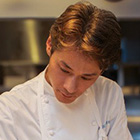
Vol.126 Hiroki Ogawa
General Manager, UMITO Kamakura Koshigoe|Chef, Le RESTAURANT
-
Vol.125 Seiichi Okada
Owner & Vice Chairman, Medical Corporation Seiseikai Inokuchinoma Hospital
President & CEO, Okada Medical Investment Co., Ltd. -
Vol.124 Masato Kato
President & CEO, Bechstein Japan Co., Ltd.
Klavierbaumeister -
Vol. 123 Akiko Yamamoto
Japan President, Van Cleef & Arpels, Richemont Japan
-
Vol.122 Akimi Fukuhara
Pianist
-
Vol.121 Sammy Miyamoto
Hairstylist & Entrepreneur / President, “momotaro salon”
-
Vol.120 Ryotaro Muramatsu
Artist / Founder of NAKED, INC. / Visiting Professor at Osaka University of Arts / Branding Director of Achi Village, Nagano
-
Vol.119 lecca
Singer-Songwriter
-
Vol.118 John Tanzella
President / CEO of the International LGBTQ+ Travel Association (IGLTA)
-
Vol.117 Marin Alsop
Conductor
-
Vol.116 Hajime Kinoko
Modern Artist, Kinbakushi (Rope Master), Rope Artist, Photographer
-
Vol.115 Shintaro Koizumi
Out Japan Co., Ltd Chairman
SK Travel Consulting Co., Ltd (Out Asia Travel) President
International LGBTQ+ Travel Association (IGLTA) Ambassador to Asia -
Vol.114 George Fujisawa
George Fujisawa, President of Fluid Power, Ltd.
-
Vol.113 Kazumi Arikawa
President, Albion Art Co., Ltd.
Founder, Albion Art Jewelry Institute
Chevalier of the Ordre des Arts et des Lettres (French Republic)
International Council Member, Metropolitan Museum of Art (New York) -
Vol.112 Leslie Kee
Photographer
-
Vol.111 Mitsuyuki Takada
President and CEO of Albalkan Corporation
-
Vol.110 Koji Sato
Head Chef of Yamagata Kappo Akasaka Ajisai
-

Vol.109 Krishna Ramachandra
Founder and Non-Executive Chairman of Digital Insights Ventures
-
Vol.108 Marc Einstein
Chief Analyst of ITR Corporation
-
Vol.107 Kentaro Sakai
President and CEO of Sakai Fish Farm Co., Ltd.
-
Vol.106 Ryuki Narita
President of Narita Koi Farm Co., Ltd.
-
No.105 Yoshihiro Tsumura
President and Group CEO, Aderans Co., Ltd.
-
Vol.104 Takatoshi Maruo
"Bali's Aniki (*Big Brother)"
-
Vol.103 Takashi Shimokawa
Principal of the preparatory school "Bulkan Juku" | President and CEO of Tass Group
-
Vol.102 Sayuri Yamaguchi
Ginza "CLUB GRÈS" Owner Mama
-
Vol.101 Koji Yamamoto
President and CEO of Global Partners Inc.
-
Vol.100 Tetsuo Gyotoku
Director of the Japan BE Research Institute
-
Vol.99 Kiyoshi Murano
Philosopher and Astronomer | Futurist
-
Vol.98 Hiroshi Yaegashi
Catalyst | Business Creator
-
Vol.97 Hiroyuki Sasaki
Chairman, Group Representative & CEO Pro Labo Holdings Co., Ltd.
-
Vol.96 Satoshi Yamaguchi
Chairperson of the Chitose Koyukai Social Welfare Corporation
-
Vol.95 Hideko Suzuki
Doctor of Literature | Critic
-
Vol.94 Kiyoshi Kurokawa
Doctor of Medicine | Honorary Professor at the National Graduate Institute for Policy Studies | Representative Director of the Health and Global Policy Institute
-
Vol.93 Hiroshi Senju
Japanese Painter | Professor at the Graduate School of Kyoto University of the Arts and Design
-
Vol.92 Takashi Yamane
Management Scholar | Certified Public Accountant | Professor at Waseda University Graduate School of Business and Finance (WBS) | Emeritus Professor at Keio University
-
Vol.91 Kazuo Noda
Honorary Chairman of the Japan Research Institute, a general incorporated foundation | Honorary Chairman of the Social Development Research Center, a general incorporated foundation | Honorary President of Tama University | Honorary President of The Graduate School of Project Design
-
Vol.90 Goichi Okada
Sales Office Manager, Prudential Life Insurance Co. | Senior Consulting Life Planner
-
Vol.89 Tatsumitsu Yamazaki
Honorary Chairman of the Japan Sailing Federation | Former Chairman of S&B Foods Inc.
-
Vol.88 Rick Blangiardi
Hawai‘i News Now Manager
-
Vol.87 Timothy Cottrell
Head of School, ‘Iolani School
-
Vol.86 John Gotanda
President of Hawai‘i Pacific University
-
Vol.85 George Ariyoshi
Former Governor of Hawaii
-
Vol.84 Taro Yoshida
President and CEO, Hawaii Hochi Ltd.
-
Vol.83 Naoki Kusano
President, HANAKEN | TOKYO TONKOTSU RA-MEN BANKARA Founder
-
Vol.82 Akira Kawashima
Doctor | Doctor of Medicine | Professor, Department of Acupuncture and Moxibustion, Faculty of Health Sciences, Tokyo Ariake University of Medical and Health Sciences
-
Vol.81 Reika Asai
President of Kirei Company, Inc.
-
Vol.80 Seiji Hayashi
President and CEO of Car Conveni Club Co., Ltd.
-
Vol.79 Shinichi Inoue
CEO of Peach Aviation Co., Ltd.
-
Vol.78 Katsuyoshi Fukuyama
President and CEO of Gardner Co., Inc.
-
Vol.77 Nahoko Ishikawa
Representative Director, Sixth Sense Labs, Inc.
-
Vol.76 Shin Yamagishi
Photographer
-
Vol.75 Mikio Kawai
Professional Surfer
-
Vol.74 Isao Aoki
Professional Golfer | Chairman, Japan Golf Tour Organization
-
Vol.73 Norihiko Sasaki
Executive Director, Editor-in-Chief of NewsPicks | Editor | Journalist
-
Vol.72 Yazaki Yasuhisa
Freelance Journalist | Editor
-
Vol. 71 Michael Anthony
Executive Chef, Gramercy Tavern
-
Vol.70 Kenji Takenaka
Flower Designer
-
Vol.69 Daniel T. Ebihara
Head of the New York Kendo Dojo, Entrepreneur, and Product Designer
-
Vol.68 Kyoko Gasha
Journalist | Film Director
-
Vol.67 Casey Taniguchi
President of Yomitime
-
Vol.66 Misao Ito
Writer | Art Producer
-
Vol.65 Narimasa Nakaoka
President and Representative Director, Suzukake Co., Ltd.
-
Vol.64 Takashi Sano
Chocolate Shop Owner-Chef
-
Vol.63 Toshiaki Kurosaka
Chairman of Porsche Japan K.K.
-
Vol.62 Taro Saito
Communication Designer. President and CEO of dof Inc., Co-CEO of CC Inc., Outside Director of VOYAGE GROUP Inc., Outside Director of Oceanize Inc., and Global Strategy Committee Member of the NPO TABLE FOR TWO.
-
Vol.61 Hideyuki Murakami
President and CEO of Iwataya Mitsukoshi Ltd. | Executive Vice President of Isetan Mitsukoshi Holdings Ltd.
-
Vol.60 Yoshiyuki Okuno
Owner-Chef of Ristorante La Brinca
-
vol.59 Rika Yukimasa
Culinary Researcher | CEO, REKIDS Co., Ltd.
-
Vol.58 Kazuko Tōdō
Manager and Proprietor of "Royal Box" and "Lindbergh" | Editor-in-Chief of 'LB Nakasu Newsletter
-
Vol.57 Takaharu Futaeda
CEO, Anny Group KFT
-

Vol.56 Kengo Kuma
Architect
-
Vol.55 August Hergesheimer
President and CEO of Abios Corporation | Ph.D. in Nutritional Science
-
Vol.54 Tomio Taki
Honorary Advisor, Takihyo Co., Ltd.
School Board Chairman, Taki Academy, Inc.
Board Member, Mikimoto (America) Inc. -
Vol.53 Tadashi Okura
President and CEO of Torikizoku Co., Ltd.
-
Vol.52 Hiroshi Sugimoto
Japanese Painter | Specially Appointed Professor at Yokohama University of Art and Design
-

Vol.51 Aureana Tseu
Hula Artist
-
Vol.50 Don Konishi
Fashion Designer | Visiting Professor, Nagoya University of Arts and Sciences
-
Vol.49 Sachio Senmoto
Chairman of the Board, Renova, Inc.
-
Vol.48 Naoyoshi Amari
Head Priest of Ichigyosan Senshuji Temple | Principal of Senshu Kindergarten
-
Vol.47 Takashi Maeno
Dean and Professor of the Graduate School of System Design and Management at Keio University.
-
Vol.46 Tomizo Yamaguchi
Third-Generation Head of Kyoto Confectionery "Suetomi"
-
Vol.45 Toshiharu Kokubun
Representative Director of Earth Holdings Co., Ltd.
-
Vol.44 Keita Obara
Professional boxer
-
Vol.43 Yuko Kibayashi Shin Kibayashi
Non-fiction writer and manga creator
-
Vol.42 “My Philosophy” Junki Yoshida
Chairman and CEO, Yoshida Group & Founder, Yoshida Sauce
-
Vol.41 Seisei Hanayama
Artist
-

Vol.40 Yoshiharu Sekino
Explorer | Anthropologist | Professor at Musashino Art University
-
Vol.39 Masaki Yokokawa
Representative of WELCOME Group
-
Vol.38 Tamami Sunoda
President and CEO of NOZZE (Marriage Information Center)| President, CEO, and Owner-Designer of Fashion Brand "JuviJuvi"
-
Vol.37 Shuichi Tsuji
Sports Doctor | CEO of Eminecross Co., Ltd.
-
Vol.36 Yuichiro Miura
Professional Skier | Principal of Clark Memorial International High School
-
Vol.35 Nobufumi Matsunaga
Educational Environment Setting Consultant | Founder of V-net Educational Consultation Office
-
Vol.34 Tetsu Mizutani
Suntory Beer Limited - President, Chief Executive Officer
-

Vol.33 Yukino Kikuma
Lawyer
-

Vol.32 Keiko Kouda
CEO of AsMama Co., Ltd.
-

Vol.31 Takami Hasebe
White Ship Inc. CEO | Art Producer
-

Vol.30 Aya Kinoshita
Representative Director of UHM Co., Ltd. | General Manager of Hotel Niwa Tokyo
-

Vol.29 Clara Komazaki
KoLabo Co., Ltd. Representative Director and President
-

Vol.28 Nobuko Tsutsumi
Lecturer at Showa Women's University, Aoyama Gakuin Women's Junior College, and Hosei University | Freelance Announcer | Essayist
-

Vol.27 Yu Kaida
Portrait photographer
-

Vol.26 Manabu Miyasaka
President and CEO, Yahoo Japan Corporation
-

Vol.25 Shuichiro Kimura
Representative Director of Boulangerie Eric Kayser Japon Inc.
-

Vol.24 Yohei Sadoshima
President and CEO of Cork, Inc.
-

Vol.23 Toshiaki Kanda
Representative of Kanda News Network | IT Journalist, Social Media Consultant
-

Vol.22 Emmy Suzuki Harris
Japanese Representative of Change.org
-

Vol.21 Masakazu Yanagisawa
Director of Global Prime Finance Sales at Deutsche Securities Inc. | Board Member of NPO good aging yells
-

Vol.20 Fumio Tateishi
Chairman of the Board of Directors, OMRON Corporation
-

Vol.19 Nobuyuki Idei
Founder & CEO, Representative Director of Quantum Leap Corporation
-

Vol.18 Rowland Kirishima
Photographer | Multi-Creator
-

Vol.17 Junko Masachika
Founder of Personal Styling | President and CEO of Fashion Rescue Ltd. | Dean of Personal Stylist Japan | Chairman of the Professional Personal Stylist Association
-

Vol.16 Kumiko Otsuka
President and Representative Director of Otsuka Kagu, Ltd.
-
Vol.15 Tsugihiko Fujiwara
President and CEO of AOI Pro. Inc.
-
Vol.14 Hideaki Inoue
President and CEO, Park Corporation
-
Vol.13 Edward Suzuki
Architect | Representative of Edward Suzuki Associates Inc.
-
Vol.12 Hiroshi Kato
Economist
-
Vol.11 Seiichi Shimada
Special Advisor at Nihon Unisys Ltd. | Former Chairman of the Japan Housing Finance Agency | Former Vice President of Mitsui & Co., Ltd. | Former President of Nihon Unisys Ltd.
-
Vol.10 Kanae Doi
Japan Representative, International NGO "Human Rights Watch" | Lawyer
-
Vol.9 Hitomi Kumasaka
Social Media Consultant | President and CEO of Social Media Research Institute Co., Ltd.
-
Vol.8 Yuriko Takahashi
CEO of E.OCT Inc.
-
Vol.7 Kazuhiro Hasegawa
Representative of the Corporate Power Institute | Senior Researcher at the Inter Professional Education Research Center, Chiba University of Commerce (CUC)
-
Vol.6 Kage
President and Representative Director of Caricature Japan, Ltd., and Representative Artist | Asian Ambassador for the National Caricaturist Network (NCN)
-
Vol.5 Fumi Sasada
President and CEO of BRAVIS International, Inc. | Chairman of the Japan Package Design Association
-
Vol.4 Kota Matsuda
Chairman of Tully's Coffee International | President of Quiznos Asia Pacific
-
Vol.3 Shigeru Uchida
Interior Designer
-
Vol.2 Naoyuki Agawa
Dean of the Faculty of Policy Management at Keio University.
-
Vol.1 Hitoshi Suga
Venture Capitalist