



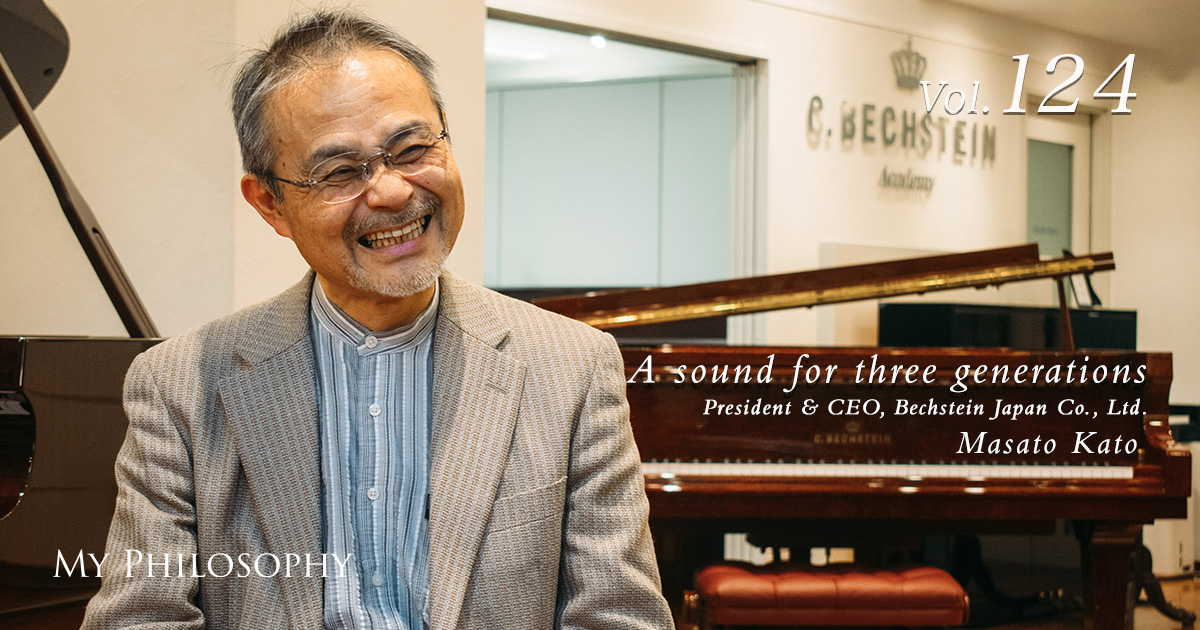
“Being ‘colorless’ is its greatest individuality.” This is how Masato Kato, President of Bechstein Japan, describes the sound of C. Bechstein, one of the world’s three great piano makers. Resonating with the performer and the space, the instrument weaves infinite tonal colors and becomes a “family treasure” passed down across three generations over a century. Rather than “selling,” he believes in “conveying.” What lies at the core of Kato’s philosophy of delivering true value?
Profile
Vol.124 Masato Kato
President & CEO, Bechstein Japan Co., Ltd.
Klavierbaumeister
Born in 1962 in Tajimi City, Gifu Prefecture, Japan. After completing his studies in piano tuning at Kunitachi College of Music, he joined a piano maintenance company serving broadcasting stations. He was involved in tuning pianos for numerous settings, including popular television programs and concerts at the Nippon Budokan.
Driven by a strong desire to “learn the authentic,” he moved to Germany in 1989 and joined Taiyo Musikinstrumente GmbH. After undergoing preparatory training for the Meister examination at the C. Bechstein headquarters factory, he graduated from the Piano Meister School in Ludwigsburg and obtained the German Meister qualification in piano manufacturing.
After returning to Japan in 1993, he joined Taiyo Music Japan (now Bechstein Japan). Gaining experience in both technical and sales fields, he served as Executive Vice President and Head of Technical Department before accepting the role of President & CEO after being approached three times.
He is a member of the Japan Piano Tuners Association and BDK (Bund Deutscher Klavierbauer). A certified first-class piano tuning technician, he has also contributed to the development of future generations through education, including serving as a lecturer at the Rudolf Meister Piano Camp at Koidego Cultural Hall (since 1997) and co-teaching a lecture on “The Evolution of the Piano” with Matthias Fuchs at Kunitachi College of Music (2003).
He is the author of The World of Piano Enjoyed Visually (2007, supervised by Tsutomu Nasuda).
Bechstein Centrum Tokyo
Steinway Paints with a Bold Brush, Bechstein with a Fine Brush
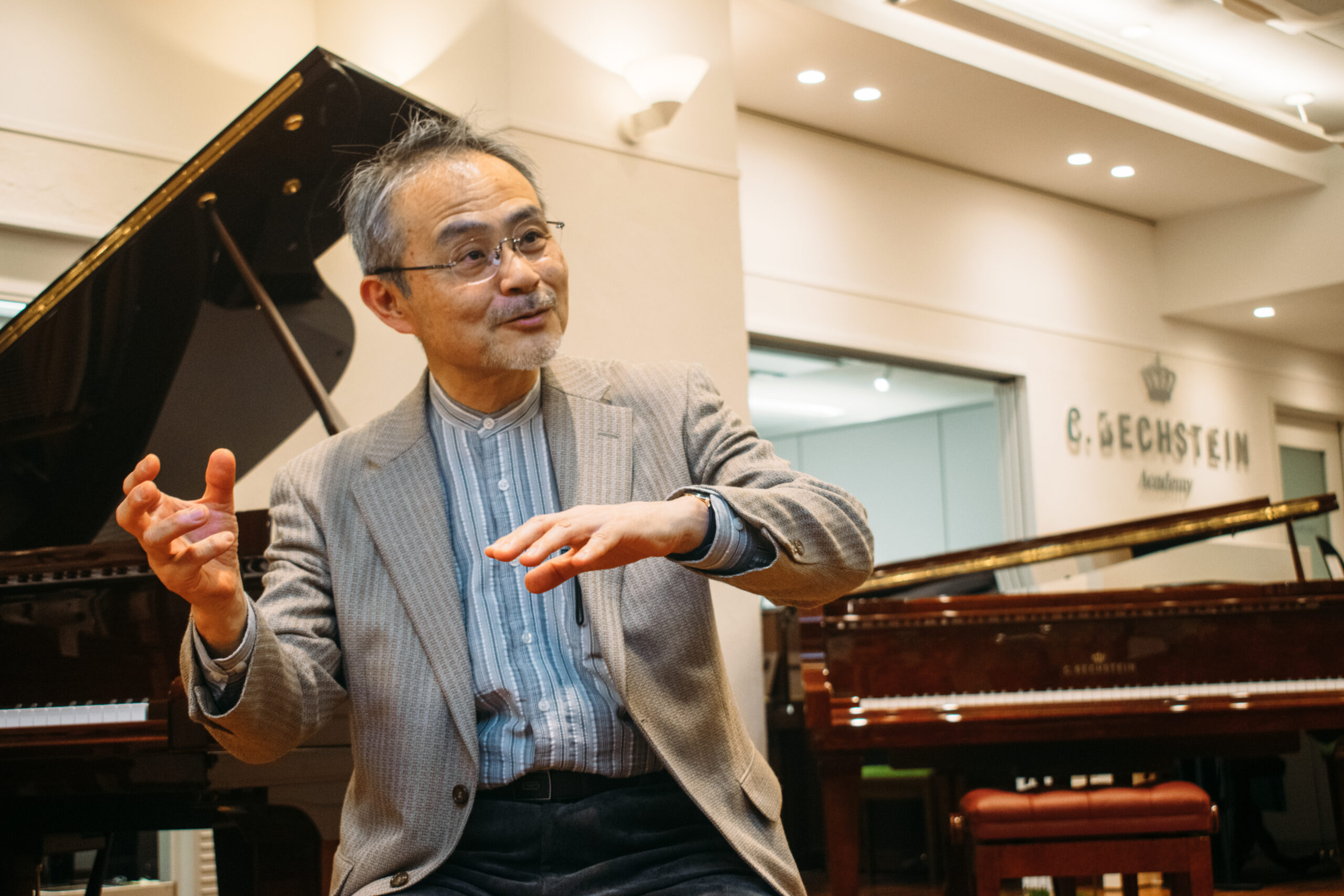
I am often asked, “What defines the sound of Bechstein?”
In truth, it is difficult to answer in a single phrase. This is because the sound varies entirely depending on the performer. Each individual note is delicate, and even the slightest variation in touch can dramatically change its expression. If Steinway—also regarded as one of the world’s three great piano makers—paints dynamically across a large canvas with a bold brush, then Bechstein is like layering many subtle colors carefully with a fine brush. For this reason, it is difficult to say, “This is the Bechstein sound,” yet at the same time, the individuality of the performer is directly reflected in the tone.
Because of this sensitivity, it creates an especially rich dialogue with other instruments such as violin, cello, and voice. If expressed in terms of color, it is “colorless.” It does not assert itself too strongly, but instead adapts to others while weaving its own tone and presence. This is why it blends so naturally even with the most delicate vocal performances. For those who prefer a bright tone, it can be bright; for those who prefer a darker tone, it can be adjusted accordingly. The ability to become any color depending on the performer and the space—that is Bechstein’s strength.
I often tell customers this: when someone you know well greets you from behind with “Good morning,” even though the words are the same, you can sense whether they are in a good mood or if something is different. Great pianists do exactly this with sound. The same melody can be played melancholically or with brightness and lightness. Bechstein is a piano that makes such expression possible.
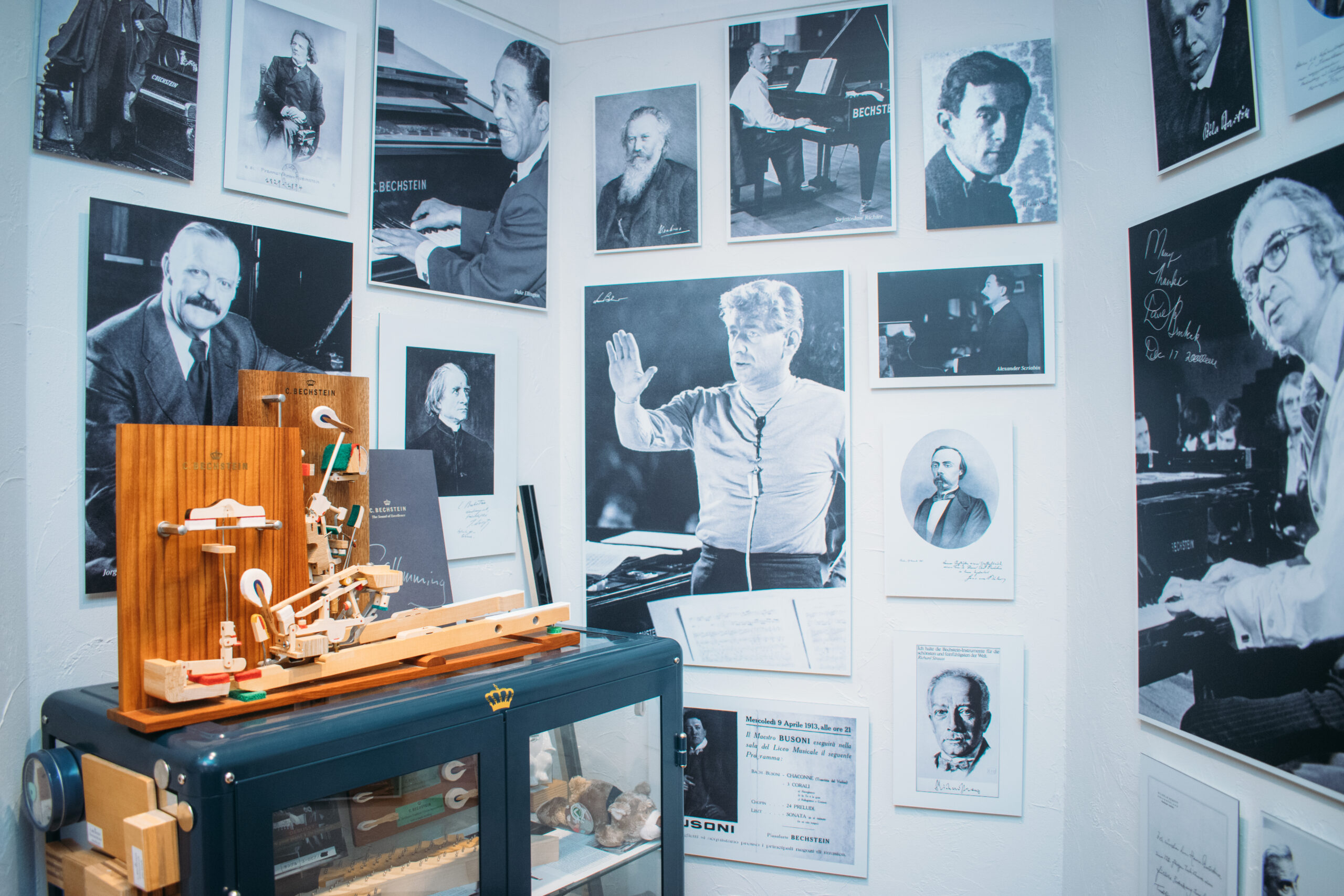
Bechstein first gained recognition when Hans von Bülow, a student of Franz Liszt, performed Liszt’s Piano Sonata on a Bechstein in the 19th century. From that point on, Liszt himself also came to favor Bechstein, and the brand’s reputation spread widely.
At that time, the relationship between piano makers and pianists was very close. Makers would ask directly, “How do you want to play?” “How do you want to express this?” They would refine the instrument accordingly, return to the pianist with “How is this?” and incorporate the feedback once again. Bechstein was developed through this kind of interactive relationship. In fact, I believe that this “dialogue” is embedded not only in the sound of the instrument, but also in its very history.
A Family Treasure That Matures Like Wine Over a Century
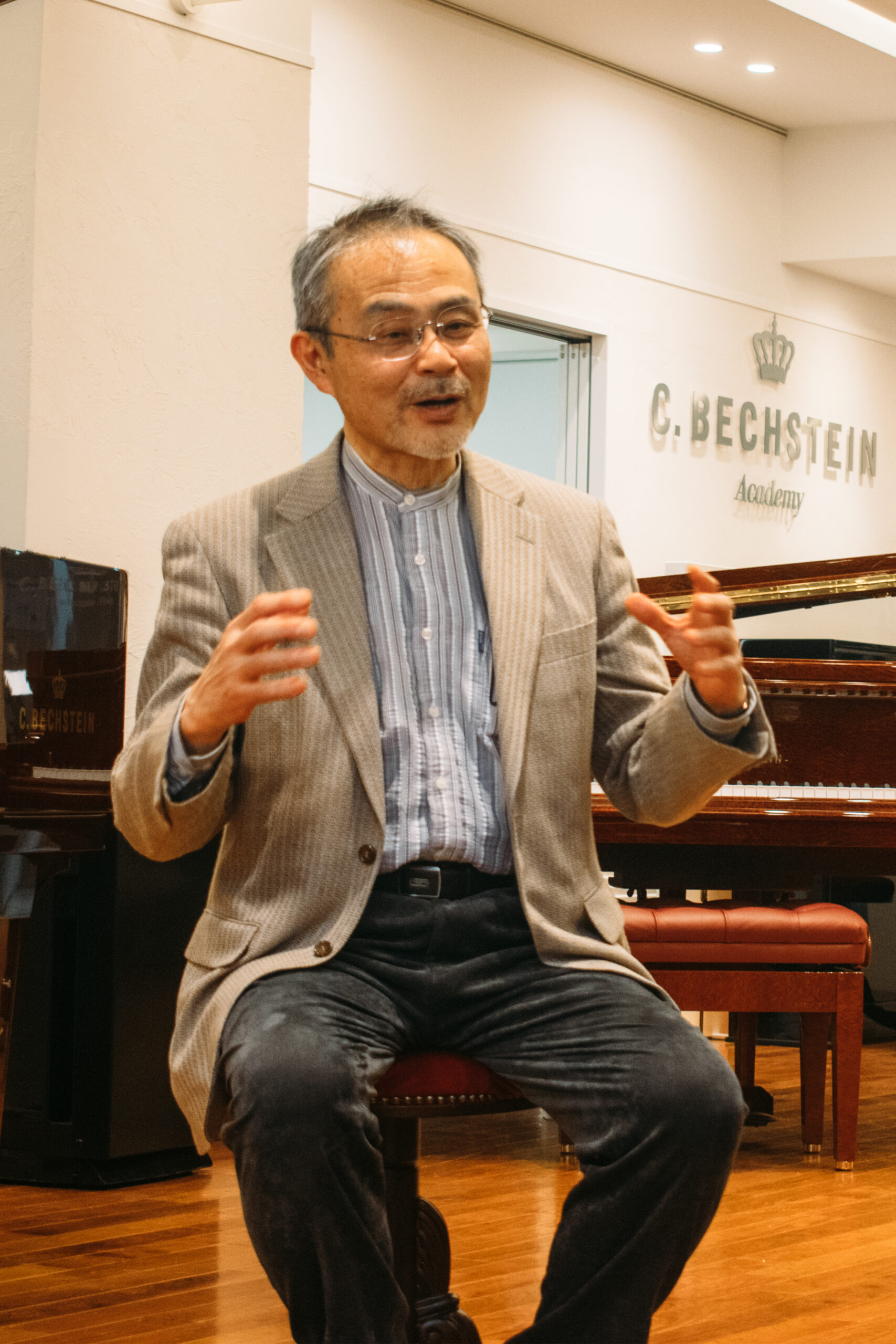
Bechstein creates pianos that are meant to be used across three generations. Its value lies in how long they can be enjoyed. At first glance, some may feel the price is high, but when considered over the course of 100 years, a different kind of value begins to emerge.
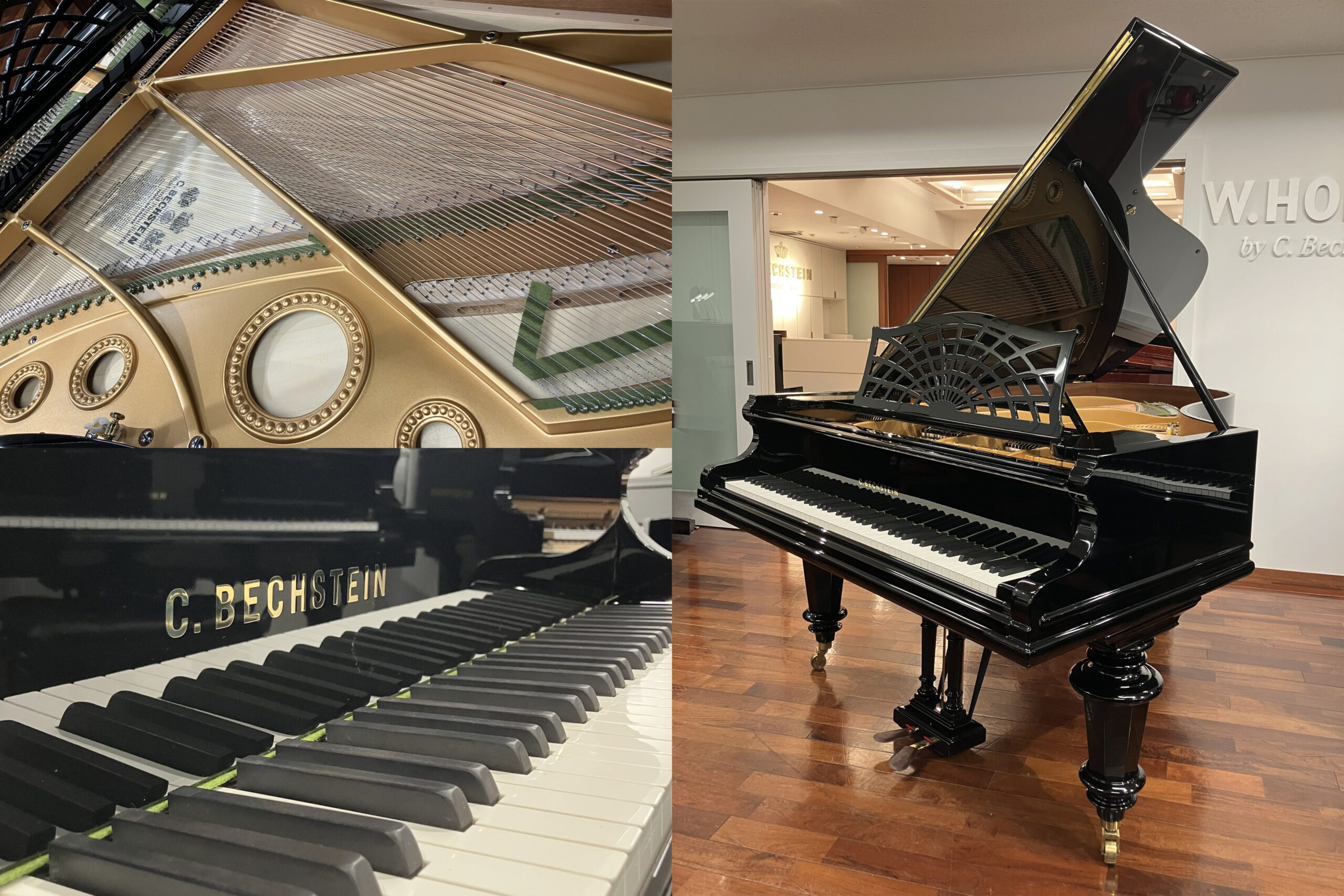
At the Bechstein Centrum Tokyo showroom in Hibiya, there is even a piano built in 1912. It was actually used by musicians of that era, and thanks to a full overhaul at the factory, it is still fully playable today. The iron frame and side panels remain original. Only the parts that required restoration have been replaced, while everything else that could be preserved has been kept intact. The wood itself is still alive. With proper care, it can remain in excellent condition for decades. In fact, much like wine, the sound can become richer after ten or twenty years than when it was brand new. It may truly be described as “a crafted piece with a story.”
The design tells the same story. The 1912 piano features decorative details on the leg bases that resemble columns from Greek architecture—a trace of the Neo-Classical style that was popular in Berlin at the time. Another detail is the small curved projection beside the music stand, which is a remnant of a candle holder. Before the age of electricity, candles had to be placed slightly in front of the score to prevent shadows from falling on the sheet music. It is details like these that embody the weight of history.
Incidentally, modern pianos placed in concert halls are designed with a slightly more brilliant sound so that they can resonate all the way to the furthest corners of a large 2,000-seat venue. The 1912 piano, by contrast, reveals its true value in intimate salon-like spaces. The fundamental tone remains the same, but choosing a piano according to its purpose and environment—this too is part of the richness that defines Bechstein.
C. BECHSTEIN B Polished Black, 1912
[Selected Euro Piano – Pre-Owned]
Emotion Determines One’s Path in Life
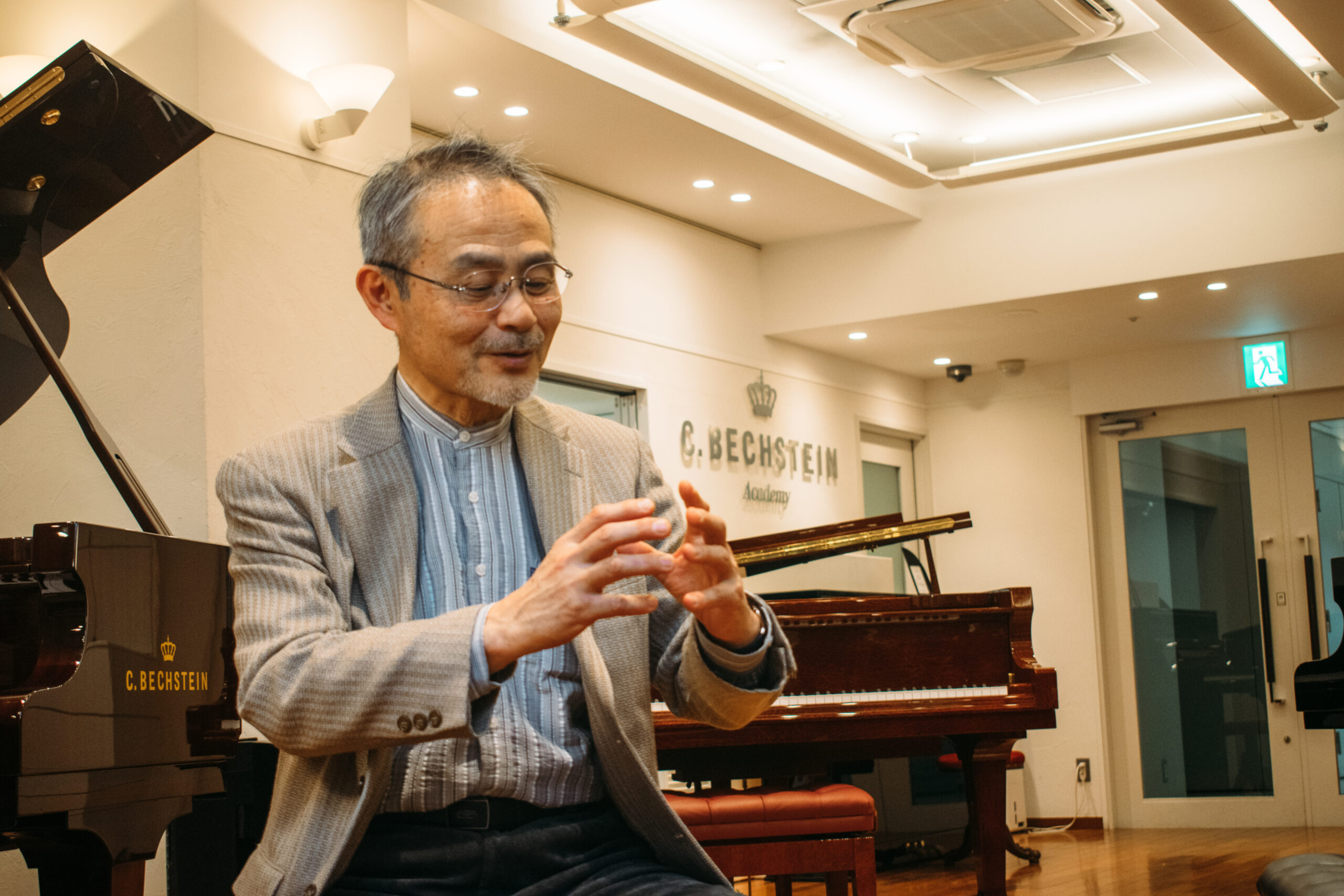
If I had not pursued music, I think I would have gone into architecture or civil engineering. I have always been more inclined toward the sciences and loved creating things. The piano was a natural extension of that. While many of my peers in high school were aiming for medical school or other science-related faculties, I chose the piano tuning department at Kunitachi College of Music. I happened to see the words “piano design” in a school information magazine, and something immediately clicked. My parents told me, “If you fail, give it up,” but fortunately, I was accepted.
At the root of my career is, after all, a sense of inspiration. I was deeply moved by something, and that made me want to pursue it myself. After graduating, I joined a piano maintenance company serving broadcasting stations, spending my days tuning pianos for television programs and concerts at the Nippon Budokan. It was stimulating work, but gradually I felt a stronger desire to understand the design and structure of the piano itself on a deeper level. That led me to decide to go to Germany in order to obtain my Meister qualification. At the time, East and West Germany were still divided, and many traditional elements remained. I could truly feel how deeply European musical culture lived within everyday life.
After returning to Japan, I joined Bechstein Japan and gained experience in both technical and sales roles. Even in Bechstein stores in Germany, many of the people standing on the sales floor are piano technicians or performers. Without a deep understanding of the structure of the piano and how its sound is created, one cannot properly convey the true value of the instrument. I have always believed that.
As for becoming president, I actually declined the offer twice. I had confidence in myself as a technician, but management was a different matter. However, after being approached again and again, I gradually began to feel, “If I do not do this, who will?” On the third occasion, I finally made up my mind. Rather than “selling,” I focus on “conveying”—that has always been my guiding principle.
Not “Selling,” but “Conveying”
—A Challenge Toward the Future
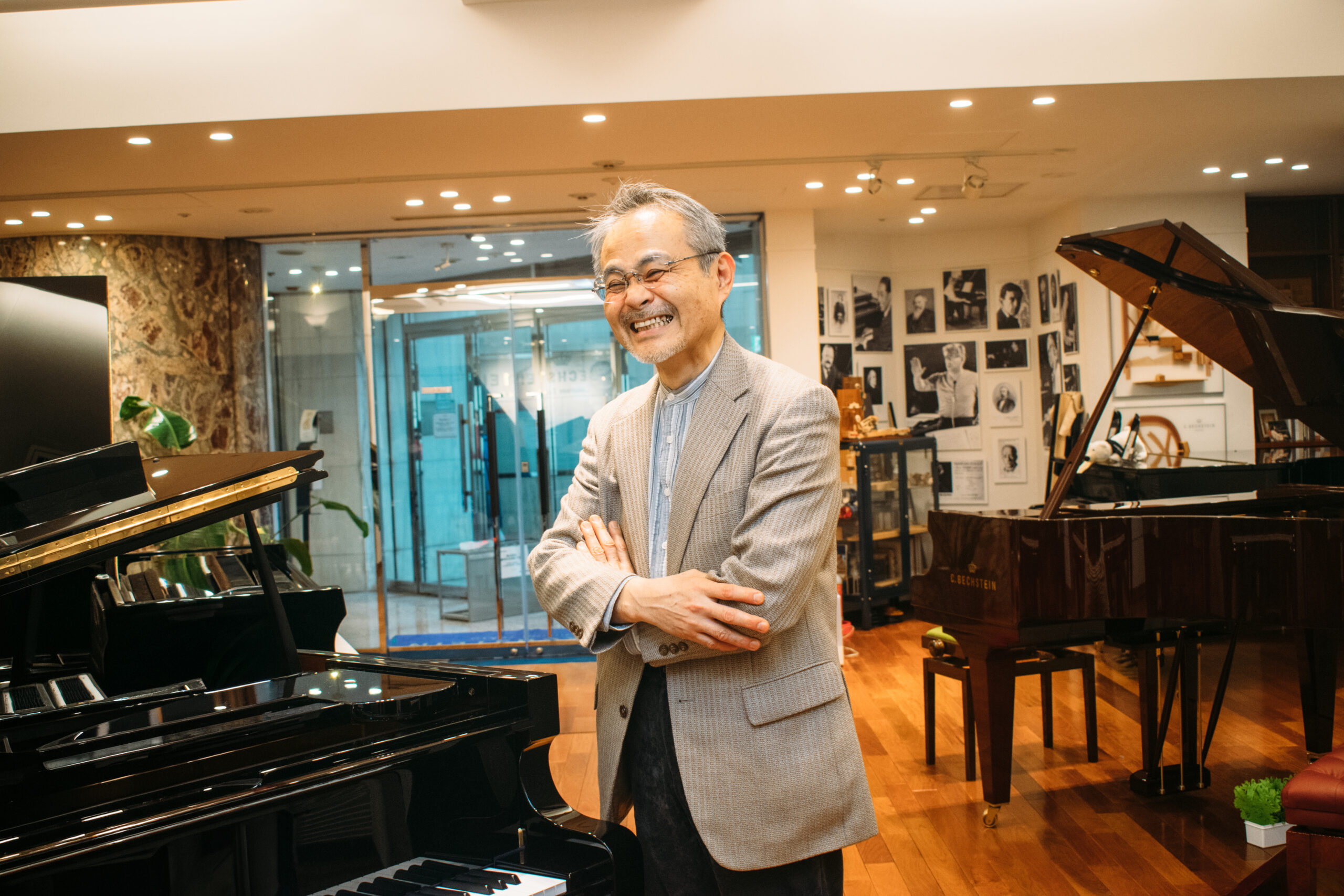
What I am most focused on now is developing successors. To carry on Bechstein, it is essential not only to possess technical skill, but also to understand German craftsmanship and the mentality behind it. Why is it made this way? Who can properly understand the legacy of Germany’s past? Nurturing people who can inherit all of this—I believe that is my greatest mission today.
Recently, we have also been receiving more inquiries from concert halls across Japan. However, the reality is that we have not yet fully conveyed the appeal of Bechstein. In Germany, Bechstein accounts for 30 to 40 percent of new piano shipments, while in Japan it is still only around 2 percent. One could view this as a challenge, but to me it represents room for growth. There are still that many more people who can come to understand true value. But before narrowing that gap, what matters most to me is increasing the number of people who truly understand Bechstein’s philosophy. I hope to establish Bechstein firmly in this country as a presence that supports Japan’s musical culture itself.
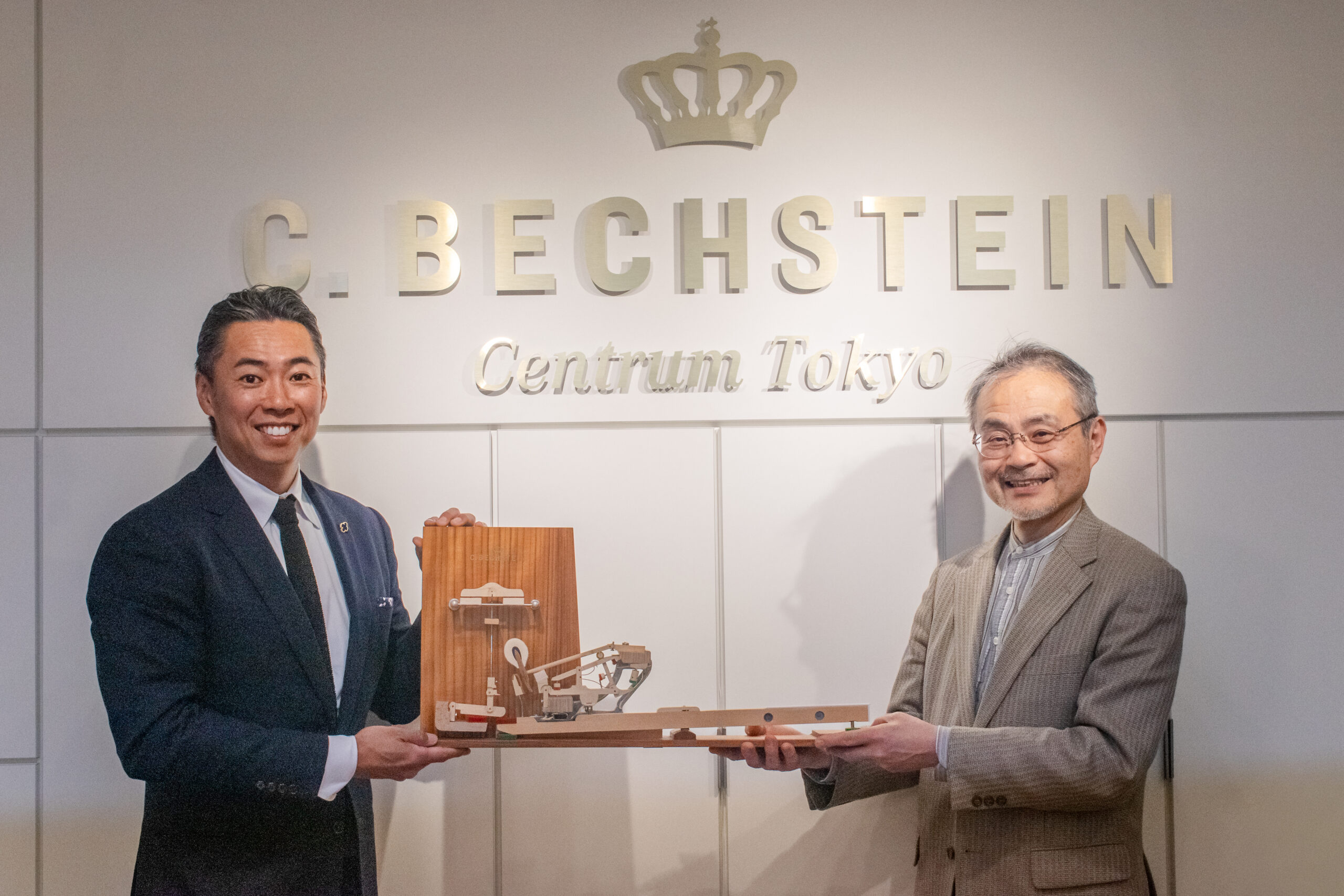
This interview, guided by Mr.Sugiyama’s positive energy, gave me an opportunity to once again reflect on the still-unorganized thoughts within me and the experiences that have shaped them.
I feel both humbled and greatly honored to have been included, even in a small way, among interviews with such outstanding individuals, while also feeling a certain sense of shyness.
Reading the edited manuscript, I feel that my natural awkwardness has been softened, and that I appear perhaps a little more polished than I truly am. I believe that is entirely due to Sugiyama’s positive perspective and the power of his words.
Through encountering that attitude, I was reminded once again of my own responsibility to continue delivering positive value and energy to every customer through Bechstein pianos.
The Bechstein brand has long provided musicians and music lovers with meaningful possibilities for artistic expression. I offer my deepest respect and gratitude for having captured that essence so accurately and given it lasting form through words.
Bechstein Japan Co., Ltd.
Masato Kato, President & CEO
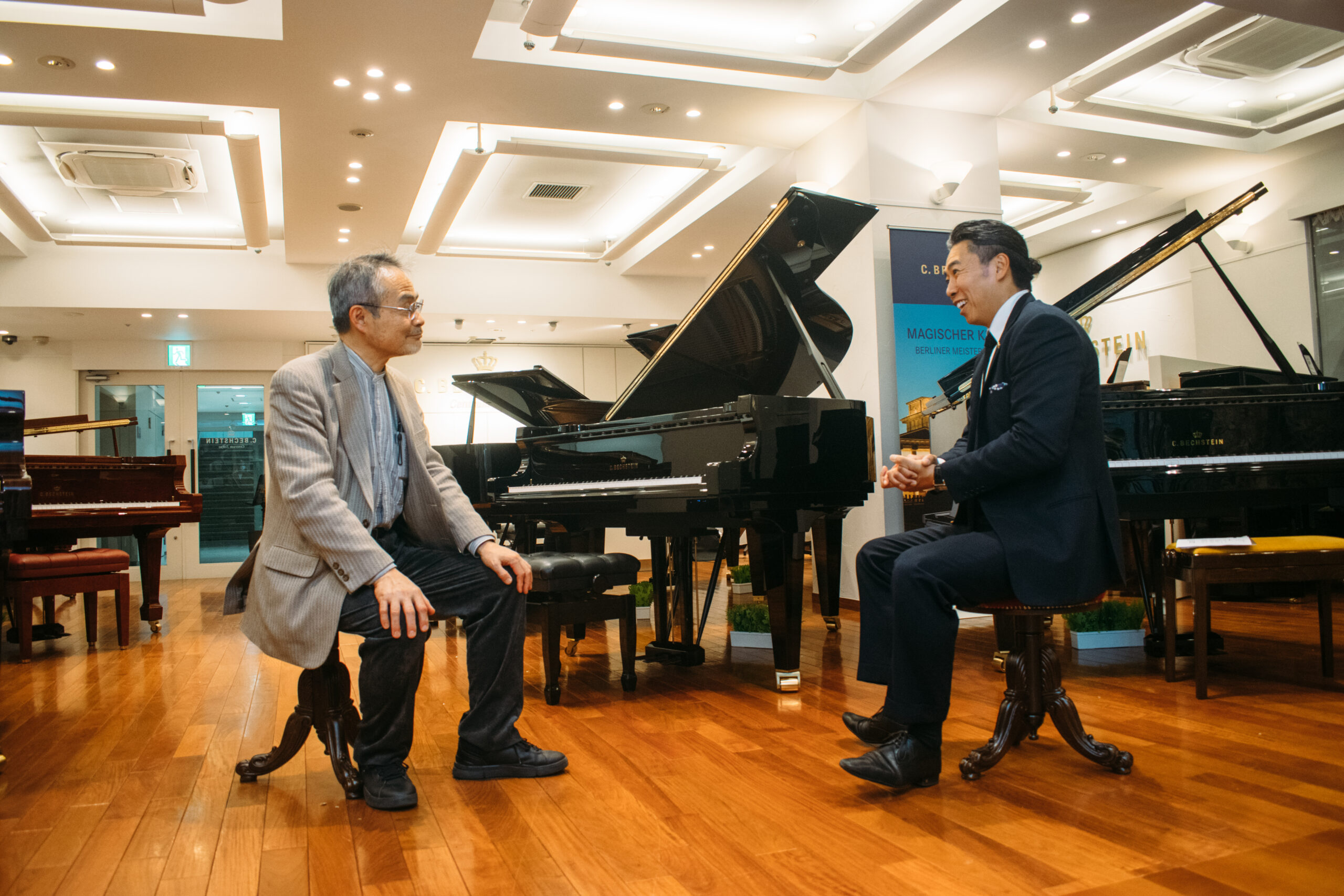
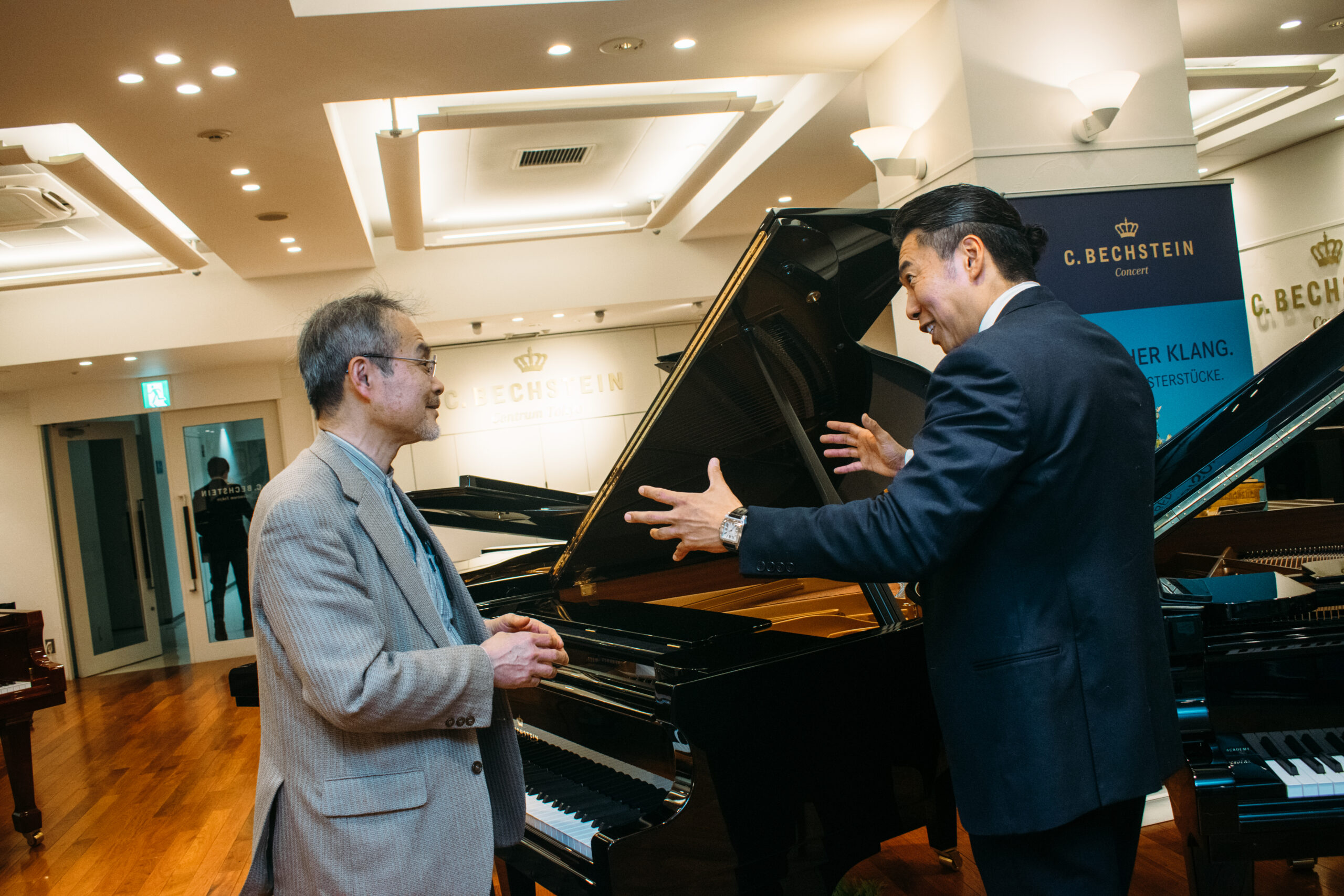
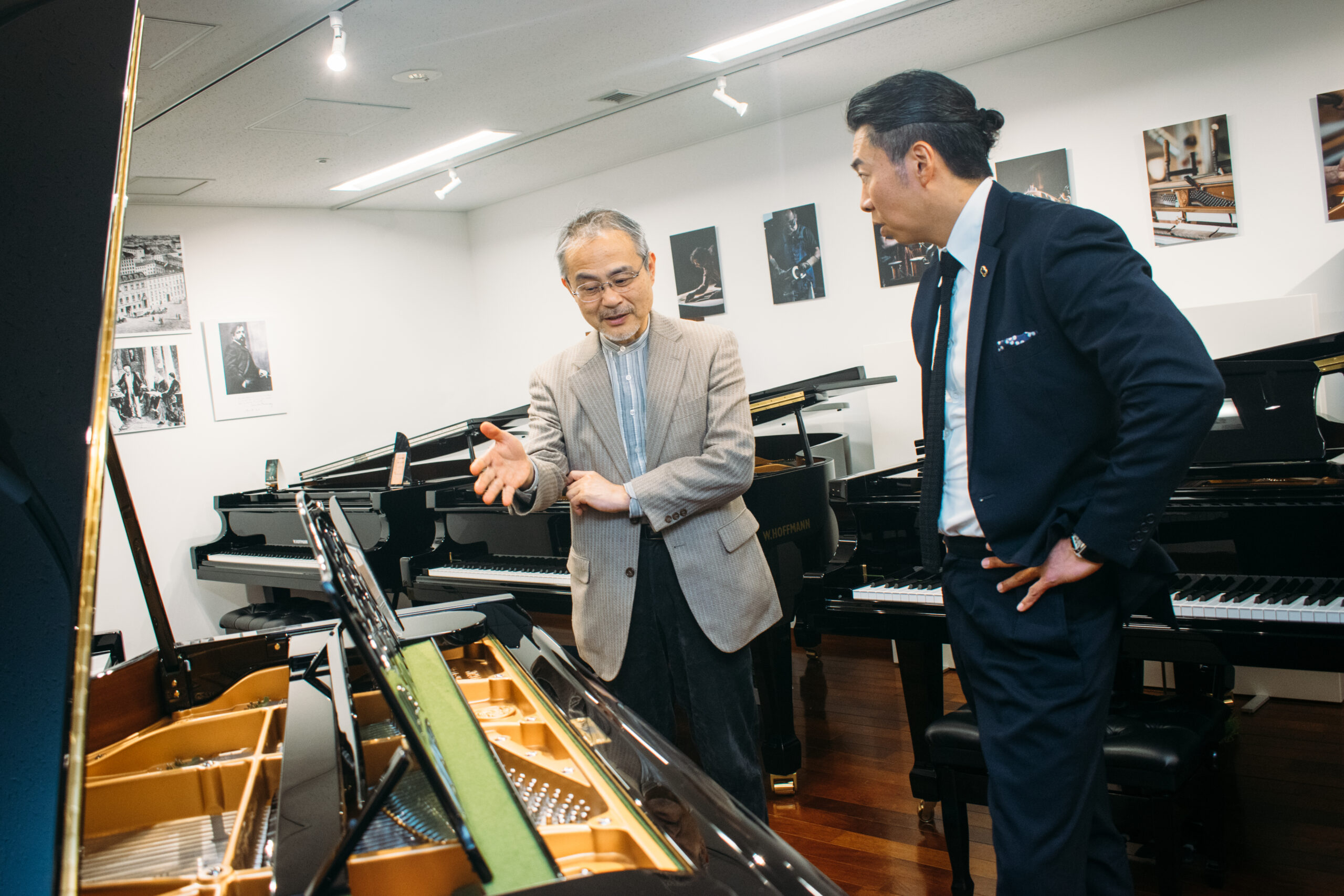
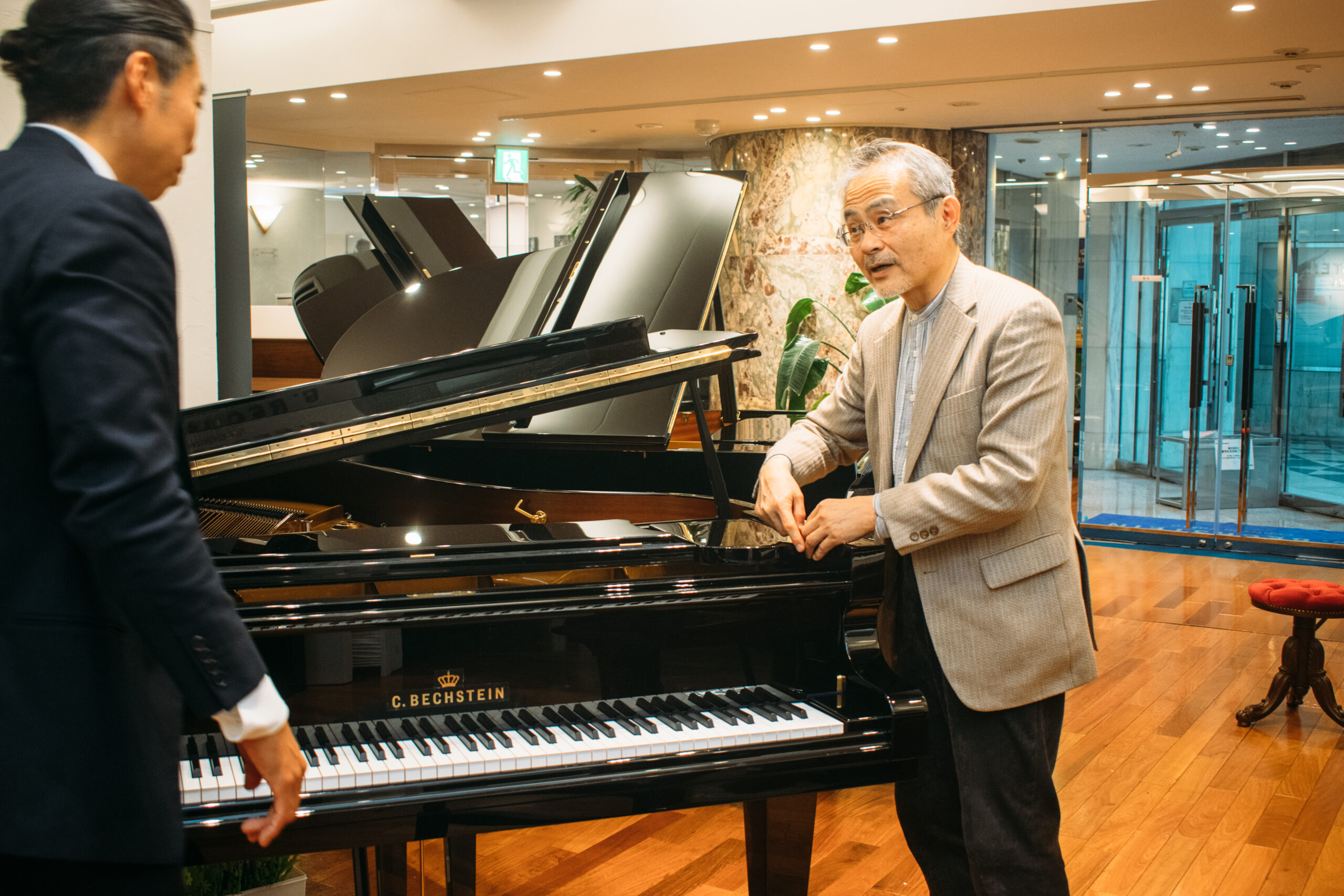
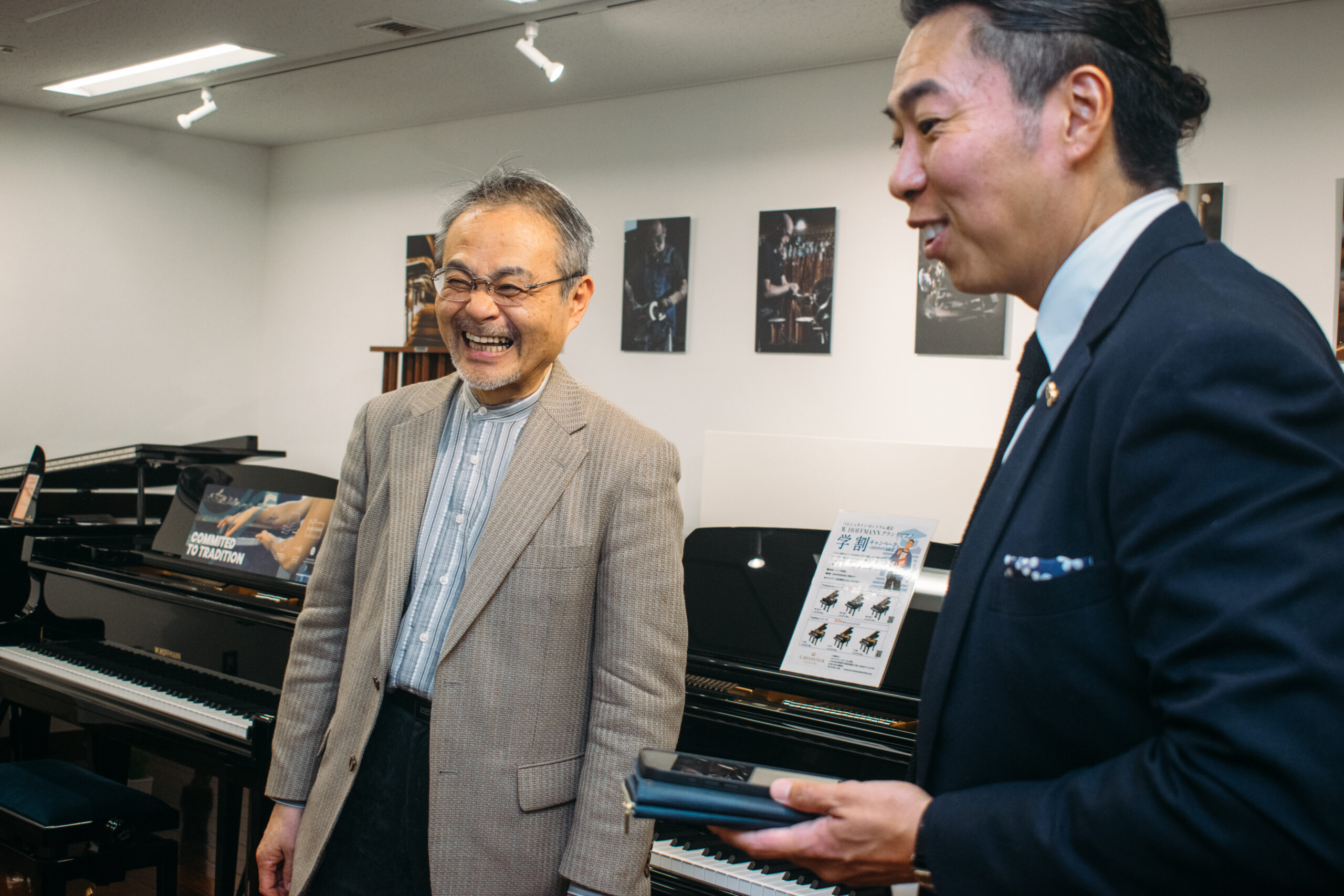
What left the strongest impression on me in this interview was the courage to act that lies at the root of Mr. Kato’s journey. His decision to move to Germany with his family out of a desire to learn more deeply could not have been an easy one. Behind that decision, there must have been many hardships and challenges, including differences in language and culture. Even so, I felt that the experience of taking that first step is what shaped the person he is today.
I was also deeply drawn to the story of Bechstein itself. I had the opportunity to play a piano built in 1912, and its condition was so extraordinary that it was hard to believe it was more than 100 years old. Its resonance felt almost like that of a brand-new instrument. Hearing the story behind it, along with the hand craftsmanship passed down through generations of technicians, I felt that its value was by no means expensive—if anything, it felt remarkably affordable.
What was especially striking was Bechstein’s attitude of approaching each instrument individually, shaping its sound according to the performer and the space. In that sense of craftsmanship built on customization, I felt a strong resemblance to Rolls-Royce. Neither is simply a product; both are presences that accompany a person’s life and values. That is precisely why it is not about merely selling, but about conveying the story. I believe that attitude is the essence of Bechstein and the very core of Mr. Kato’s management philosophy.
Today, Bechstein has entered a phase of expanding the value of its German-born brand more widely throughout Japan. True value will always be recognized. I have great hopes for the future that lies beyond this challenge.
DK Sugiyama, Editor-in-Chief, My Philosophy
March 2026
At Bechstein Centrum Tokyo
Interview & Editing: DK Sugiyama
Project Manager: Chiho Ando
Text: Eri Shibata (Deputy Editor, My Philosophy)
Photography: Hirona Goto
Production: My Philosophy® Editorial Team

Milestone (2007~)
View all Interviews
-
Vol.124 Masato Kato
President & CEO, Bechstein Japan Co., Ltd.
Klavierbaumeister -

Vol. 123 Akiko Yamamoto
Japan President, Van Cleef & Arpels, Richemont Japan
-

Vol.122 Akimi Fukuhara
Pianist
-
Vol.121 Sammy Miyamoto
Hairstylist & Entrepreneur / President, “momotaro salon”
-
Vol.120 Ryotaro Muramatsu
Artist / Founder of NAKED, INC. / Visiting Professor at Osaka University of Arts / Branding Director of Achi Village, Nagano
-
Vol.119 lecca
Singer-Songwriter
-

Vol.118 John Tanzella
President / CEO of the International LGBTQ+ Travel Association (IGLTA)
-

Vol.117 Marin Alsop
Conductor
-
Vol.116 Hajime Kinoko
Modern Artist, Kinbakushi (Rope Master), Rope Artist, Photographer
-
Vol.115 Shintaro Koizumi
Out Japan Co., Ltd Chairman
SK Travel Consulting Co., Ltd (Out Asia Travel) President
International LGBTQ+ Travel Association (IGLTA) Ambassador to Asia -
Vol.114 George Fujisawa
George Fujisawa, President of Fluid Power, Ltd.
-
Vol.113 Kazumi Arikawa
President, Albion Art Co., Ltd.
Founder, Albion Art Jewelry Institute
Chevalier of the Ordre des Arts et des Lettres (French Republic)
International Council Member, Metropolitan Museum of Art (New York) -

Vol.112 Leslie Kee
Photographer
-
Vol.111 Mitsuyuki Takada
President and CEO of Albalkan Corporation
-
Vol.110 Koji Sato
Head Chef of Yamagata Kappo Akasaka Ajisai
-

Vol.109 Krishna Ramachandra
Founder and Non-Executive Chairman of Digital Insights Ventures
-
Vol.108 Marc Einstein
Chief Analyst of ITR Corporation
-
Vol.107 Kentaro Sakai
President and CEO of Sakai Fish Farm Co., Ltd.
-
Vol.106 Ryuki Narita
President of Narita Koi Farm Co., Ltd.
-
No.105 Yoshihiro Tsumura
President and Group CEO, Aderans Co., Ltd.
-
Vol.104 Takatoshi Maruo
"Bali's Aniki (*Big Brother)"
-
Vol.103 Takashi Shimokawa
Principal of the preparatory school "Bulkan Juku" | President and CEO of Tass Group
-
Vol.102 Sayuri Yamaguchi
Ginza "CLUB GRÈS" Owner Mama
-
Vol.101 Koji Yamamoto
President and CEO of Global Partners Inc.
-
Vol.100 Tetsuo Gyotoku
Director of the Japan BE Research Institute
-
Vol.99 Kiyoshi Murano
Philosopher and Astronomer | Futurist
-
Vol.98 Hiroshi Yaegashi
Catalyst | Business Creator
-
Vol.97 Hiroyuki Sasaki
Chairman, Group Representative & CEO Pro Labo Holdings Co., Ltd.
-
Vol.96 Satoshi Yamaguchi
Chairperson of the Chitose Koyukai Social Welfare Corporation
-
Vol.95 Hideko Suzuki
Doctor of Literature | Critic
-
Vol.94 Kiyoshi Kurokawa
Doctor of Medicine | Honorary Professor at the National Graduate Institute for Policy Studies | Representative Director of the Health and Global Policy Institute
-
Vol.93 Hiroshi Senju
Japanese Painter | Professor at the Graduate School of Kyoto University of the Arts and Design
-
Vol.92 Takashi Yamane
Management Scholar | Certified Public Accountant | Professor at Waseda University Graduate School of Business and Finance (WBS) | Emeritus Professor at Keio University
-
Vol.91 Kazuo Noda
Honorary Chairman of the Japan Research Institute, a general incorporated foundation | Honorary Chairman of the Social Development Research Center, a general incorporated foundation | Honorary President of Tama University | Honorary President of The Graduate School of Project Design
-
Vol.90 Goichi Okada
Sales Office Manager, Prudential Life Insurance Co. | Senior Consulting Life Planner
-
Vol.89 Tatsumitsu Yamazaki
Honorary Chairman of the Japan Sailing Federation | Former Chairman of S&B Foods Inc.
-
Vol.88 Rick Blangiardi
Hawai‘i News Now Manager
-
Vol.87 Timothy Cottrell
Head of School, ‘Iolani School
-
Vol.86 John Gotanda
President of Hawai‘i Pacific University
-
Vol.85 George Ariyoshi
Former Governor of Hawaii
-
Vol.84 Taro Yoshida
President and CEO, Hawaii Hochi Ltd.
-
Vol.83 Naoki Kusano
President, HANAKEN | TOKYO TONKOTSU RA-MEN BANKARA Founder
-
Vol.82 Akira Kawashima
Doctor | Doctor of Medicine | Professor, Department of Acupuncture and Moxibustion, Faculty of Health Sciences, Tokyo Ariake University of Medical and Health Sciences
-

Vol.81 Reika Asai
President of Kirei Company, Inc.
-
Vol.80 Seiji Hayashi
President and CEO of Car Conveni Club Co., Ltd.
-
Vol.79 Shinichi Inoue
CEO of Peach Aviation Co., Ltd.
-
Vol.78 Katsuyoshi Fukuyama
President and CEO of Gardner Co., Inc.
-
Vol.77 Nahoko Ishikawa
Representative Director, Sixth Sense Labs, Inc.
-
Vol.76 Shin Yamagishi
Photographer
-

Vol.75 Mikio Kawai
Professional Surfer
-
Vol.74 Isao Aoki
Professional Golfer | Chairman, Japan Golf Tour Organization
-
Vol.73 Norihiko Sasaki
Executive Director, Editor-in-Chief of NewsPicks | Editor | Journalist
-
Vol.72 Yazaki Yasuhisa
Freelance Journalist | Editor
-

Vol. 71 Michael Anthony
Executive Chef, Gramercy Tavern
-
Vol.70 Kenji Takenaka
Flower Designer
-
Vol.69 Daniel T. Ebihara
Head of the New York Kendo Dojo, Entrepreneur, and Product Designer
-
Vol.68 Kyoko Gasha
Journalist | Film Director
-
Vol.67 Casey Taniguchi
President of Yomitime
-

Vol.66 Misao Ito
Writer | Art Producer
-
Vol.65 Narimasa Nakaoka
President and Representative Director, Suzukake Co., Ltd.
-
Vol.64 Takashi Sano
Chocolate Shop Owner-Chef
-
Vol.63 Toshiaki Kurosaka
Chairman of Porsche Japan K.K.
-
Vol.62 Taro Saito
Communication Designer. President and CEO of dof Inc., Co-CEO of CC Inc., Outside Director of VOYAGE GROUP Inc., Outside Director of Oceanize Inc., and Global Strategy Committee Member of the NPO TABLE FOR TWO.
-
Vol.61 Hideyuki Murakami
President and CEO of Iwataya Mitsukoshi Ltd. | Executive Vice President of Isetan Mitsukoshi Holdings Ltd.
-
Vol.60 Yoshiyuki Okuno
Owner-Chef of Ristorante La Brinca
-
vol.59 Rika Yukimasa
Culinary Researcher | CEO, REKIDS Co., Ltd.
-
Vol.58 Kazuko Tōdō
Manager and Proprietor of "Royal Box" and "Lindbergh" | Editor-in-Chief of 'LB Nakasu Newsletter
-
Vol.57 Takaharu Futaeda
CEO, Anny Group KFT
-

Vol.56 Kengo Kuma
Architect
-
Vol.55 August Hergesheimer
President and CEO of Abios Corporation | Ph.D. in Nutritional Science
-
Vol.54 Tomio Taki
Honorary Advisor, Takihyo Co., Ltd.
School Board Chairman, Taki Academy, Inc.
Board Member, Mikimoto (America) Inc. -
Vol.53 Tadashi Okura
President and CEO of Torikizoku Co., Ltd.
-
Vol.52 Hiroshi Sugimoto
Japanese Painter | Specially Appointed Professor at Yokohama University of Art and Design
-

Vol.51 Aureana Tseu
Hula Artist
-
Vol.50 Don Konishi
Fashion Designer | Visiting Professor, Nagoya University of Arts and Sciences
-
Vol.49 Sachio Senmoto
Chairman of the Board, Renova, Inc.
-
Vol.48 Naoyoshi Amari
Head Priest of Ichigyosan Senshuji Temple | Principal of Senshu Kindergarten
-
Vol.47 Takashi Maeno
Dean and Professor of the Graduate School of System Design and Management at Keio University.
-
Vol.46 Tomizo Yamaguchi
Third-Generation Head of Kyoto Confectionery "Suetomi"
-
Vol.45 Toshiharu Kokubun
Representative Director of Earth Holdings Co., Ltd.
-
Vol.44 Keita Obara
Professional boxer
-
Vol.43 Yuko Kibayashi Shin Kibayashi
Non-fiction writer and manga creator
-
Vol.42 “My Philosophy” Junki Yoshida
Chairman and CEO, Yoshida Group & Founder, Yoshida Sauce
-
Vol.41 Seisei Hanayama
Artist
-

Vol.40 Yoshiharu Sekino
Explorer | Anthropologist | Professor at Musashino Art University
-
Vol.39 Masaki Yokokawa
Representative of WELCOME Group
-

Vol.38 Tamami Sunoda
President and CEO of NOZZE (Marriage Information Center)| President, CEO, and Owner-Designer of Fashion Brand "JuviJuvi"
-
Vol.37 Shuichi Tsuji
Sports Doctor | CEO of Eminecross Co., Ltd.
-
Vol.36 Yuichiro Miura
Professional Skier | Principal of Clark Memorial International High School
-
Vol.35 Nobufumi Matsunaga
Educational Environment Setting Consultant | Founder of V-net Educational Consultation Office
-
Vol.34 Tetsu Mizutani
Suntory Beer Limited - President, Chief Executive Officer
-

Vol.33 Yukino Kikuma
Lawyer
-

Vol.32 Keiko Kouda
CEO of AsMama Co., Ltd.
-

Vol.31 Takami Hasebe
White Ship Inc. CEO | Art Producer
-

Vol.30 Aya Kinoshita
Representative Director of UHM Co., Ltd. | General Manager of Hotel Niwa Tokyo
-

Vol.29 Clara Komazaki
KoLabo Co., Ltd. Representative Director and President
-

Vol.28 Nobuko Tsutsumi
Lecturer at Showa Women's University, Aoyama Gakuin Women's Junior College, and Hosei University | Freelance Announcer | Essayist
-

Vol.27 Yu Kaida
Portrait photographer
-

Vol.26 Manabu Miyasaka
President and CEO, Yahoo Japan Corporation
-

Vol.25 Shuichiro Kimura
Representative Director of Boulangerie Eric Kayser Japon Inc.
-

Vol.24 Yohei Sadoshima
President and CEO of Cork, Inc.
-

Vol.23 Toshiaki Kanda
Representative of Kanda News Network | IT Journalist, Social Media Consultant
-

Vol.22 Emmy Suzuki Harris
Japanese Representative of Change.org
-

Vol.21 Masakazu Yanagisawa
Director of Global Prime Finance Sales at Deutsche Securities Inc. | Board Member of NPO good aging yells
-

Vol.20 Fumio Tateishi
Chairman of the Board of Directors, OMRON Corporation
-

Vol.19 Nobuyuki Idei
Founder & CEO, Representative Director of Quantum Leap Corporation
-

Vol.18 Rowland Kirishima
Photographer | Multi-Creator
-

Vol.17 Junko Masachika
Founder of Personal Styling | President and CEO of Fashion Rescue Ltd. | Dean of Personal Stylist Japan | Chairman of the Professional Personal Stylist Association
-

Vol.16 Kumiko Otsuka
President and Representative Director of Otsuka Kagu, Ltd.
-
Vol.15 Tsugihiko Fujiwara
President and CEO of AOI Pro. Inc.
-
Vol.14 Hideaki Inoue
President and CEO, Park Corporation
-
Vol.13 Edward Suzuki
Architect | Representative of Edward Suzuki Associates Inc.
-
Vol.12 Hiroshi Kato
Economist
-
Vol.11 Seiichi Shimada
Special Advisor at Nihon Unisys Ltd. | Former Chairman of the Japan Housing Finance Agency | Former Vice President of Mitsui & Co., Ltd. | Former President of Nihon Unisys Ltd.
-
Vol.10 Kanae Doi
Japan Representative, International NGO "Human Rights Watch" | Lawyer
-
Vol.9 Hitomi Kumasaka
Social Media Consultant | President and CEO of Social Media Research Institute Co., Ltd.
-
Vol.8 Yuriko Takahashi
CEO of E.OCT Inc.
-
Vol.7 Kazuhiro Hasegawa
Representative of the Corporate Power Institute | Senior Researcher at the Inter Professional Education Research Center, Chiba University of Commerce (CUC)
-
Vol.6 Kage
President and Representative Director of Caricature Japan, Ltd., and Representative Artist | Asian Ambassador for the National Caricaturist Network (NCN)
-
Vol.5 Fumi Sasada
President and CEO of BRAVIS International, Inc. | Chairman of the Japan Package Design Association
-
Vol.4 Kota Matsuda
Chairman of Tully's Coffee International | President of Quiznos Asia Pacific
-
Vol.3 Shigeru Uchida
Interior Designer
-
Vol.2 Naoyuki Agawa
Dean of the Faculty of Policy Management at Keio University.
-
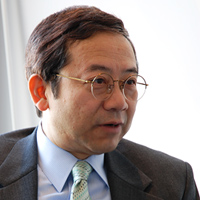
Vol.1 Hitoshi Suga
Venture Capitalist